A Simple Guide To Monstera Plant Care – The Basics
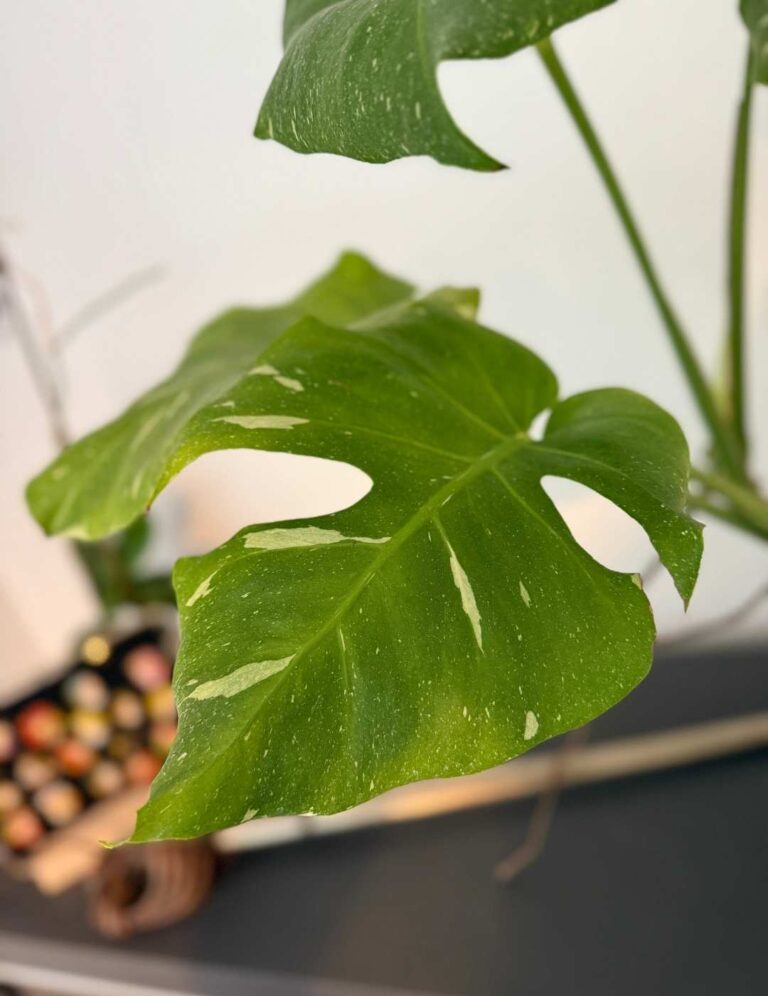
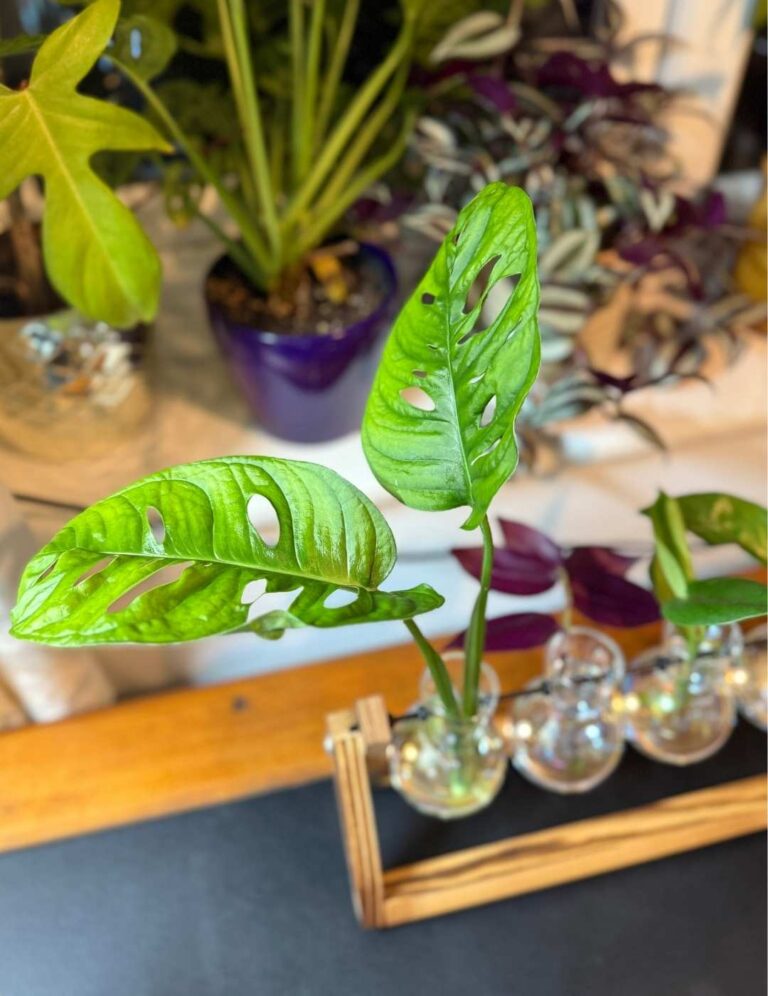
It occasionally surprises visitors to my house just how many Monstera plants I have. I don’t just have a traditional swiss cheese plant in one of the corners, I have several different varieties in various places around my home.
So how did I get here? Well, it all started with a very sad, sunburned plant that I found in a garden center a few years ago. It was practically being given away, and I just had this desperate urge to try and save the poor sad thing.
I had kept Monstera plants in my reptile terrariums in the past, but this was the first time I’d really got into finding out just how to keep them happy. And once I understood the basics, I found that keeping these glorious plants growing well and in good health was surprisingly simple. Depending on the variety!
So today I want to share some basic care tips that we can apply to most common Monstera varieties, to help you decide how to care for your plant. And for each piece of advice I give you, I’ll explain why it’s a good idea, because I always find that helps me to remember things!
Light, But Not Too Light
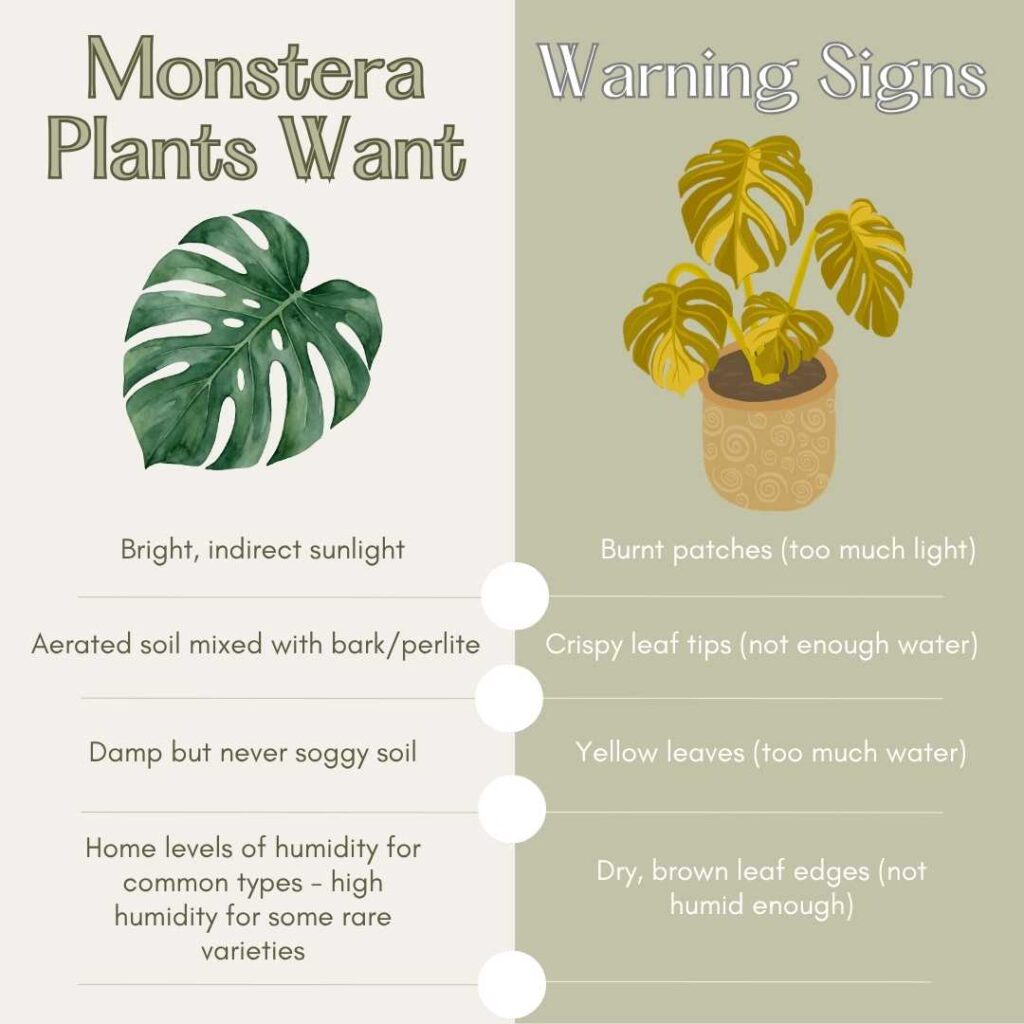
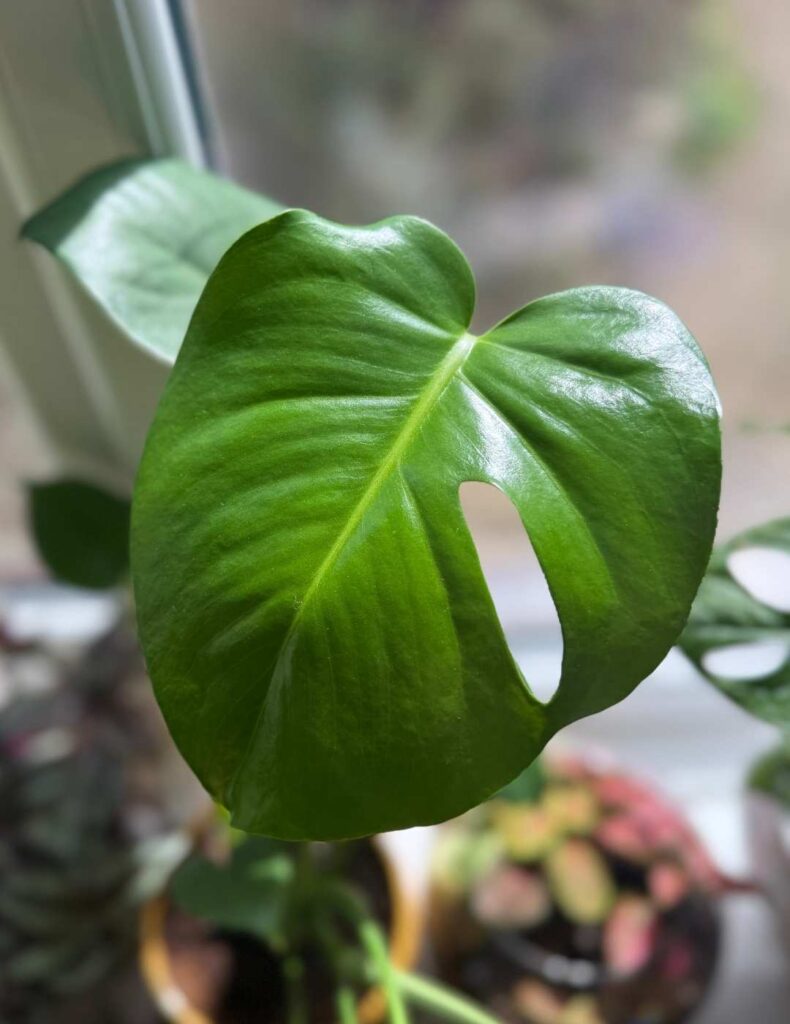
Monsteras love light, but if you give them too much they burn and crisp surprisingly quickly. That’s why mine have a little trip away from my South facing window every summer, onto the desk nearby.
The Rule
Monsteras need to be kept in bright, indirect light
The Reason
Wild monstera plants live on the rainforest floor, under a thick canopy. They have light, but it’s speckled and often blocked by high leaves and branches. This is possibly why they have developed such large leaves, with gaps in them. To allow them to capture as much light as possible, but without expending as much energy as they would have to use to keep a full giant leaf in good condition.
Water, But Not Too Much
Despite being a plant that likes humidity, when it comes to the roots your Monstera is more likely to die from being watered too much than it is from being too dry.
The Rule
If the soil looks completely dry, water it.
The Reason
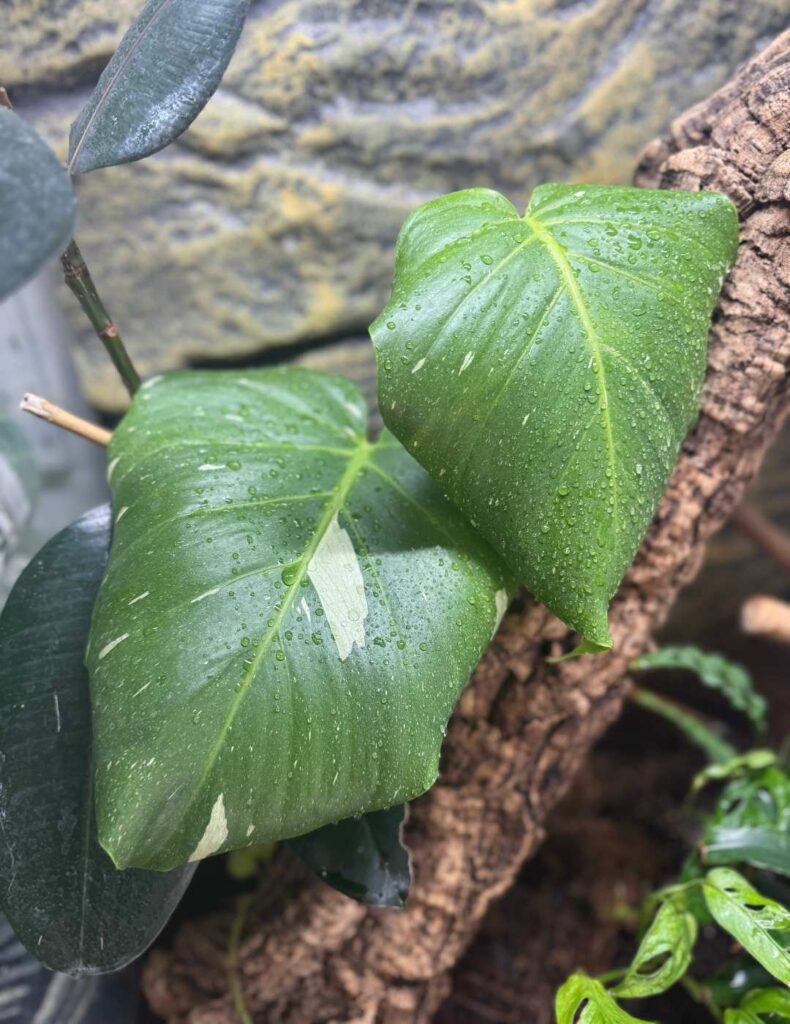
Monstera roots do not like being too wet. They might begin life with their roots in the soil, but they are climbers and in the wild their roots are often not in the ground at all. When the soil gets too wet the oxygen in the soil is replaced with water, the roots don’t get enough oxygen and this leads to rot.
Mix Up Your Soil
Potting soil is the worst enemy of the monstera. It encourages the damp issues we’ve just talked about, and stops the roots from breathing.
The Rule
Mix your potting soil with orchid bark and/or perlite.
I use 50% perlite to 50% potting soil, but lots of people have success with similar mixes substituting orchid bark or mixing them both with the potting soil.
The Reason
This soil combination is a good copy for their rainforest origins. It allows the roots to get enough oxygen. It also supports their naturally high root pressure, which is designed to push water through their systems as they climb. When the soil is too compact this pressure causes an unnatural and increased stress on the plant.
Give Your Monstera Some Support
In the wild your monstera would have big trees to climb, so we need to replicate that in our homes.
The Rule
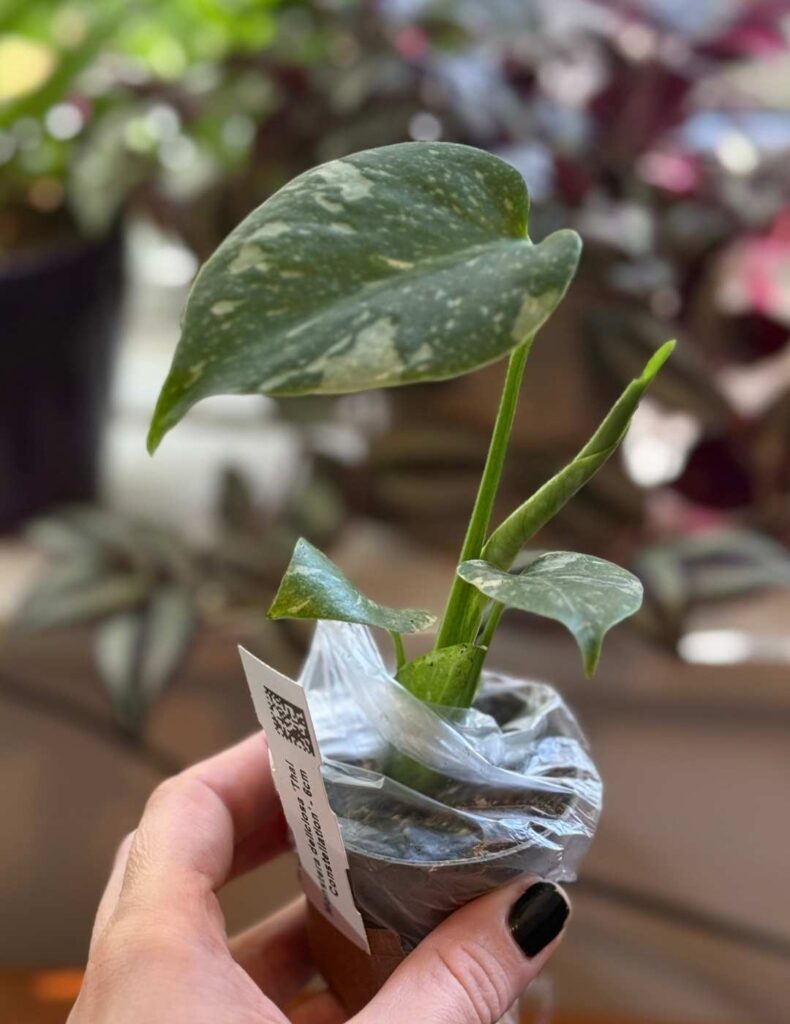
Provide a moss pole or coco coir stakes for support.
The Reason
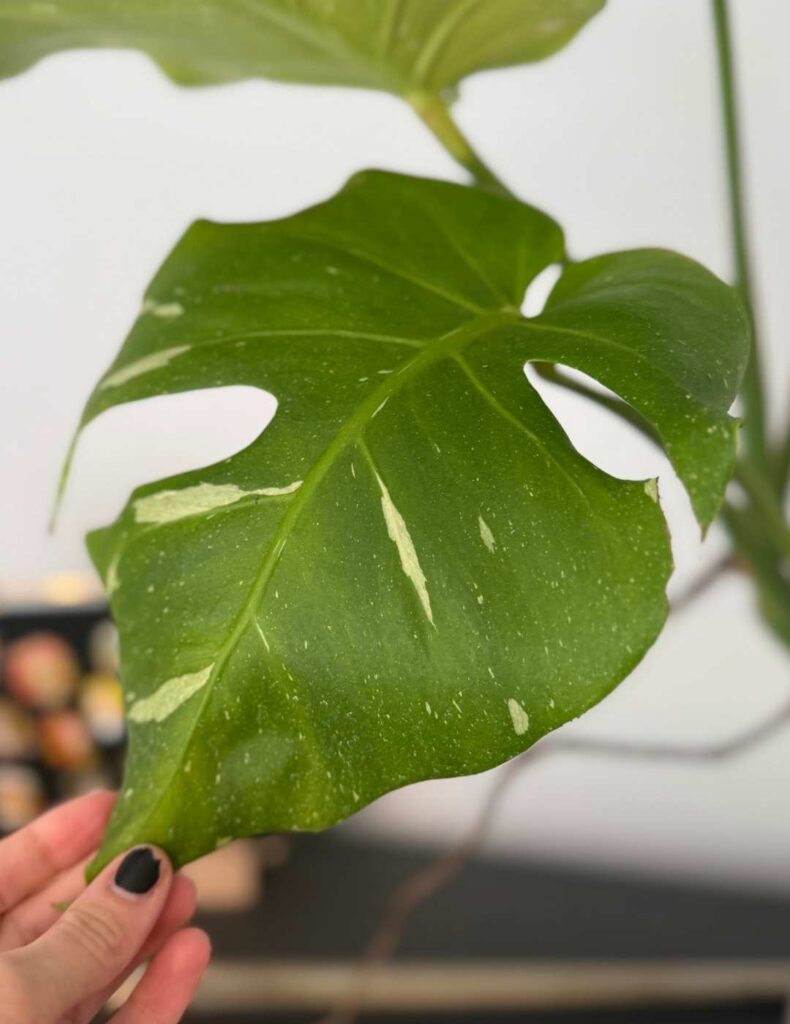
Monsteras have this awesome power to seriously change how their leaves are shaped as they grow. These huge, fenestrated (open sectioned) leaves cannot be held up by their stem alone. When the plant is unsupported, it won’t grow into this giant stage as it won’t believe that it can survive under their weight.
If you want a huge, impressive Monstera, you need to give it that support.