Monstera Varieties: From Common To Rare Types
I don’t want you to think I’m showing off, but I’ve got to tell you, I’ve got a lot of Monstera plants. Sadly not one of every type yet, but like any true plant nerd, a full collection is one of my botanical goals one day.
Although the traditional swiss cheese plant, also known as Monstera deliciosa, is found almost everywhere you find plant enthusiasts, there are absolutely loads of other varieties of this gorgeous plant.
Some of them are easy to get hold of and look an awful lot like the deliciosa, others are really rare, and some you’d be shocked to find where a type of Monstera at all they look so different.
Today we’ll have a quick rundown of all the Monstera varieties, from common to uncommon and rare, with some quick information about each one. Of course, how easy they are to get hold of will differ a little depending on where you live, but this is based on my experience.
Common Monstera Varieties
The most common varieties of Monstera tend to also be the easiest to keep in the average home. They like some bright light but not huge amounts, well aerated soil, regular watering and are typically the least expensive of the Monstera plants.
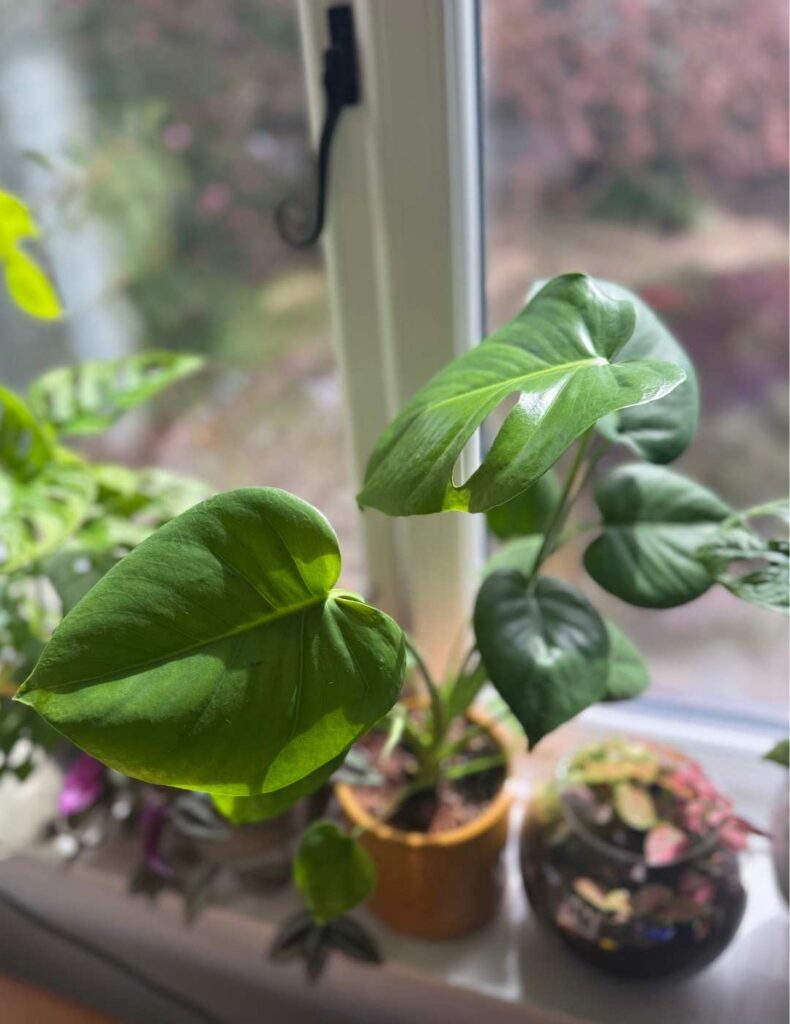
Monstera Deliciosa
Known commonly as the swiss cheese plant due to its huge leaves with big fenestrations, this is the Monstera that resides in most homes. It’s relatively easy to care for, and it’s got those classic Monstera looks. I love mine, they are robust but dramatic. What more could you ask for!
Monstera Adansonii
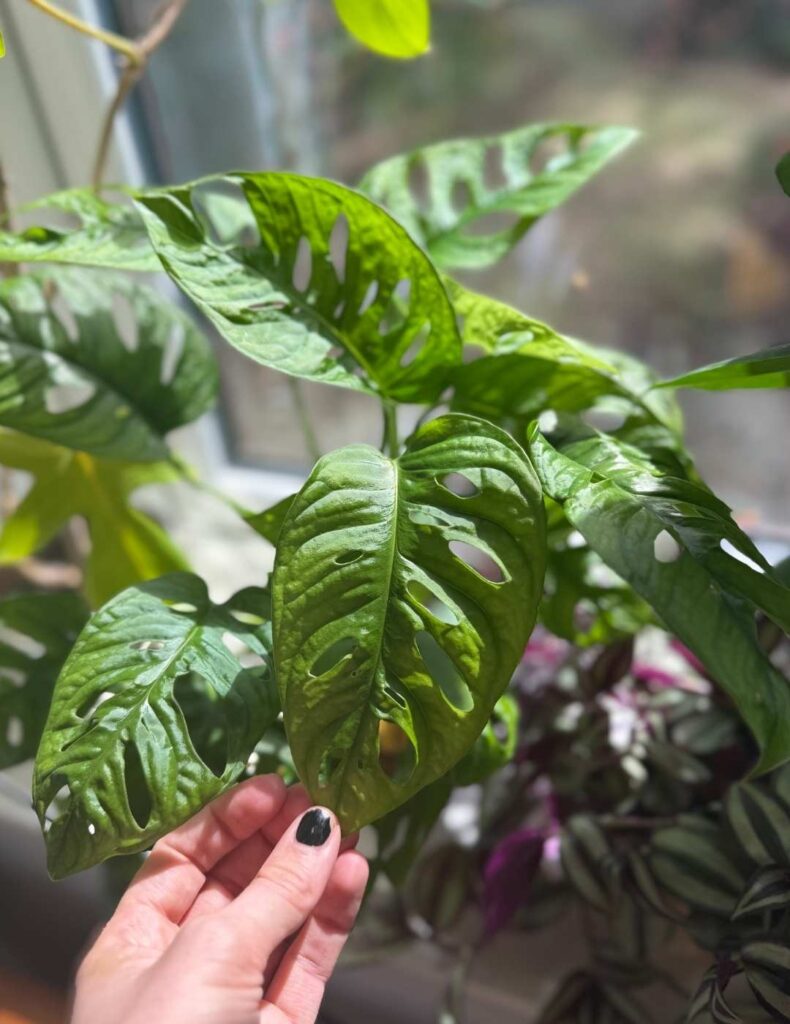
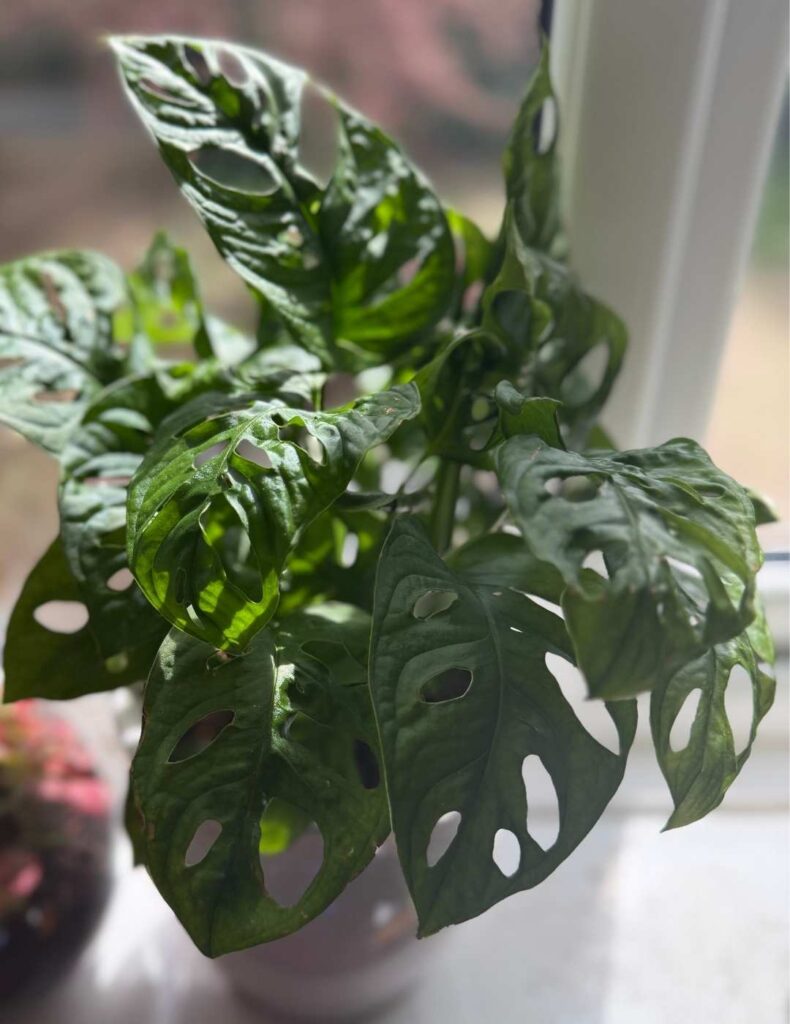
Also known as the Monkey Mask by some, this plant looks like the deliciosa on a smaller scale. The easiest way to quickly tell them apart is that their fenestrations are enclosed and not open. They are often sold as hanging plants, and the leaves will never grow to the size of an adult Monstera plant. I have a few of these on my window in front of me as I’m typing. They are exceptionally decorative and dainty, whilst still being relatively easy to keep happy.
Monstera Deliciosa Tauerii
A dwarf version of the deliciosa, this plant is on a smaller scale but with the same distinctive look. The leaves tend to fenestrate sooner in its life, and it stops growing much sooner than its larger cousin.
Uncommon Monstera Types
These varieties are harder to get hold of, but they can be found with a bit of effort. And you’ll find a bit of a different opinion on this here than you might have seen elsewhere, because a few of what used to be the incredibly rare plants are now being cultivated more often. So they’ve slipped their way from rare to uncommon.
The uncommon Monstera plants will be more expensive than the common varieties, but shouldn’t leave you feeling bankrupt afterwards.
Monstera Siltepecana
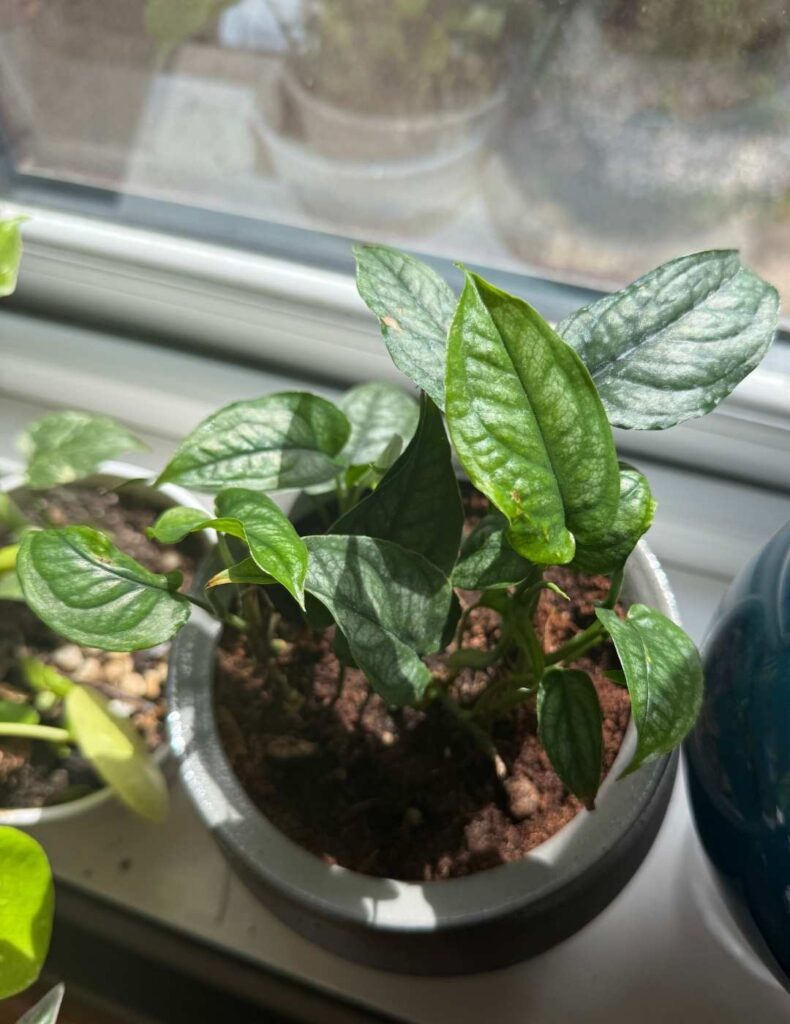
Of all my Monstera varieties, this is the one that makes people say “oh really?” when I tell them it’s a Monstera. Its leaves are much more pointed than normal, it is a richer dark color, with shades of silver contrasting with bold green veins.
You’ll need to be confident in what you are looking for with this plant, as it’s so different looking to your common Monsteras that they aren’t always in the same section in stores.
Monstera Thai Constellation
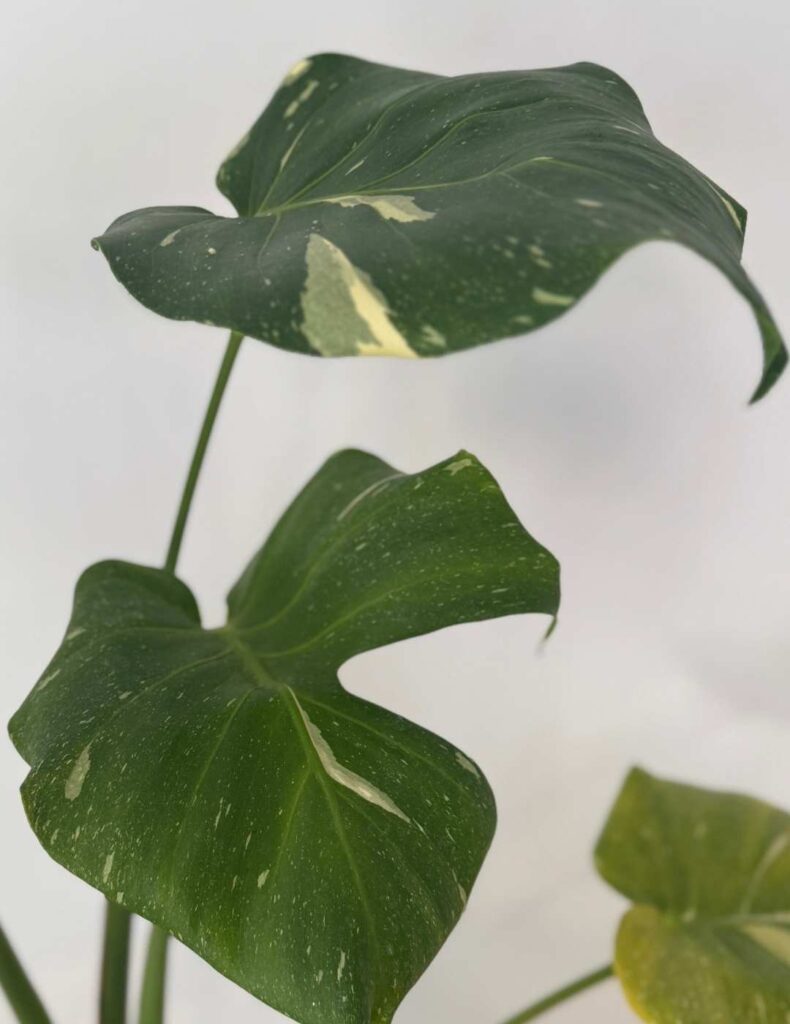
A few years ago I’d have put this plant in the rare category, but I’ve managed to get my hands on a couple recently without too much fuss. One of them came from a website, the other from a local gardening store! They are a lot like the deliciosa in terms of leaf style and size, but with a beautiful star flecked variegation across the leaves.
This variety was lab engineered so the white spots will appear on new leaves and not fade with age. Although I’ve read a lot of opinions on their care, in my experience it’s identical to the standard deliciosa, and although they have less chlorophyll due to the white spots, these are far outweighed by the green areas so it doesn’t seem to me to inhibit their photosynthesis in the same way that you get with some more strongly variegated plants.
Monstera Peru
This thick leaved Monstera doesn’t fenestrate as it grows, but its leathery leaves are just as striking to look at, and have an almost iridescent sheen to them too.
Monstera Standleyana
A variegated version of the Monstera, this has far fewer fenestrations, narrow leaves and some white flecking across them.
Rare Monstera Varieties
Thanks to modern cultivation methods like using tissue cultures these plants are no longer almost impossible to find, but they will still be a challenge.
If you are like me and love to have your propagator busy for as much of the year as possible, these are so much fun to find and then multiply.
They are more expensive to buy, and often harder to keep alive due to their more dramatic looks.
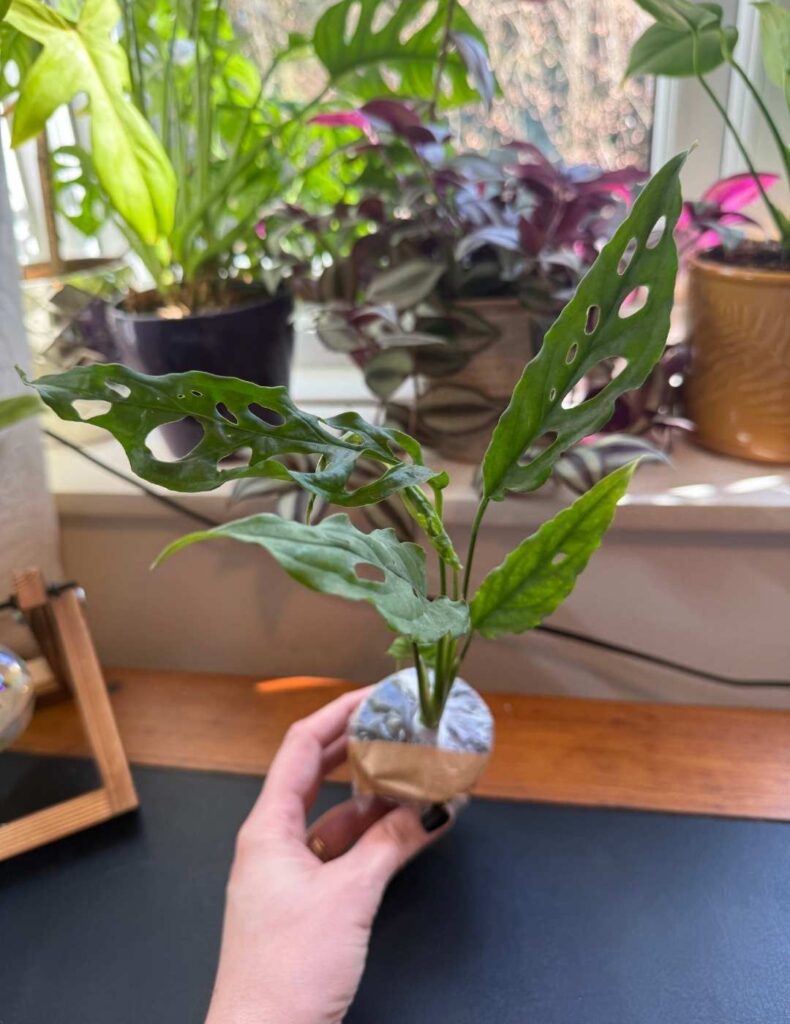
Monstera Obliqua
This is the most money I’ve ever spent on a tiny Monstera plant, but thankfully it’s doing well. Although I’ve not got it to the point I can confidently take cuttings for propagation quite yet.
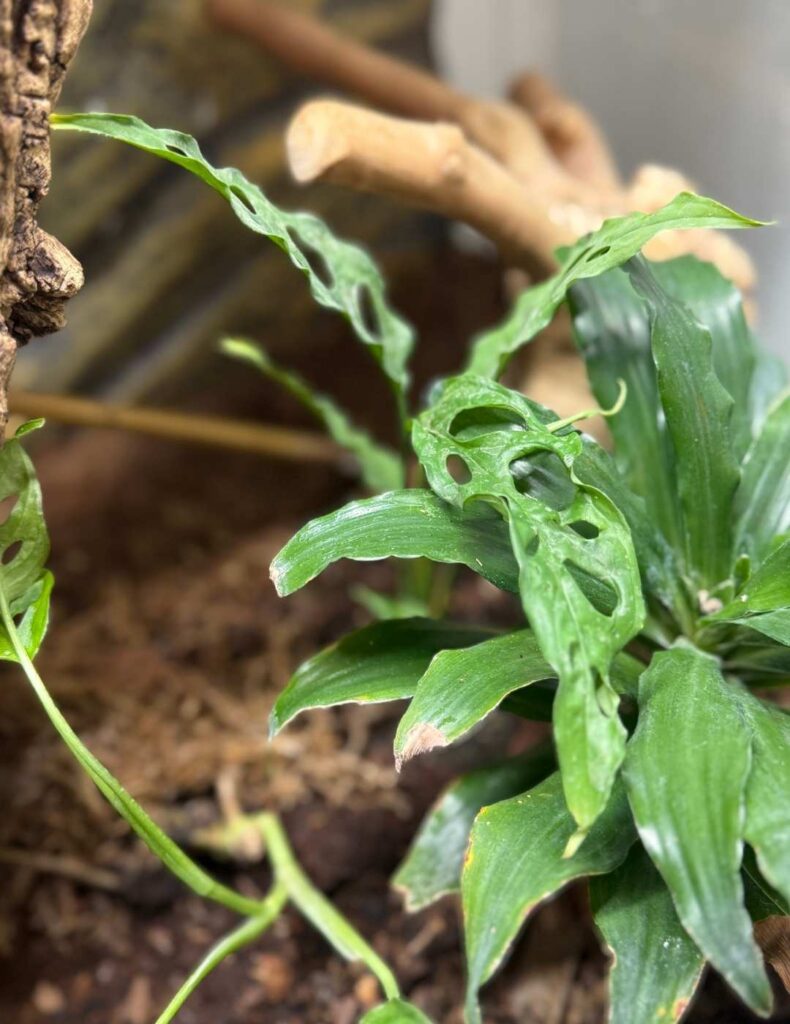
The obliqua has fish bone leaves, with barely any surface area of leaf showing due to the size of the fenestrations. They need higher humidity and better access to light due to the minute surface area that they have for chlorophyll. I keep mine in one of my reptile tanks, which has a higher humidity but never gets soaking at the roots. So far, it’s working well!
Monstera Albo
This is a variegated Monstera which is selected for its white areas on the leaves. They are selected from cuttings that have large areas of white, but sadly this can cause problems once you bring your plant home. The lack of green on the leaves means the plant has less chlorophyll and therefore cannot photosynthesise as well.
This can go two ways. Either the plant doesn’t get enough light and struggles this way, or the owner puts it in the direct sun to up the light levels for the areas that can photosynthesise, but then ends up burning the edges of the leaves as a result.
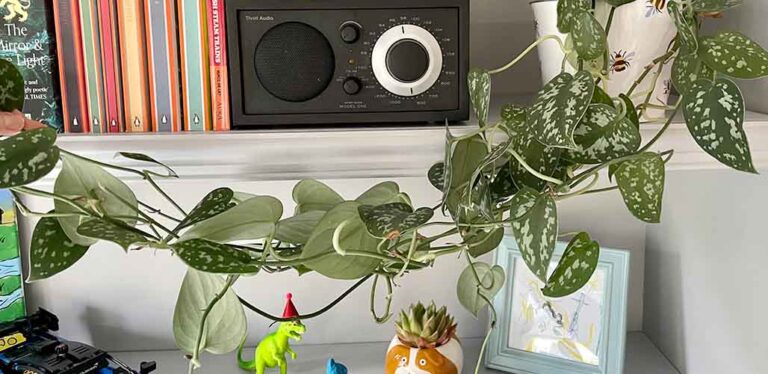
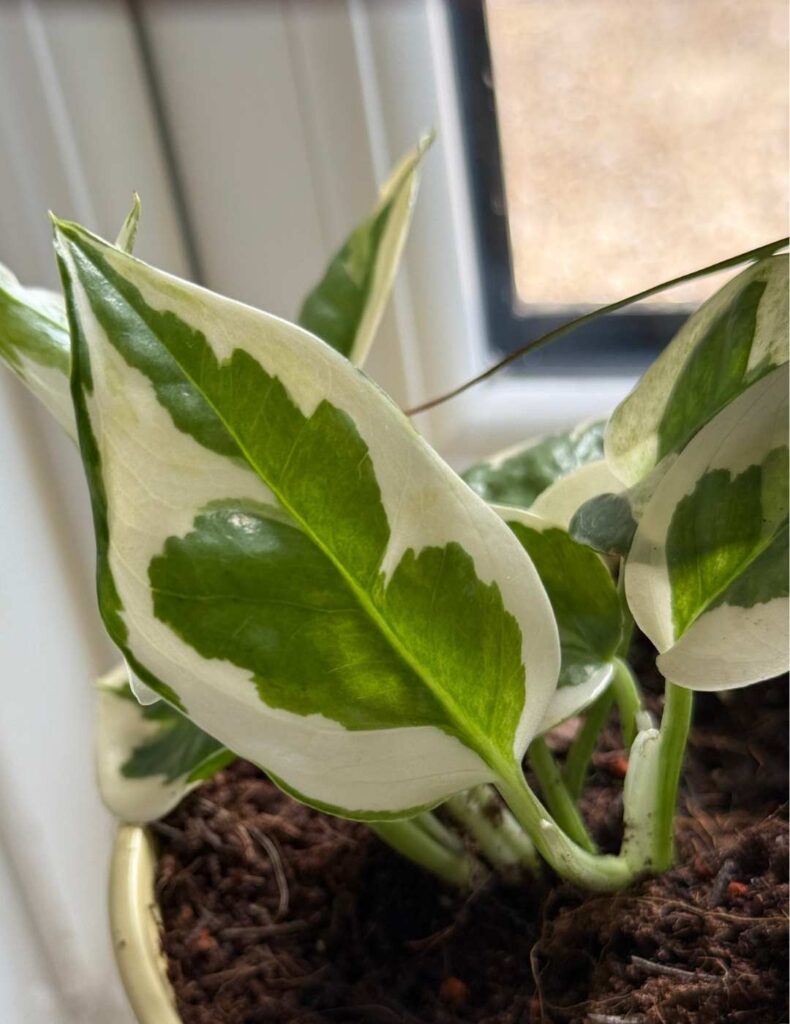
I love how they look, but because of the challenges they have with their care I’m not a fan. The photo below is to show the variegation but it’s one of my pothos, who are similarly temperamental plants but not nearly as costly if things go wrong.
Monstera Dubia
These Monstera plants look so different to the classic swiss cheese plant, it’s hard to believe they are in the same group when they are young. They climb in a way that’s reminiscent of ivy, flattened against boards or a moss pole. However once they mature at the top of their support, the leaves blossom, grow and produce fenestrations.
Monstera Esqueleto
This is one of my dream plants, and I haven’t found a way to get hold of one yet without making my bank account sob. They look a lot like the Adansonii or Obliqua, but their fenestration gaps are even wider and more skeletal.
Monstera Pinnatipartita
Much like the Equeleto, I have had no luck with finding this gorgeous plant in my area, or in finding one that I felt willing to gamble on delivery given the high price. The leaves of this plant are solid and waxy when they are juvenile, but they, like the Dubia, split into exaggerated fenestrations when they reach the top of their support.
I hope you enjoyed reading about all the different Monstera types, and I’d love to hear about your varieties of Monstera in the comments below. I’ll be adding to this list as I add to my collection, so do check back soon!