How To Get Started With Rosemary
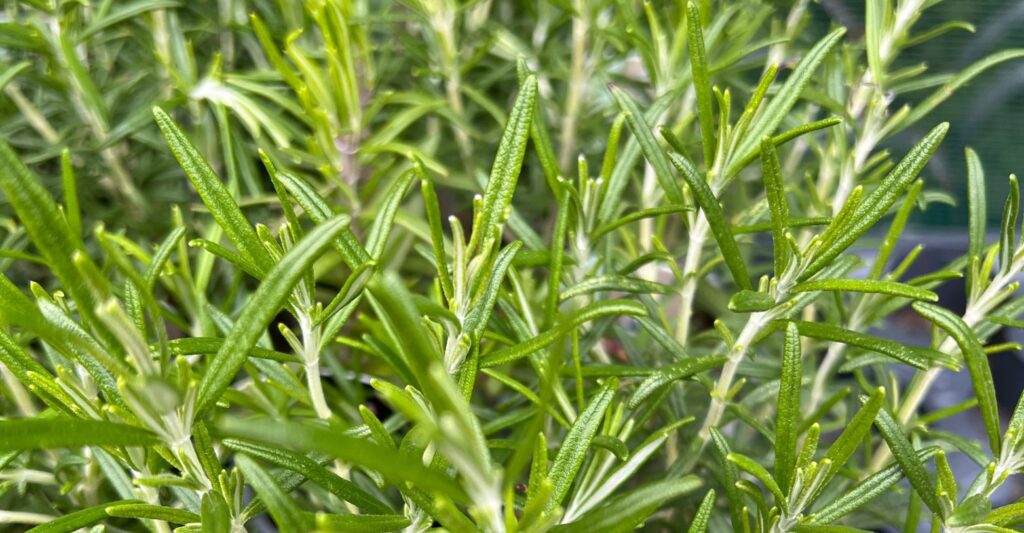
Rosemary needs no introduction. This attractive, aromatic herb is a reliable staple in my kitchen, finding its way into everything from marinara sauce to Sunday roast dinners.
It looks good, smells good, and once you have followed my tricks and tips, I think you’ll find it’s surprisingly easy to keep alive!
Rosemary is a woody perennial that originated in the Mediterranean, and grows natively across much of Europe and North Africa, and parts of Asia. It’s been used in cooking for over two thousand years, and as a medicine for longer. So it’s not a surprise that nowadays rosemary is found in a wide range of varieties, known as ‘cultivars’, that grow in different shapes and sizes.
There are rosemary cultivars that stand upright and reach well over a metre in height. There are varieties than spread flatter and wider, and provide great ground cover. And there are variations in essential oil composition that make some cultivars taste stronger than others, or have an unusual flavor or smell. So lets start by taking a look at some of my favourite types of rosemary, to help you pick your first plant.
Popular Rosemary Varieties
If you’re planting in a bed outdoors, I recommend starting with a hardy variety like Miss Jessops, which grows so well it’s used for hedging, or Rosemary Arp, originally from Texas, which is famously good at surviving the cold, and has a fun citrusy flavor. For containers, if you plan to let your rosemary flower (more on that later!) I like Roman Beauty, which is quite compact with a long flowering period, or Blue Cascade; a semi-trailing variety that the bees love.
If your priority is flavor, Barbecue is a popular one with chefs, that’s also quite fun. The large leaves taste great, and the woody stems, stripped of leaves, make great kebab skewers. But the joy of rosemary is that all varieties tend to look good and taste great. So if you set your heart on a particular cultivar and then can’t get your hands on that type, don’t worry. You’ll have fun with any variety of rosemary.
Your First Rosemary Plants
The quickest way to get started with rosemary is to buy a small established plant, or plants, from a garden center or nursery in your local area. Grocery store plants may seem like a bargain, but are often very young seedlings that have been bulked up by overplanting in the same pot. This overcrowding means they need separating and repotting early on, and I’ve found the failure rate for these plants rather high. Nurseries will also be more likely to have a range of different varieties, and will be able to tell you which variety will suit your needs best.
If you’d prefer to grow your own plant from scratch, you have two options – cuttings or seeds.
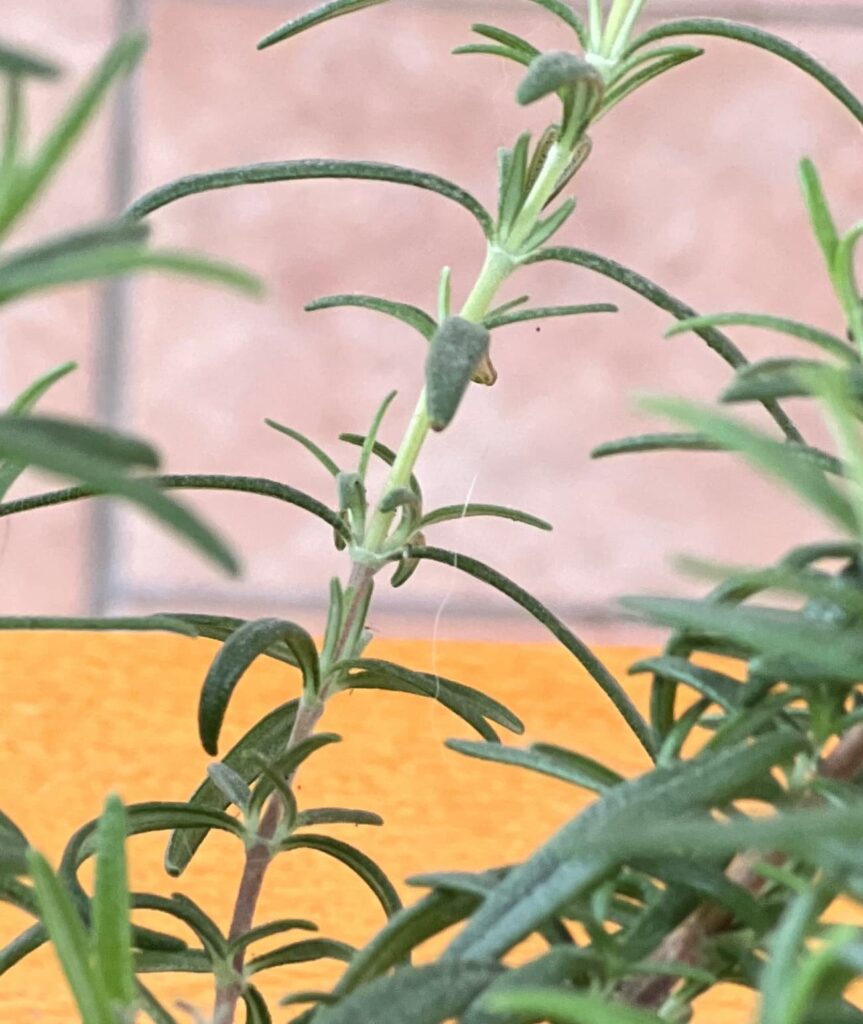
Growing rosemary from seeds is only for the very patient! Rosemary seeds take at least 2-4 weeks to sprout, sometimes longer. They have low germination rates, so many of the seeds never sprout. And, once they’ve germinated, the delicate seedlings can take years to become large enough for regular harvesting.
Growing rosemary from cuttings is just as slow in the early stages, but is more reliable, takes less day to day attention, and produces a mature plant that can be harvested faster than seeds do. Let’s take a look at both options.
Rosemary Seed Success
If you do want to try growing seeds, I recommend scattering them across a tray of compost then using your fingers to lay a very thin layer of extra compost on top of the seeds. Rosemary needs light to germinate! Next up, pop your tray in a very warm sunny window, or under growlights. (My growlights bring joy to my dark British house every day – if you can afford even a small cheap set, I recommend getting some – you won’t regret it!)
Put a clear plastic cover over the tray to keep the warmth in. But don’t seal it. Open it up every day or so and use a spray bottle to keep the compost moist. And then just wait. (And wait. And wait. And…. you get the picture!)
Top tip: if you’re feeling extra patient, pop your seed packet in an airtight container and put it in the freezer for a couple of weeks before sowing them. This temperature change tricks the seeds into thinking spring is here, and is claimed to increase the number of seeds that germinate.
The Three Inch Rule is helpful once your seeds germinate. Transplant your seedings to three inch wide pots, when they reach…. three inches tall! (That’s 7-8 cm for those using metric).
Growing your own rosemary plants like this is very satisfying. But for the highest satisfaction to effort ratio, I personally prefer the other approach.
Cuttings, Cuttings, Cuttings
If you have a friend with an established rosemary plant that you like the look and smell of, the simplest way to grow your own plant is to take a few cuttings from their plant. (Do ask permission from your friend first!)
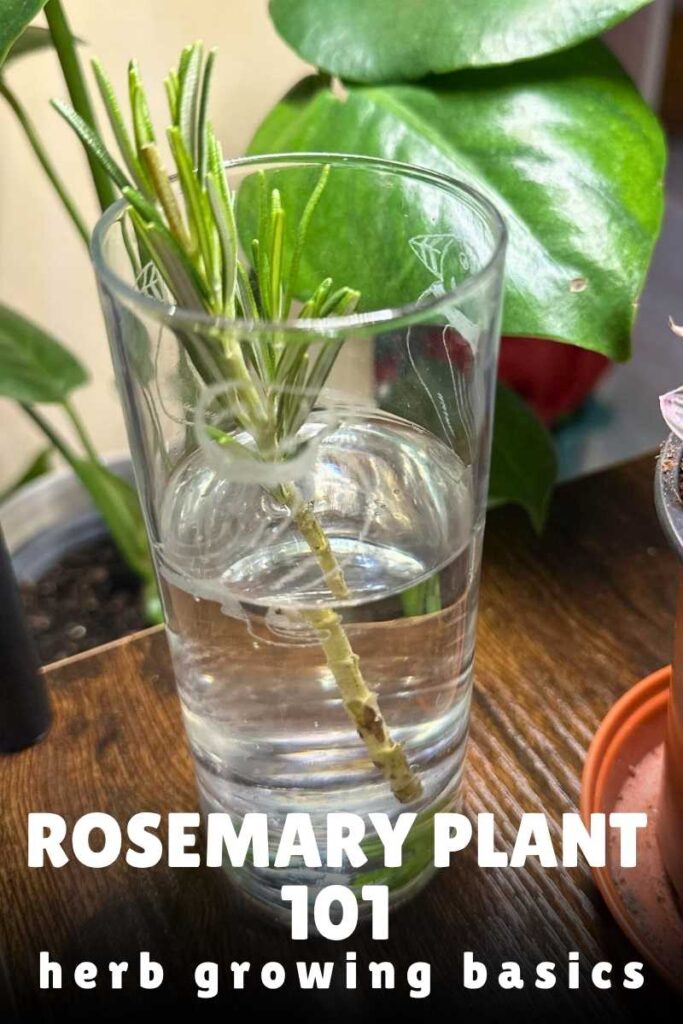
You’ll need to take young flexible shoots, rather than the older woodier stems, and cut 4-6 inch (10-15cm) long sections from the tips. Then strip the leaves from the bottom half of the stem, and place it, stripped end down, in a glass of water. Adding some rooting powder to the cut stem will help it grow bigger, faster – but don’t worry if you don’t have any. It isn’t essential.
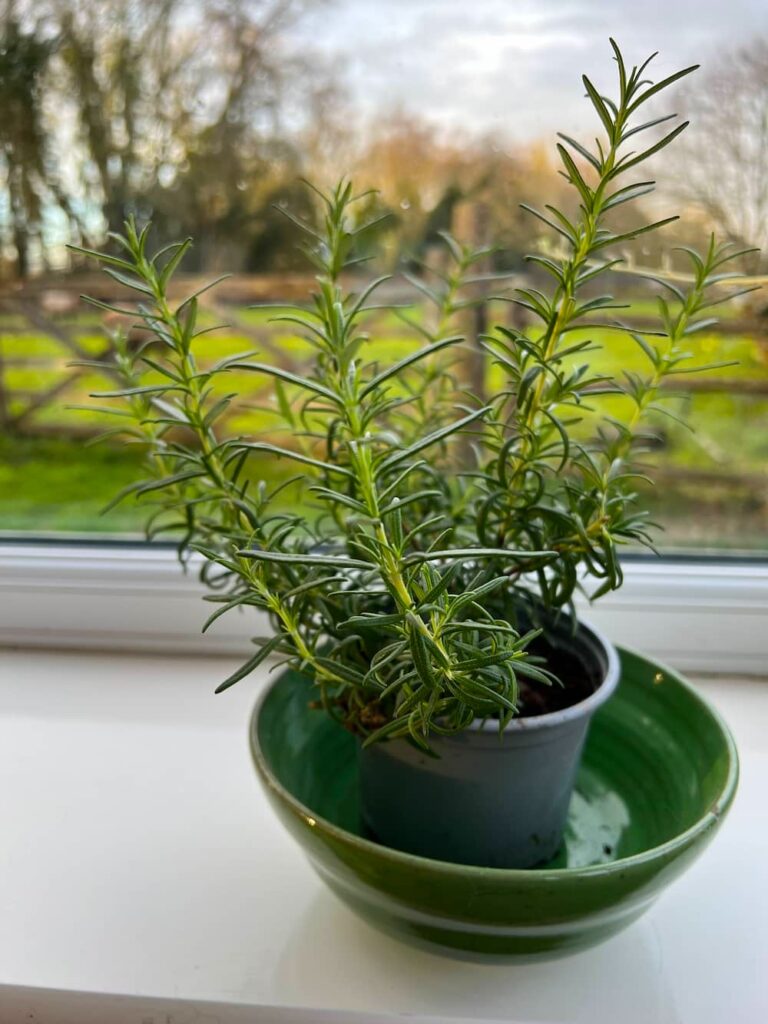
Here’s one I set up recently, to test the theory that you can grow plants from grocery store packets of cuttings, designed for cooking with. I’m not hopeful, as the stem on this was starting to get quite woody. But it will be fun finding out!
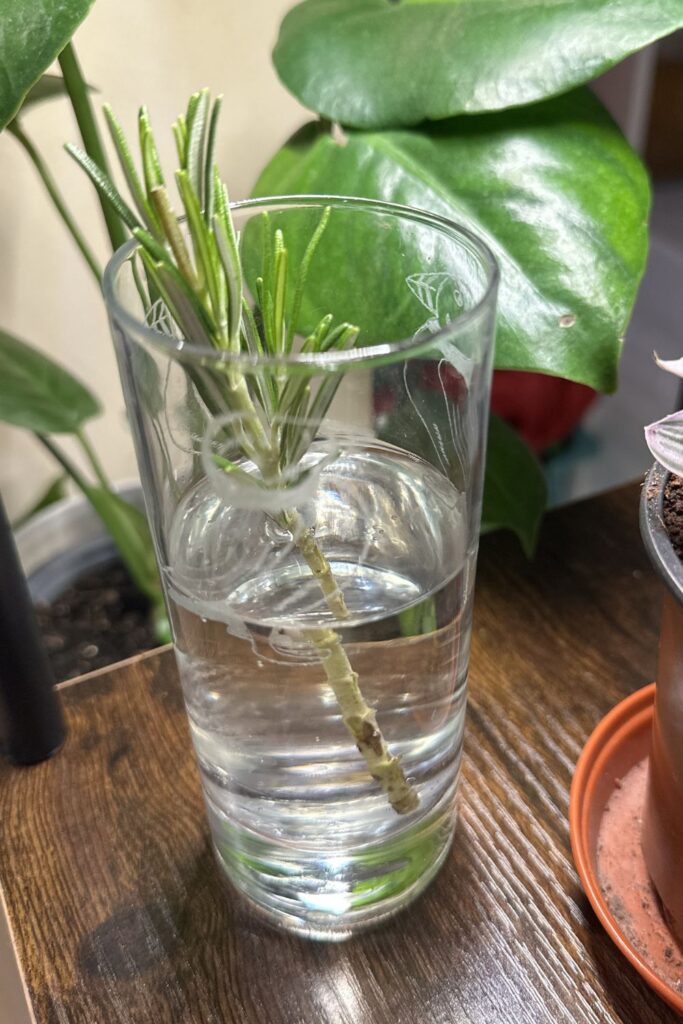
Keep your cutting in bright indirect light, and swap the water out for fresh roughly once a week. It can take up to 6 weeks for roots to appear, so don’t give up too soon. The good news is your cuttings don’t need any extra care in the meantime.
Once your stem has several roots that are 1-2 inches long, gently transplant it into a pot (see below for potting mix tips) and Hey Presto – you’ve got your own rosemary plant.
Now let’s look at how to help it thrive.
Not All Herbs Are The Same
My rosemary is not allowed to live near my basil. Because when I put two plants side by side, my husband treats them as equals, with equal needs. And I get drowned rosemary, or very thirsty basil!
Rosemary is technically a ‘woody perennial’. It can grow for years, making thick strong stems. If you’re planting it in a permanent spot outside, make sure to leave room for it to grow. If you have bought a grocery store plant, consider repotting it and separating overcrowded seedlings into separate containers. This helps make sure each little plant gets a good share of the nutrients it needs to grow strong.
Mature rosemary plants are pretty resilient. But it takes a little time for them to reach that stage. And the environment you plant them in is a big factor in whether your rosemary just survives, or thrives.
Rosemary Wishes It Was At The Seaside…
Rosemary evolved in rocky soil on dry, sunny, Mediterranean coasts. To keep it happy, offer it as close to those conditions as possible. Starting with as much full sun as possible.
If you’re growing rosemary indoors, aim for a south or east facing window. Outdoors, place your rosemary plant in your sunniest spot. Imagine the hot coastal sun passing over the whole sky uninterrupted, bathing your rosemary in light all day. That’s your gold standard!
If your plant gets too little light, it will be leggy, thin, and slow to grow. Given enough light, rosemary will have more energy for growth, and also more energy to make the tasty essential oils that make it so delicious in your cooking.
…Playing In The Sand
Coastal Mediterranean soil is rocky, nutrient poor, and free draining. You can mimic this in your rosemary’s pot, by mixing some good quality potting soil with sand, to thin out the nutrients and improve the drainage. (Check out my oregano article for ideas on how to turn this into a project that also keeps your kids busy for half an hour!).
Studies show that rosemary grows biggest in loamy soil types, but grows a better ‘quality’ leaf with more concentrated essential oils in sandy soil, so making this potting soil and sand mix is a good compromise to help you grow a healthy, tasty, rosemary plant.
Don’t Drown Your Rosemary Plant
Like many new gardeners, the biggest mistake I made with my early herbs was overwatering them. Overwatering your rosemary will clog the air pockets in the soil, and starve the roots of oxygen. It will let fungal pathogens that contribute to root rot move in. And it can kill your plant very quickly indeed.
On the plus side, you don’t need to worry about underwatering it! Rosemary is extremely drought tolerant. In fact, studies show rosemary actually produces more essential oils, and therefore tastes stronger, when it’s under ‘drought stress’.
Water your rosemary sparingly, letting the top inch of soil dry out between waterings. This mimics natural rainfall patterns. If your plant is in a pot, make sure the pot can drain freely too. Good drainage really helps protect your plant from diseases that love the damp.
Trim, Trim, Trim!
Rosemary loves a haircut, so don’t be shy about trimming those tasty shoots back. Trimming the ends of shoots encourages more side growth, which helps make your plant bushier. And a trim lets light reach inner stems and encourages good airflow around the stems. Which helps reduce the risk of fungal infections like powdery mildew.
You can be pretty bold with your trimming as long as you stick to green stems. The woody stems of your plant are the old, structural material. They’re slow to make new shoots. Green stems grow faster, so aim to cut newer, flexible, green stemmed shoots off where they’re still green, to encourage even more new growth.
You can trim with your kitchen scissors. In fact if your scissors won’t go through easily, that’s a good sign you’re too far in to the woody part of the plant. Just make sure your scissors are clean before you start, so you don’t introduce pathogens into the cut ends.
If you trim more rosemary than you want to cook with right now, just tie it into small bundles with a piece of string, and hang it high up to dry. Dried rosemary will last for months in an airtight container. And the drying process will make your kitchen smell amazing.
Top Tip: don’t dry rosemary in the microwave. It does technically work – but the rapid drying causes the flavor-carrying oils to evaporate. Air-drying slowly preserves the taste.
Overtime, regular harvesting will lead to a healthier, tidier, plant, and even more leaves available to harvest next time.
Rosemary Flowers: The Good, The Bad, and The Beautiful
There’s only one disadvantage to rosemary flowering, in my opinion, and it’s a small one. Rosemary does grow new leaves at a slower rate, while it’s making flowers.
But I think it’s worth that sacrifice. Mature rosemary blooms at least once a year, usually in spring or early summer, with a profusion of pretty little flowers that the bees and butterflies love.
The flowers don’t seem to reduce the flavor of the leaves. In fact, studies show that rosemary produces the most oil when it’s recently been pollinated, and is turning those pretty flowers into seeds. So my flowers support the bees, and the bees support my cooking in return!
My advice is to let your outdoor plants flower freely. If you find yourself short on rosemary to cook with, the answer is more rosemary plants, not fewer flowers!
Rosemary In Winter
No rosemary plant loves the winter. But they tend to muddle through with a little support.
Indoors, place your plant in the best lit window you have, or pop it under grow lights if you can. I’m very short on south/east facing windows at home. And my desert lovers don’t all fit on my growlight shelving, so I make them take turns! Rotating them every weekend, or when the ones on the windowsill start to look sad, seems to work well as a compromise. And it’s a good reminder to take a proper look at them all, and see how they’re getting on.
Outdoors, your strategy needs to vary depending on the variety you’ve planted. Studies have shown that several different cultivars of rosemary, including Rosemary Barbecue, can survive frosts in southern Canada, and still keep good oil content (and hence good flavor) even after taking frost damage.
If you’ve planted your rosemary outdoors, don’t worry! But if your temperature tends to go under 40F (-5C) in the winter, or you know your variety is a less hardy one, it’s sensible to give it some winter protection, or bring it under shelter in the coldest months. Rosemary still needs light year round, so don’t hide it away in a dark shed with your fuchsias. A greenhouse, polytunnel (hoop house), or sheltered porch that still lets light in is perfect.
You may notice the flavor of your rosemary changes in winter. That’s because different temperatures and humidities cause your plant to make different proportions of the oils in the leaves. But it will still taste great. Just harvest a little more gently at times when you notice it’s growing more slowly.
Preventing Pests and Disease
Rosemary’s aromatic oils are natural pest repellants, so on the whole your new plant will be relatively pest resistant. In fact it’s so unpleasant to pests, that studies have shown planting it alongside plants like sweet peppers, protects the other plant from pests too!
Rosemary’s essential oils are also antimicrobial – they slow the growth of some bacteria and fungi. But rosemary is still prone to fungal disease in high humidity.
Remember, rosemary is a desert dweller. Give your plants plenty of space between them so they get good airflow and dry out properly between waterings, to reduce the change of powdery mildew and mold. And don’t get carried away with the mister, when you’re doing the rounds for your jungle loving houseplants.
Your Rosemary Journey
I hope I’ve inspired you to get started with your own Rosemary plant. And given you the confidence to believe you can take care of that plant for several years, while it keeps giving you more and more flavor and joy.
Whether you start out with one healthy nursery plant, several good cuttings, or a lot of seeds, the secret to happy rosemary is lots of light, a little water, well draining soil with moderate nutrients, buckets of patience, and a big pair of scissors!
You’ve got this. Have fun!
References
“Salvia rosmarinus (Ro)”. Royal Horticultural Society. https://www.rhs.org.uk/plants/384211/salvia-rosmarinus-(ro)/details
“Influence of rooting powder on propagation of sage (Salvia officinalis L.) and rosemary (Rosmarinus officinalis L.) with green cuttings”. Paradikovic et al. 2013. Agriculture. https://repozitorij.fazos.hr/object/pfos:3500
“Controlled drought stress affects rosemary essential oil composition with minimal impact on biomass yield”. Formica et al. Industrial Crops and Products, 2024. https://www.sciencedirect.com/science/article/abs/pii/S0926669024012925
“Effect of soil type on growth, productivity, and essential oil constituents of rosemary, Rosmarinus officinalis” Hendawy et al. Asian Journal of Agriculture & Biology. 2017. https://www.asianjab.com/media/2017/12/OA-AJAB-2017-07-093_OK.pdf
“Characterization of rosemary cultivars for ornamental purposes” Cervelli et al. Acta Horticulturae. https://www.actahort.org/books/1000/1000_12.htm
“Effect of Different Levels of Pruning and Nitrogen Fertilizer on the Quality and Quantity of the Volatile Oil of Rosmarinus officinalis L.”. Abbas et al. 2023. IOP Conf. Series: Earth and Environmental Science. https://iopscience.iop.org/article/10.1088/1755-1315/1158/4/042022
“Rosemary (Rosmarinus officinalis L.): Impact of drying on its flavor quality”. Rao et al. 2007. Journal of Food Quality. https://onlinelibrary.wiley.com/doi/abs/10.1111/j.1745-4557.1998.tb00508.x
“Influence of harvesting stage and inorganic and organic fertilizers on yield and oil composition of rosemary (Rosmarinus officinalis L.) in a semi-arid tropical climate”. Sigh & Guleria. 2013. Industrial Crops and Products. https://www.sciencedirect.com/science/article/abs/pii/S0926669012002592
“Impact of frost on crop growth and diterpene content of rosemary (Rosmarinus Officinalis L.)”. Bandara et al. 2008. Acta Horticulturae. https://www.actahort.org/books/765/765_28.htm
“Seasonality modifies rosemary’s composition and biological activity”. Lemos et al. 2015. Industrial Crops and Products. https://www.sciencedirect.com/science/article/abs/pii/S0926669015001570
“Intercropping Rosemary (Rosmarinus officinalis) with Sweet Pepper (Capsicum annum) Reduces Major Pest Population Densities without Impacting Natural Enemy Populations”. Li et al. Insects. 2021. https://www.mdpi.com/2075-4450/12/1/74