Monstera Growth: How to Get Bigger Leaves
Monstera plants are famously huge. So it can be incredibly disappointing when you bring home your new plant, and it just fails to grow the impressive leaves you’d imagined.
If your Monstera is not flourishing as you’d expected, it might need repotting in different soil, or changes in lighting or water amounts. We’ll look at fixing those problems in a moment.
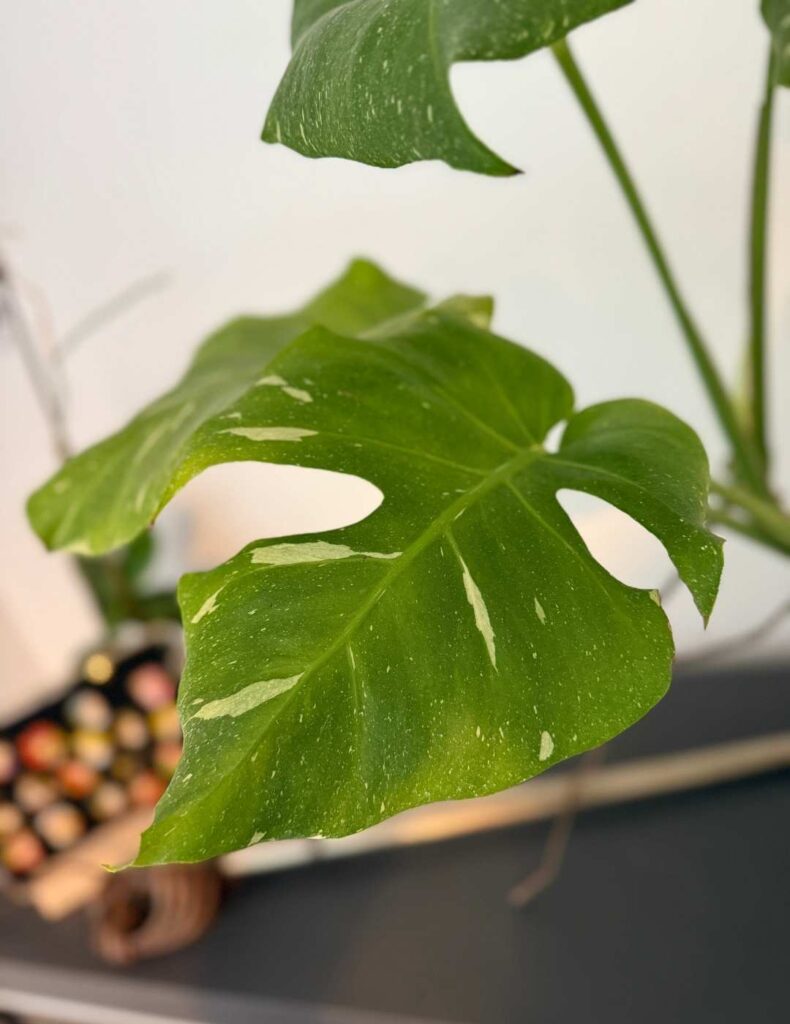
But your plant might just be growing exactly how it’s supposed to, because of the type of Monstera it is. People are often surprised when I let them know that the Monstera isn’t just the classic swiss cheese plant, there are lots of varieties and they can look very different. Some grow huge leaves, others will remain cheerfully tiny for the duration of their lives.
Not All Monstera Types Have Big Leaves
Monstera plants in stores are often labelled as ‘Monstera’ alone. Which is fine if you don’t mind how your plant will grow, or if your attitude to plant care is more on the casual side of things.
But if what you want is a plant with massive, show stopping fenestrated leaves, you should know that not all of the varieties grow this way.
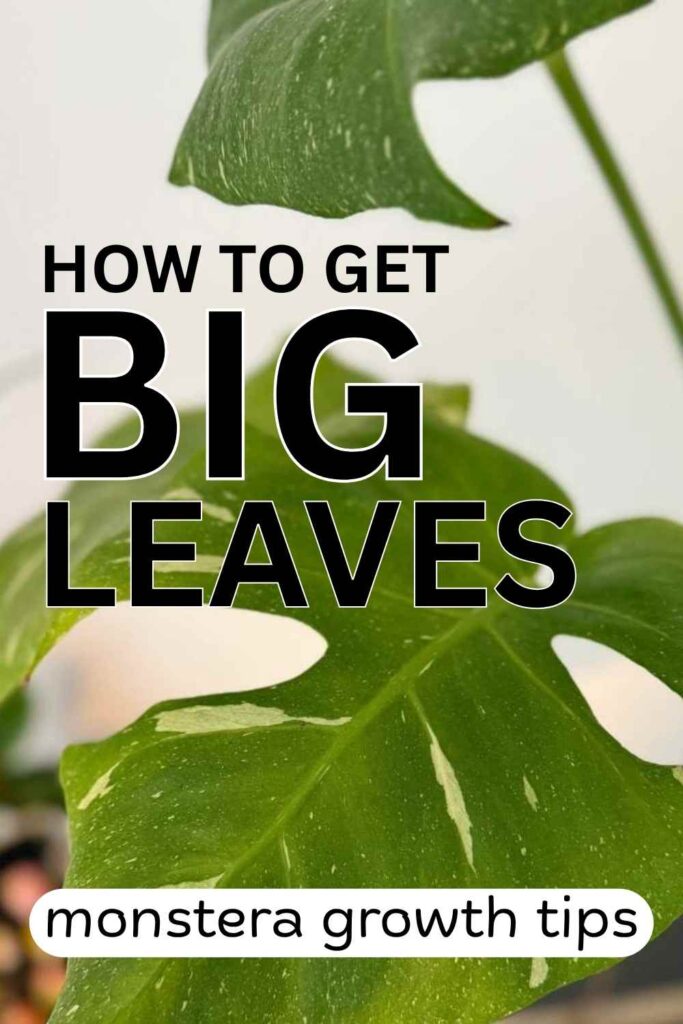
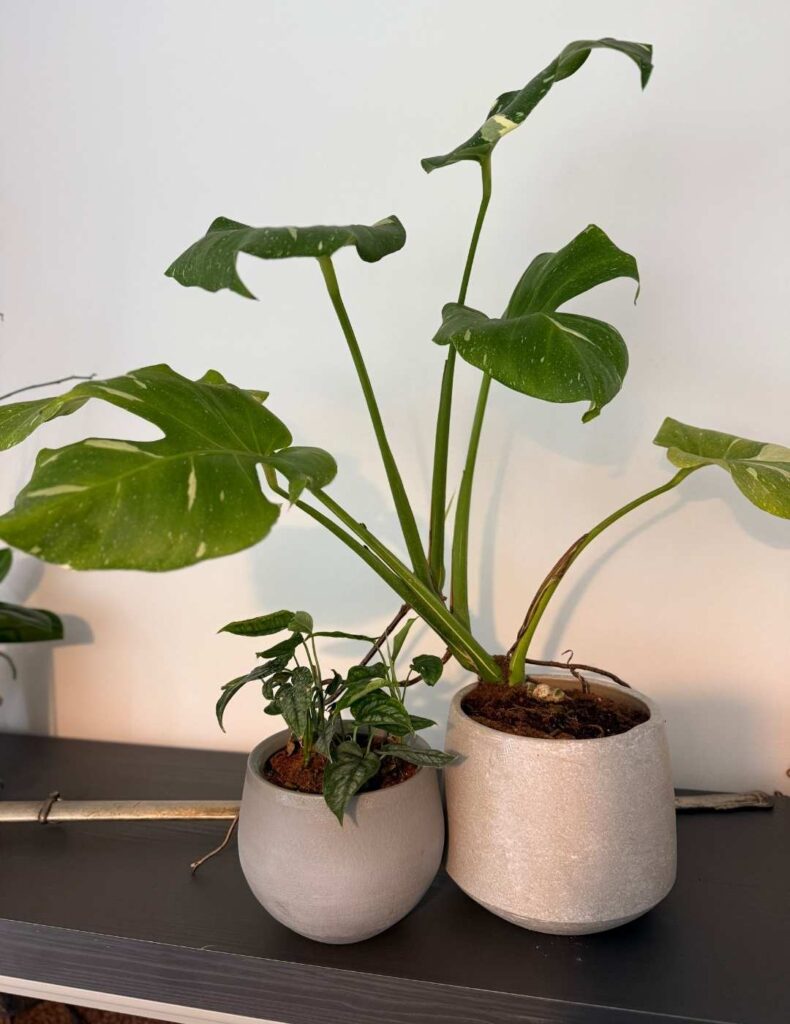
This image shows my monstera thai constellation next to my monstera siltepecana. The size difference is massive.
For big leaves, you want to look for a Monstera Deliciosa. This might be labelled as Swiss Cheese Plant. And when they are small, they won’t have those classic gapped leaves, but these will come when they are more developed.
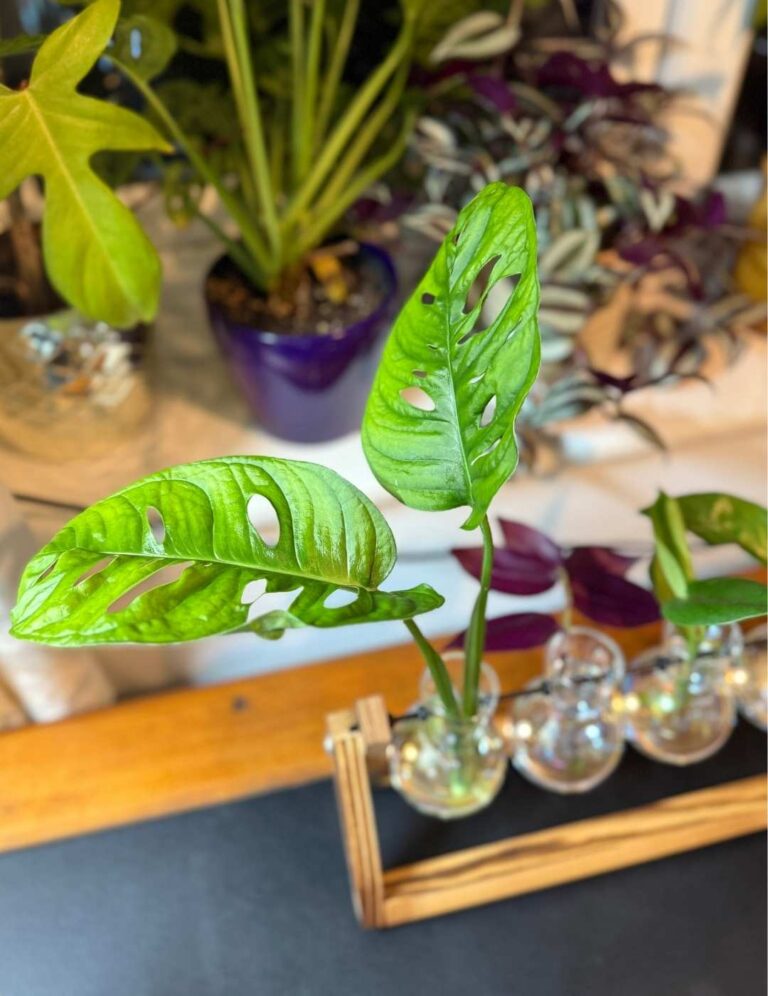
If your plant had fenestration gaps when it was very small, it is less likely to grow huge leaves later on. Another common store bought variety is the Adansonii. A gorgeous plant, but it’s never going to grow very big leaves.
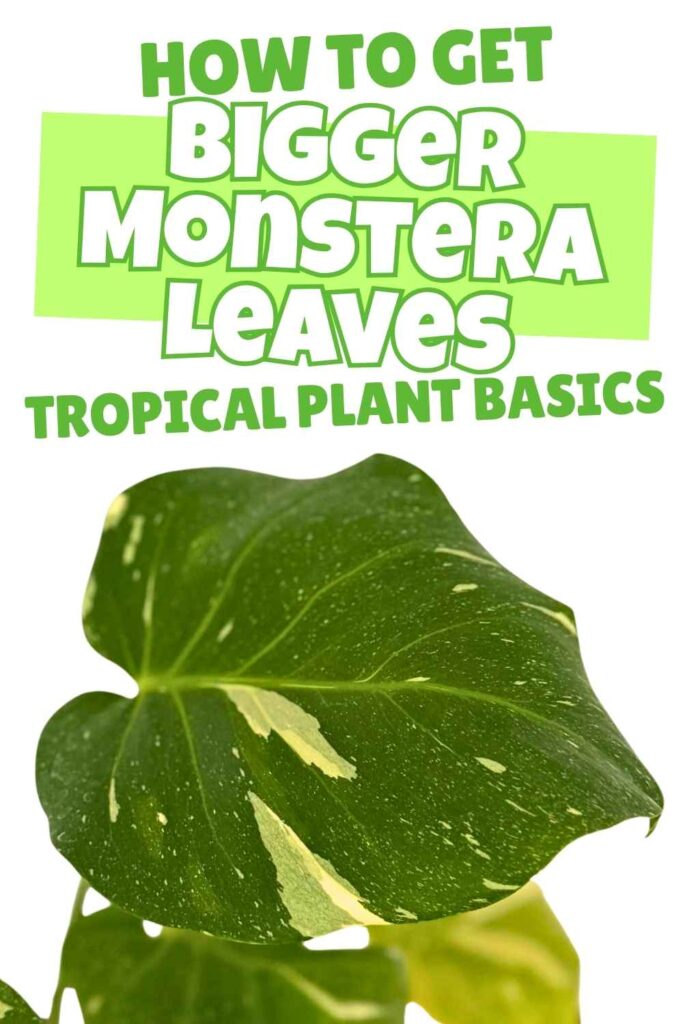
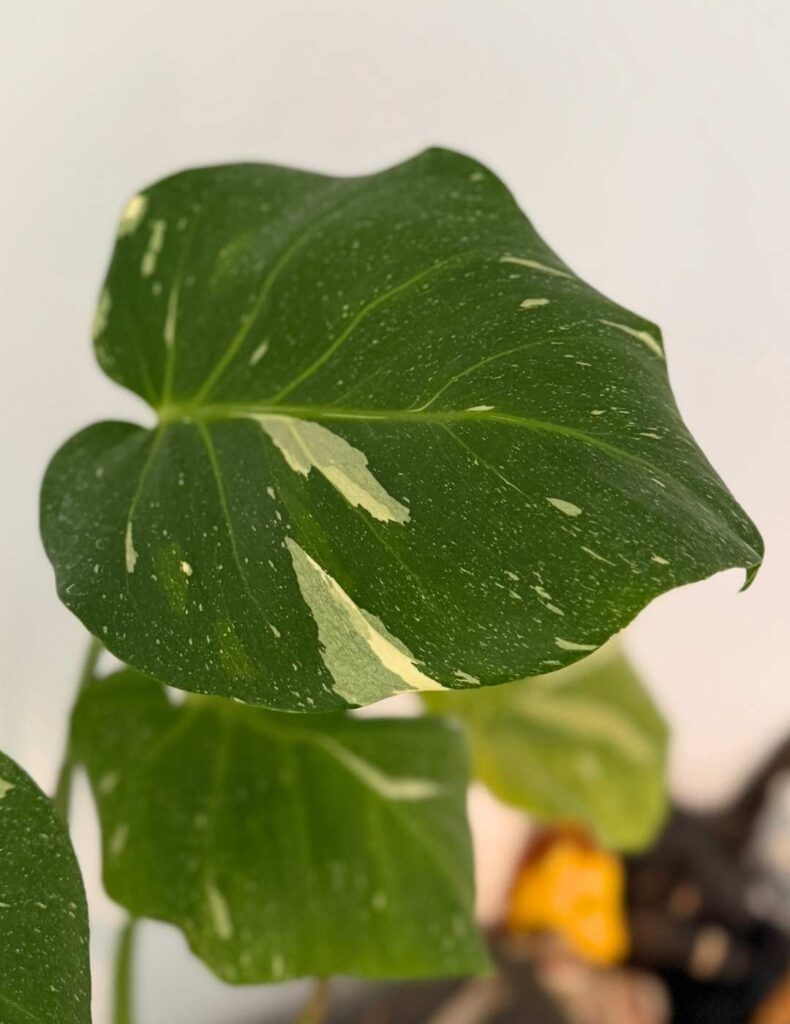
On the other hand, Monstera Thai Constellation will also grow into a huge plant. It’s a bit more expensive and has a speckled variegated pattern, but both that and the Deliciosa will grow really big leaves, given the right environment.
Healthy Monstera Environments
Monstera plant growth, assuming you’ve got the right type now, is directly related to its environment. For the largest, happiest leaves you need the correct levels of light, water, and space. Your plant will also need support, and a careful balance of substrates at the roots.
We’ll look briefly at light, water and soil, which you’ll find bigger guides to linked elsewhere on the site. Then we’ll deep dive into the support and space issue, which are most directly related to this idea of massive leaf growth.
The Right Light
Monstera famously love bright, indirect light. This means for most of us either life on the windowsill, or near to it. They naturally want dappled light like they would find under the canopy of the rainforest, so whatever you can do to reflect this as well as possible in your home will work.
Water Regularly
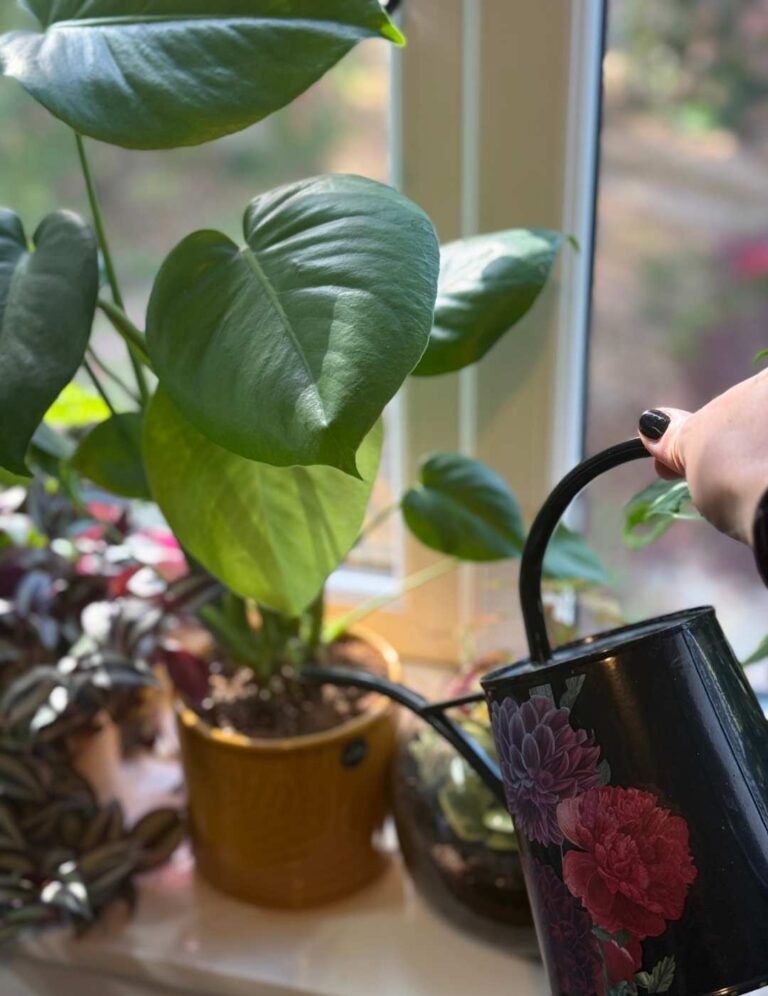
Monstera like a big drink of water, then to be left until the substrate is all dried up again. Pour water from your can into the pot when the first inch or two of soil is dry to the touch.
Humidity
Whilst plants drink through their roots, monstera will grow their biggest leaves if there is also moisture in the air. You’ve probably noticed your new leaves are coiled up and unfurl. But if there is not enough moisture in the air, that part of the process can stall and the leaves can even be stuck, never to open at all.
Soil Needs to Air
Your usual potting soil won’t promote good leaf growth. You want to mix it up, my preference is 50% potting soil, 25% perlite, 25% orchid bark.
Give them Support
Growth requires support. Big leaves are heavy, and they are naturally only supported by stems. If you want your monstera to have the best chance of reaching as high and wide as it can, that stem needs a helping hand.
In the wild monstera climb up the sides of trees. The presence of the bark tells the plant it’s safe to keep going, and using a moss pole replicates this in your home.
And the same is true for growth along the horizontal path as well as the vertical.
Space Matters
Healthy growth is impossible if your plant has nowhere to go. Whilst I do place my monstera close together when the weather is hot to increase humidity, they need to be able to stretch under the soil as well as above it. This means knowing when to repot.
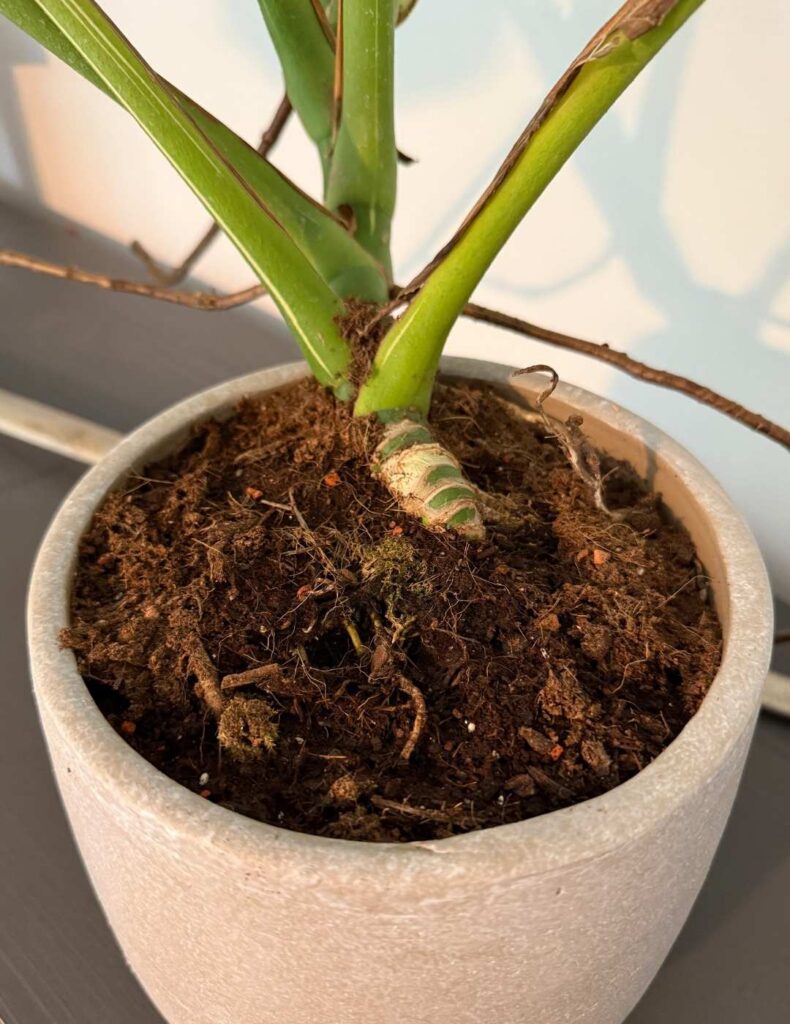
I tend to not repot monstera very often, maybe once every year or two. I do this by eye however, and not by time.
Look at the roots, if they are stretching out of the top of the pot and beyond the plant might need more space than it’s currently given. Likewise if you can see a higher proportion of root than substrate at the top of the pot.
Finally, look at the balance of the leaves to the pot. My Thai Constellation is due a pot upgrade, and you can see that it looks top heavy. The roots have grown out to the sides, the leaves look unsteady and the width of the plant itself is well over more than twice the diameter of the pot.
So it’s time to give it some more space, therefore more nutrients and an easier environment for me to keep healthy.
Clean the Leaves
I know this sounds strange, but I occasionally wipe the leaves of most of my houseplants. This is because when household dust settles on them it blocks the stomata and makes the energy gathering process of photosynthesis less efficient.
You only need to do this every few weeks, or when you notice them getting a bit dusty, but it’s a good way to ensure they are working as efficiently as they can.
Pruning
Although you might not think of the monstera as a plant that needs pruning, i’m certain it makes a big difference just as it does with most. Putting all their energy into multiple leggy vines is going to leave them with less to spare for growing fewer larger leaves.
I use this process to make the most of propagation too, but just occasionally looking at your plant and deciding whether it’s wasting energy on limbs that look more like runners if a great plan. And if you do all of these things, and you have the right monstera species, there is no reason you won’t end up with amazingly large leaves in your future!
You might also enjoy