Peace Lily Cold Tolerance – How Cold is too Cold?
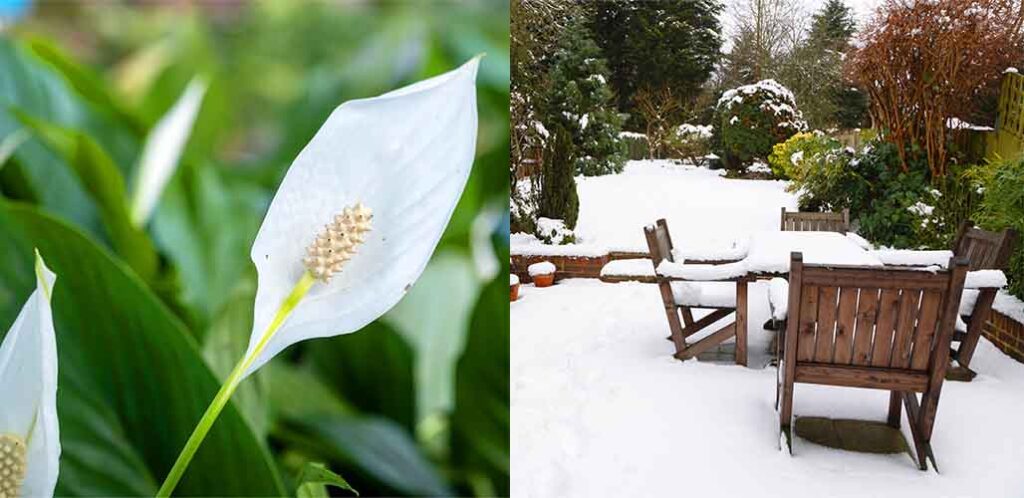
Peace lily cold tolerance is not great, since they are tropical plants. The peace lily is a perennial known for its striking dark green foliage, offset by white blooms and for its air-purifying abilities. This tropical plant needs special care when the seasons change. I’ve learnt the hard way that it can suffer damage when temperatures drop below 60°F. But, today I’m going to share my top tips so your peace lily won’t experience the same fate! In this guide, I’ll explore the best temperatures for peace lilies, signs of cold damage, and how to revive a cold peace lily plant.
Contents
- Can peace lilies survive the winter?
- Peace lily cold tolerance – how cold is too cold?
- Can a peace lily recover from the cold?
- Signs of cold damage in a peace lily
- How to revive a cold damaged peace lily
- How do I care for a peace lily through the winter?
- Can I put my peace lily outside?
Can Peace Lilies Survive the Winter?
Peace lilies are tropical plants that thrive in a warm, humid climate and cannot tolerate the cold. They prefer temperatures between 68 and 85°F and can only survive outdoors in the winter in warm, humid climates. However, in cooler climates, you can keep a peace lily alive in the winter by keeping them warm inside your house.
How Cold is Too Cold for a Peace Lily?
While you want to keep peace lilies in temperatures above 60°F, these plants can tolerate temperatures as low as 45°F. But when it gets this cold, the plant will probably stop growing. Peace lilies cannot withstand temperatures below 40°F even for a few hours. Cold shock can turn the leaves black, and the plant will start to decay.
Can a Peace Lily Recover from Cold?
While peace lilies definitely don’t like cold conditions, these plants may recover if only exposed to the cold for a short period of time, and none of the new growth has suffered damage. However, if they are left in a very cold temperature for a long period of time and the plant has started to decay, it’s unlikely that you’ll be able to revive your peace lily.
What are the Signs of Cold Damage in a Peace Lily?
Even one night of being left out in the cold can damage a tropical plant like the peace lily. Here are the three most common signs.
1. Black-Edged Leaves
Probably the first indication that your peace lily has cold damage is the leaves turning black around the edges. If the plant isn’t moved to a warmer temperature, the entire leaf will turn black. Once this happens, the foliage will eventually dry out completely and need to be removed.

2. Damage to Older Leaves
If your peace lily was only out in the cold for a short time, it might only damage the older leaves. As long as the newer leaves are untouched, then your plant should be able to recover.
3. Root damage
Unfortunately, once the roots of the peace lily have suffered cold damage, the plant is unlikely to survive.
How to Revive a Cold-Damaged Peace Lily
The first thing you want to do to revive a peace lily that’s suffered cold shock is get it into a temperature in its comfort zone, which is between 68-85°F. Never place this plant too close to a heat source, as this will only cause more problems.
Remove any dead leaves that have turned black and dried out. Leaves that are only partially damaged can be left alone. If any parts of the plant are soggy, they also need to be removed, or it could spread to the rest of the plant. Water as you would normally, and be patient. If your peace lily has temporarily gone dormant, it may take some time for it to start growing again.
How Do I Care for a Peace Lily During the Winter?
As the days get colder and shorter, peace lilies require more attention as this tropical plant becomes quite delicate in the winter. If you’re doing the same plant care routine all year, you could unintentionally be damaging this fragile plant. Here are my top 3 tips to help ensure your peace lily survives throughout the winter.
Provide Sufficient Light
Winter brings shorter days and less daylight, which affects the plant’s overall metabolism and reduces its growth. You want to find a spot for your peace lily that gets sufficient daylight but isn’t so close to a window that the plant is at risk of getting a cold draft.
Avoid Fertilizing
Since peace lily growth will slow or stop due to reduced amounts of sunlight, stop fertilizing it during the fall and winter. The plant won’t be able to process the excess nutrients, which can build up in the soil and damage the roots. In fact, over-fertilization is one of the most common causes of the poor health in peace lilies. They only need to be fertilized about every six weeks starting in the late winter to encourage blooming in the spring and summer.
Avoid Overwatering
Overwatering is another leading cause of peace lily problems. Allow the plant to dry out between waterings, and always use room-temperature water, never cold water, because it can shock the plant. Since your peace lily doesn’t get as much light, it takes longer for the soil to dry out, and you must reduce the amount of water you’re giving it compared to the growing seasons.
Can I Put My Peace Lily Outside During the Summer?
You can set your peace lily outside for the summer. But choose a shady spot, or it could suffer from sunburn if it gets more than a few hours of direct sunlight, just like our skin. Even a shady spot gets plenty of indirect sunlight throughout the day.
You’ll also want to acclimate this plant by setting it outside gradually over a week or two. Start with one or two hours a day once the weather is consistently above 60°, and then increase its outdoor time until it is able to endure a full day outdoors.
When Should I Bring my Peace Lily Inside?
Although peace lilies are usually houseplants, they can do well outdoors during warm summer months. If you live in a colder region, make sure to bring this plant indoors in the fall before the temperatures drop. Mid-September is a good time to relocate your peace lily back indoors for most regions. Place your peace lily near a window that gets bright, filtered light but not direct sun because it can burn the leaves.
Peace Lily Cold Tolerance – Summary
Peace lilies do not have much tolerance for the cold. Anything below 40°F is extremely dangerous for this tropical plant. Ideally, they should be kept in a comfortable temperature of between 68 and 85°F. But that doesn’t mean the peace lily can’t survive the winter indoors, provided they get some extra care that includes enough light, moderation in their water supply, and a full stop to fertilization.
More Houseplant Care Guides
- Is there such a thing as too much light for plants?
- Sun tolerance of fiddle leaf fig plants
- Are olive trees worth the price?
- How much less water do houseplants need in the winter