Monstera Light Requirements: Placing Your Plant
Monstera plants love light, but if you give them too much they will burn. Finding the right balance is really important, and how you do that will depend on your situation. So I’m going to help you figure out the best position for your monsteras, in your home!
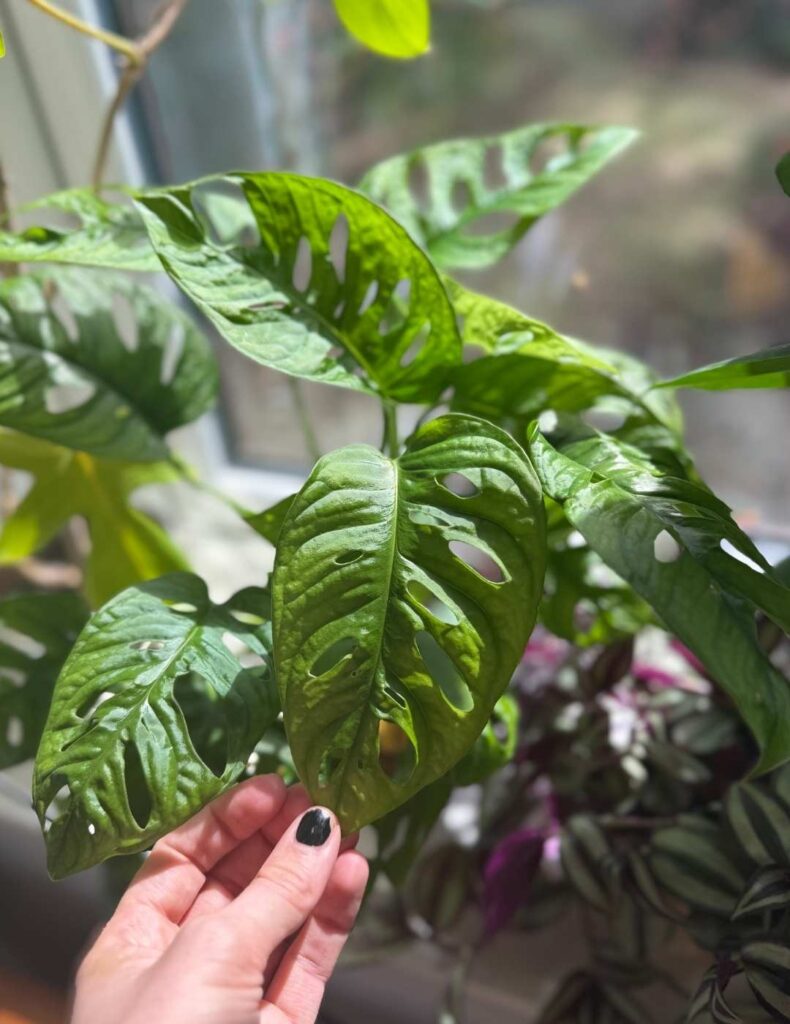
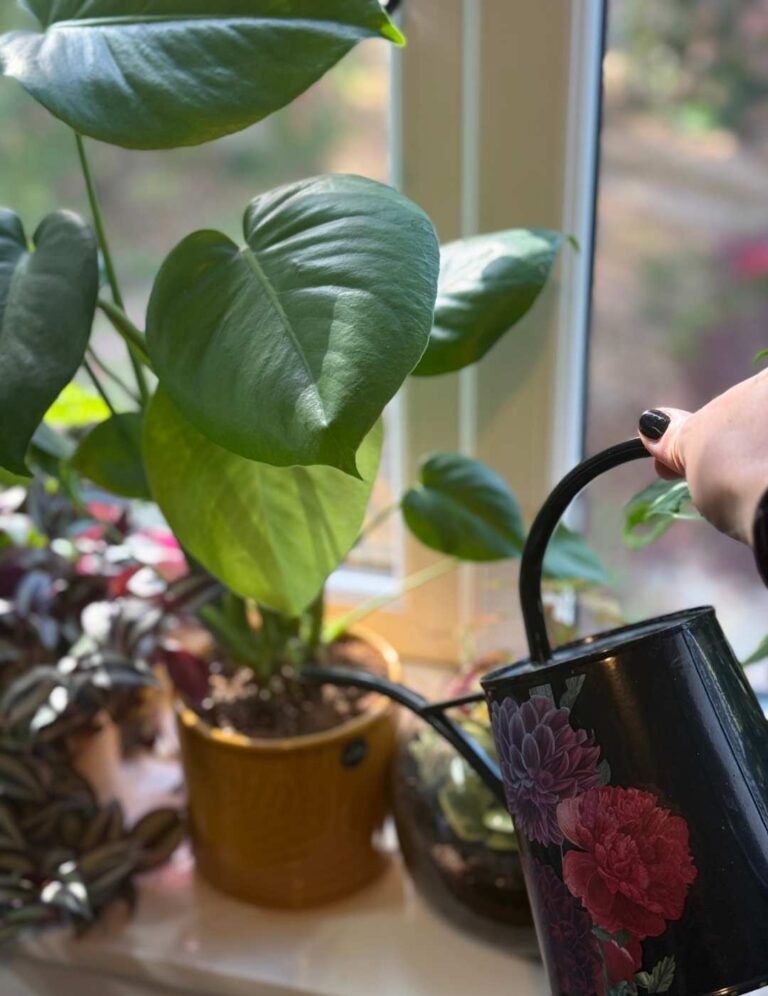
A good example is my situation. I live in the UK, and most of my Monstera live in my study. The window they sit near faces almost directly South, which works well during the autumn and winter, but as the weather brightens in the spring and summer the light levels can get quite high.
So as the year moves towards summer, I move my Monstera from the windowsill onto the desk nearby. They then still receive plenty of light, but the distance of a few feet from the window helps to keep their leaves from becoming overheated and over exposed to the harmful UV rays.
This method works well for all of my common Monstera varieties, but some need a little different handling due to more exaggerated structures or patterns.
But I can guess off the bat, that your plants don’t also live in a South facing room in the South of England, right? So let’s work out how you get the best positioning in your home. This will depend a little on the type of Monstera plant you’ve got. Let’s start with the most common options first.
Light Levels for Common Monstera Plants
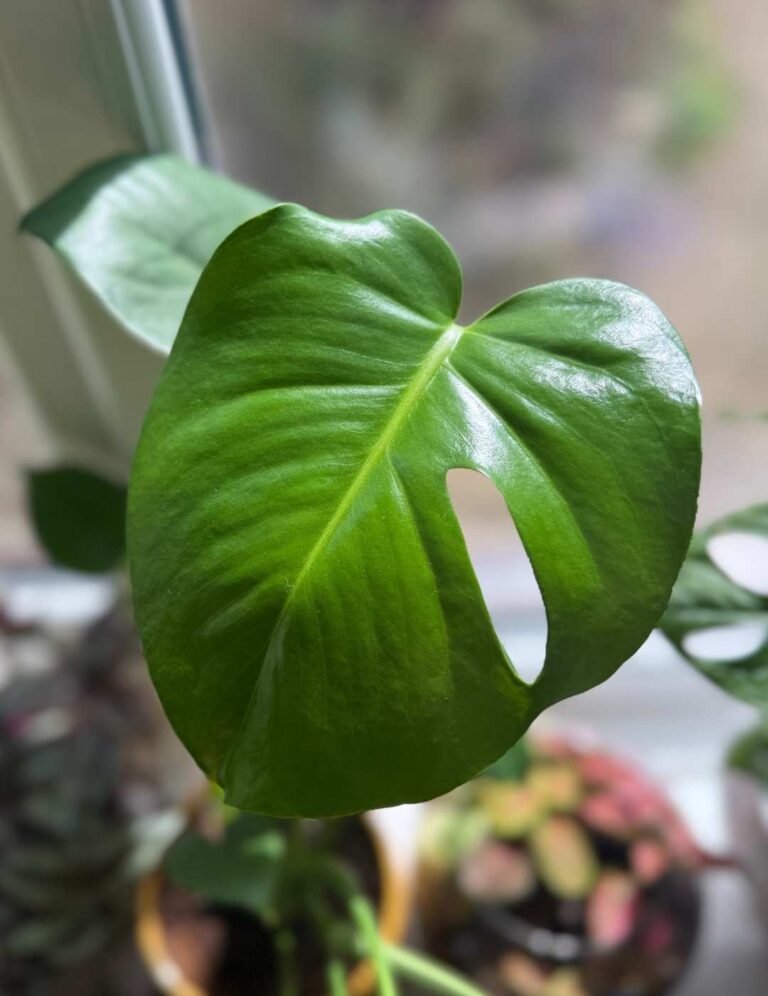
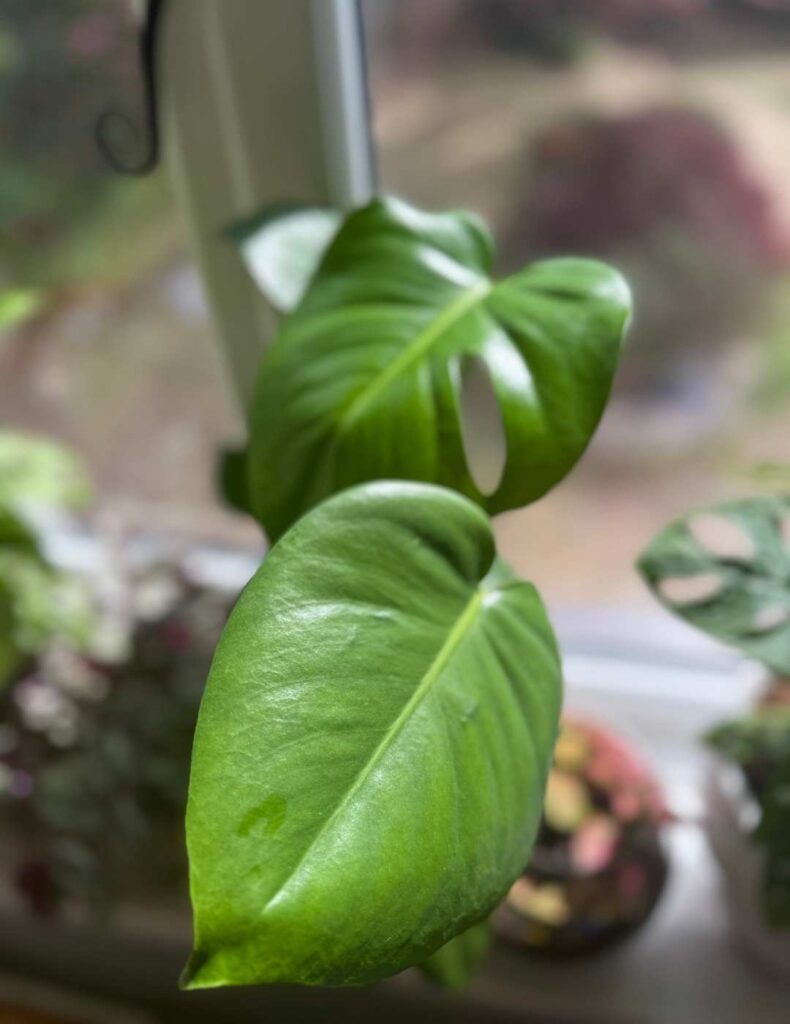
Most people have Monstera Deliciosa, the classic swiss cheese plant, or Monstera Adansonii, the monkey mask, in their homes. They are plants with green leaves with fenestrations, or openings in them. Deliciosa openings are like cuts into the edges, Adansonii are like holes or gaps.
These plants are from the rainforest, spending their whole lives underneath the broad canopy of other leaves. So light in the wild is dappled. Their broken leaves evolved to catch spots of sunlight as it falls to the rainforest floor.
Bright, Indirect Light
What you’ll hear a lot is, bright indirect light. The easiest way to achieve this is by keeping them on your windowsill during the autumn and winter months, and moving them a couple of feet away but still near to the window during the spring or summer.
This gives the best illusion of the type of environment they evolved within, and supports their natural structures. Remember, they grew these huge gapped leaves so that they could collect as much energy from the sunlight as possible, without expending as much energy on supporting the full structure of a massive leaf.
I also spin my Monstera plants’ pots around a couple of times a week, to give the plant balanced access to light and to reduce the chance of the leaves overheating and crisping.
Warning Signs
If your plant is not really growing, or has small leaves that have not fenestrated it’s probably not getting enough light. Low lighting also tends to cause yellow leaves and longer stems in proportion to the leaf size.
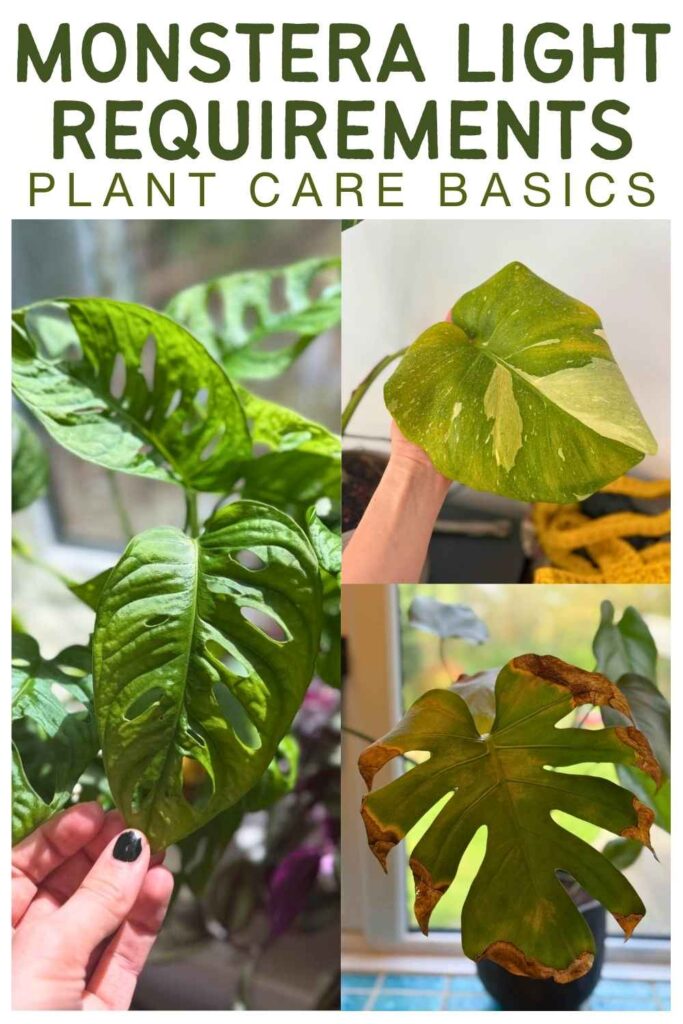
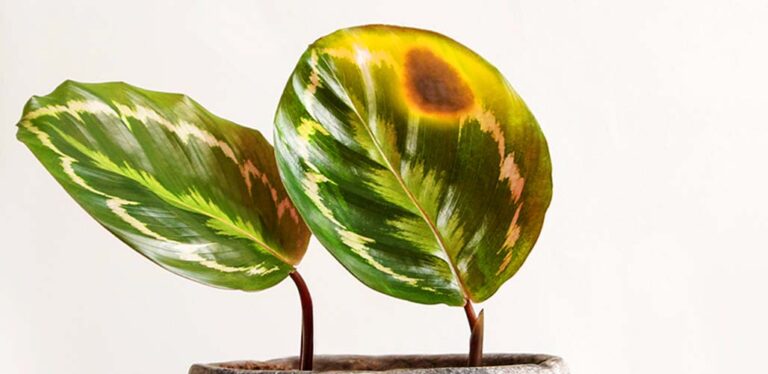
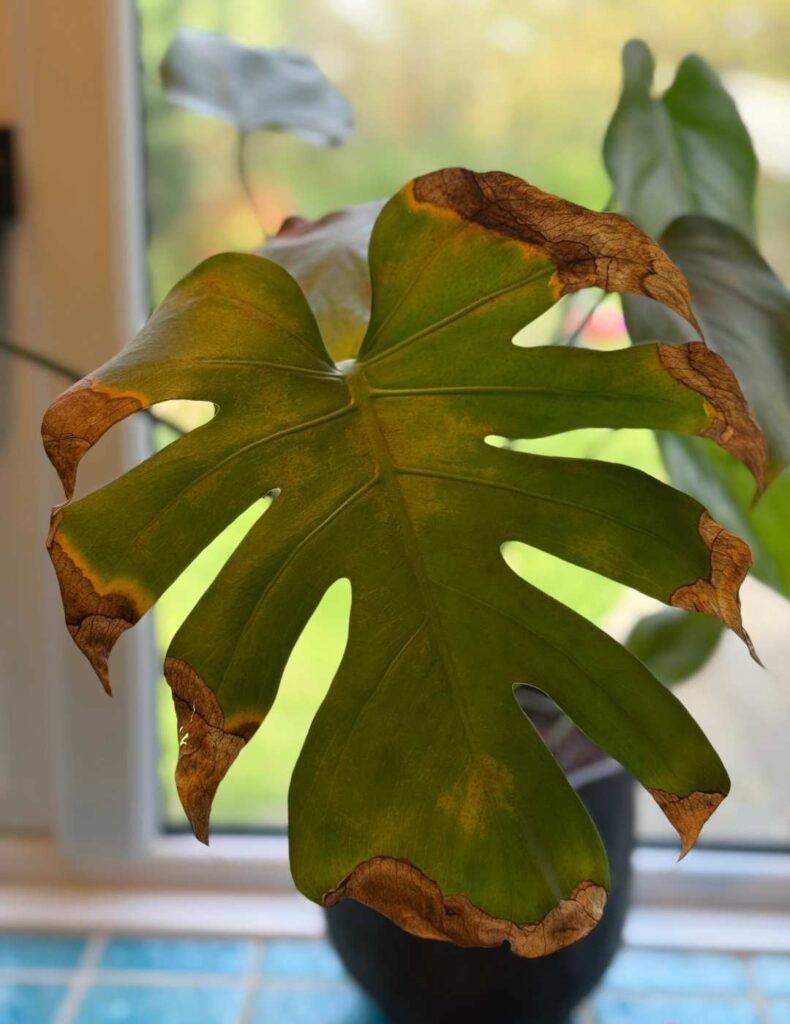
Where they get too much light the signs are often more obvious earlier. Burnt or brown edges or patches on the leaves, and tips that curl are commonplace when this happens. I’ve also seen leaves that looked almost scorched and literally burned, or that had areas of sun bleaching. This is often coupled with a lack of water needed for the hotter, brighter conditions.
Don’t panic if either of these happen, just try moving your plant closer or further away from the light source depending on the issue. When the leaves are badly burned you can cut them off, but be careful not to cut too many at once as that can also upset the plant.
I have a huge monstera plant that I bought when it was fairly small and very burned. I didn’t remove two of the biggest leaves with damage, and you can see that they are still burned on the edges but the plant is doing great and it’s care is the same as any other monstera plant now.
Giving Light To Your Monstera Obliqua
There are a few rare varieties of Monstera that absolutely crave high humidity. They cannot be kept casually on the windowsill of most homes, because the conditions they need to survive won’t keep your curtains in a mold-free state for very long. A gorgeous Monstera Obliqua isn’t worth the rot, after all.
So those of us that keep these gorgeous plants in our homes, tend to do so in a terrarium, but the mistake a lot of people make is thinking that because it’s enclosed in glass it will be happy. But these plants really do need a light source too.
For me, this is easy, because I also keep a lot of reptiles who love a humid environment. I spray down their tanks once or twice a day, and depending on the species they also have heat lamps to keep the temperature up and a UVB bulb to help them thrive.
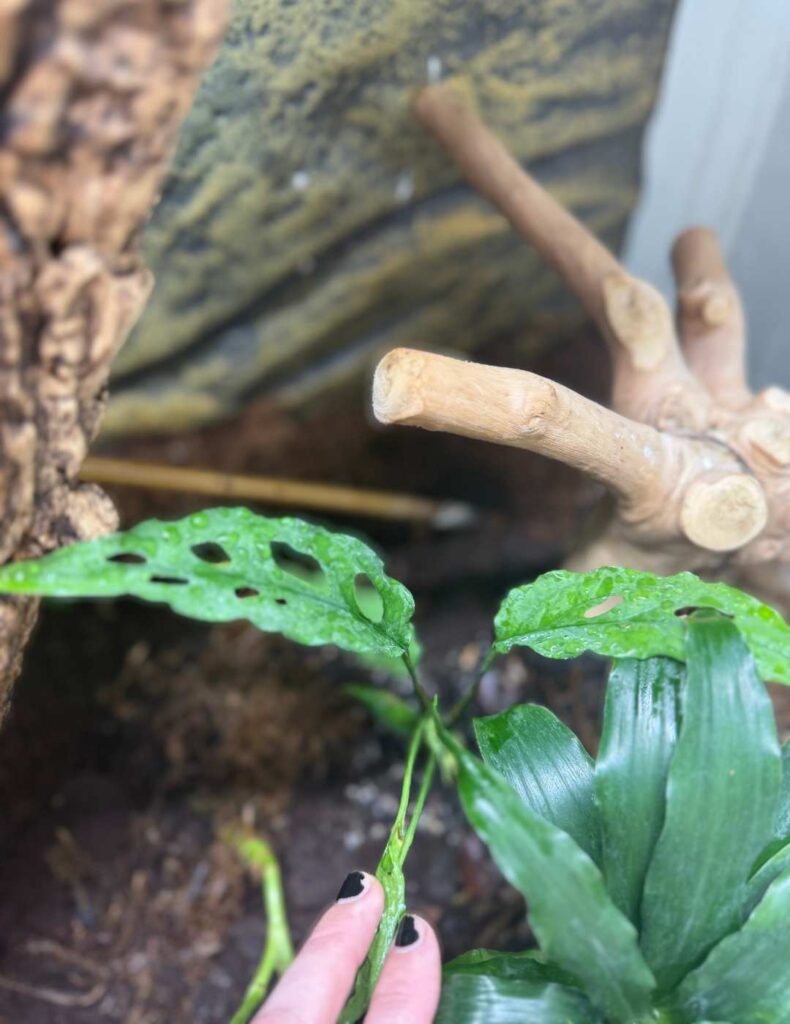
This works really well for the Obliqua too, as long as it is either far enough away from the plant not to burn it, or you have some dappled shade from other plants or structures in the enclosure. In mine, you can see that a large cork bark log blocks some of the light, allowing the Obliqua to have some light and some darkness.
The Variegated Monstera Lighting Problem
I don’t see enough people ranting about variegated plants, so forgive me if I have a little one here.
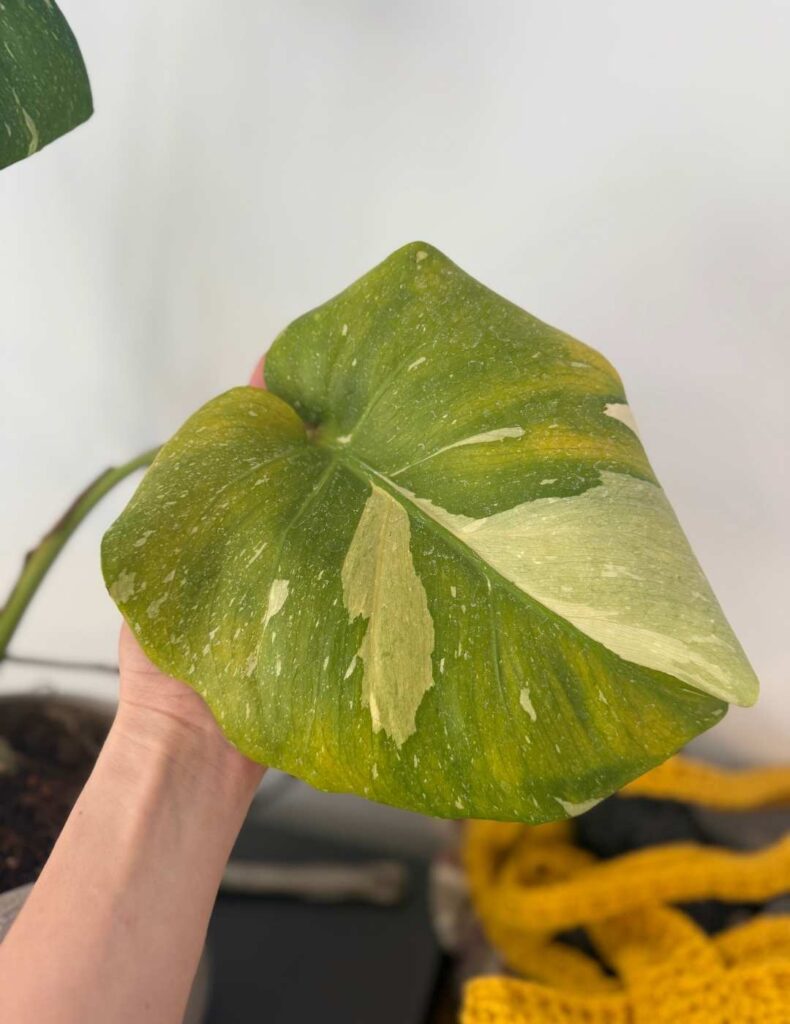
Variegated in plants basically means splodges of white on the leaves. This can be tiny flecks like you find on the Thai Constellation Monstera or huge patches like you get on the Monstera Albo.
Small amounts of white don’t seem to make much difference to the plant’s wellbeing, and you find these in lots of places in nature botanically. But large areas of white are a different story. They are often selected for in labs, and they really impact how the plant functions.