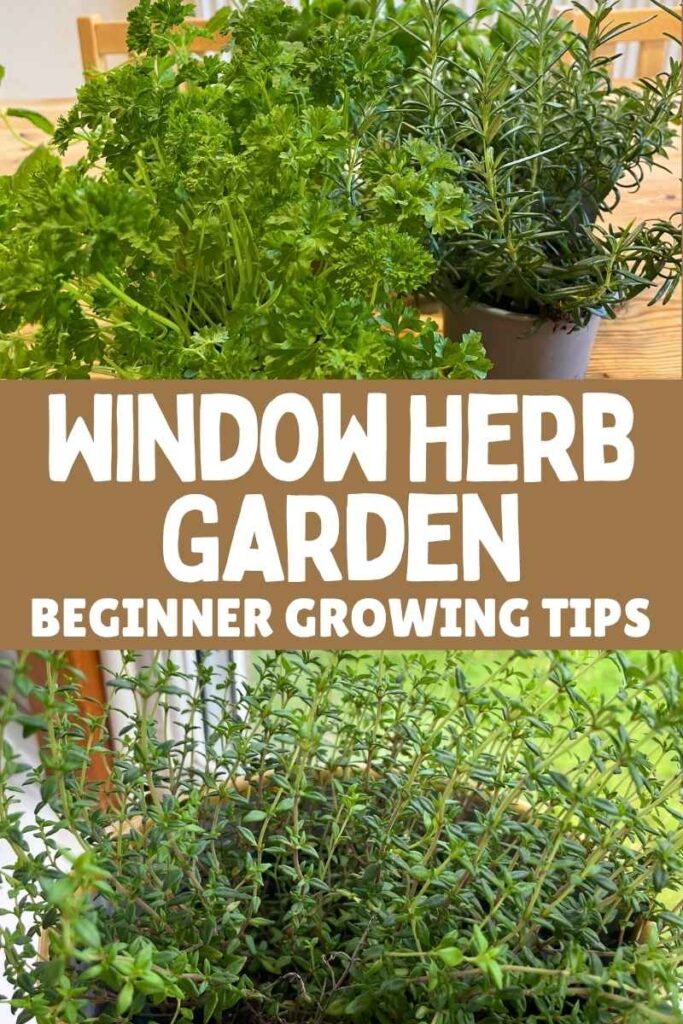
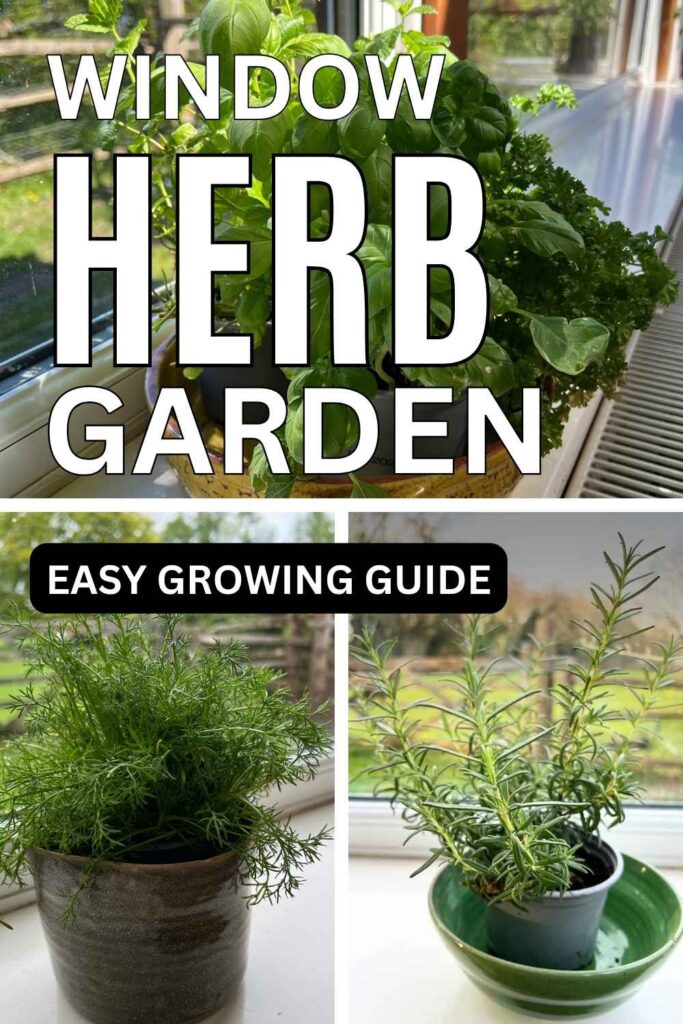
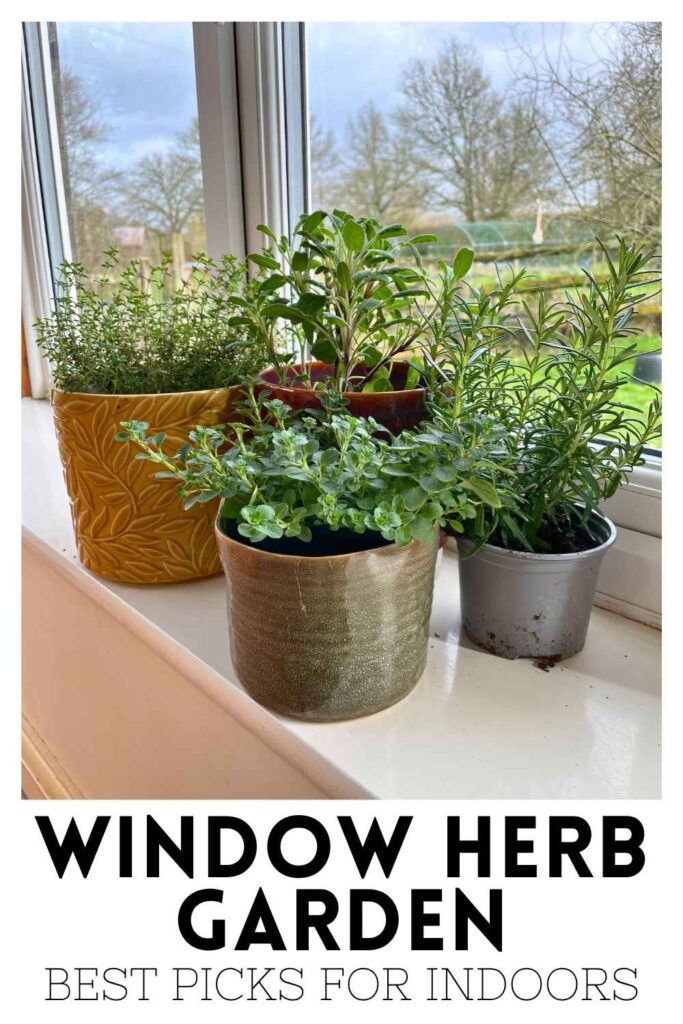
Window Herb Gardens: Pros, Cons And Top Tips
There’s nothing quite like the flavor of fresh herbs! But I find that traipsing down to the vegetable patch to grab some parsley for my risotto, can rather take the shine off my culinary enthusiasm. Especially when it’s raining!
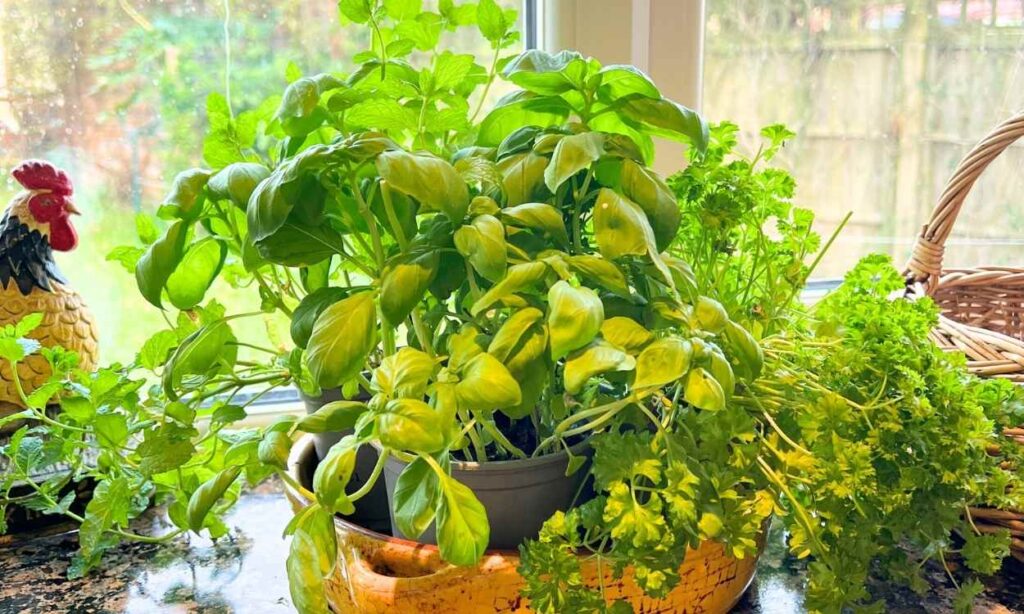
So the idea of having those freshly pulled leaves at my fingertips, in my own kitchen window herb garden, is very appealing.
The problem is that while I think my kitchen window is a great place for herbs to live, they don’t always agree!
That’s because there are pros and cons to growing herbs on your windowsill as opposed to outside in your backyard, and that’s what we’re going to talk about.
I’ll share the herbs that thrive best on your windowsill and some great tips for keeping them happy and healthy so that you have a year round supply of delicious fresh herb leaves in your kitchen.
There are three important things to consider before you get started:
- Light
- Containers
- Care
We’ll look at each of these, and then I’ll give you a quick summary of the pros and cons of indoor vs outdoor herb gardens, and my top three favorite herbs for windowsill perfection.
Getting The Light Right
Many popular houseplants are fairly tolerant of reduced levels of light. One of the reasons that herbs can be challenging to grow indoors is that their mediterranean origins means that they don’t share that tolerance.
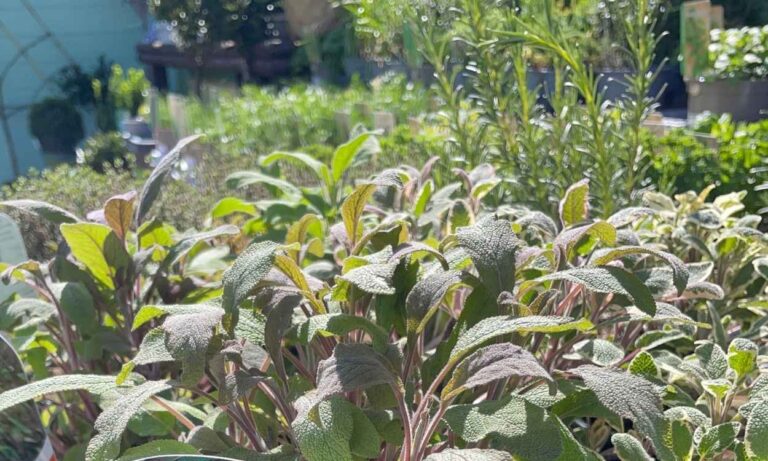
Most herbs are enthusiastic sun worshipers. “Bright-ish” won’t cut it. Your rosemary, sage and thyme plants are not interested in bright-ish, they are looking for full on mediterranean beach levels of sunlight. Anything else is a disappointment.
And while you might be confident that your window sill is a sunlight herb haven, you’d be surprised at just how much light levels are reduced indoors, even in right in front of the glass and especially as you move away from it.
How much light is there on your windowsill?
Most of us would guess that light levels are lower on a windowsill than outside in full sun. But it’s surprising just how much lower those levels are. Outdoor daylight can reach 10,000 foot-candles. Whereas even on a bright sunny window sill there might be around 2000 foot-candles, and possibly less. Move back a couple of feet from the glass and you can halve the amount of light again. And to make matters worse, the window glass itself filters out some of the wavelengths that plants need to grow.
Why does the light level matter?
If herbs don’t receive enough light, they drop their production of essential oils, which are what provides that lovely herby flavor and aroma to your food.
Instead the herb focuses on trying to reach the light by growing up as fast as they can. And becoming thin, leggy and weak, in the process. So if there isn’t enough light, your herbs are losing their flavor, and their strength.
How much light do herbs need?
The general consensus is a minimum of six hours of full sunlight. Preferably more. You might be able to provide something approximating this on south or west facing windowsill during the summer months.
In most regions you’ll need to supplement this light during the winter months. Fortunately there are now quite a range of plant lights on the market. And the cost of these has fallen somewhat.
You can even buy single LED plant lights that clip onto individual pots. The downside is that this means having more cables trailing around your window, or remembering to recharge them. But if you are keen to grow herbs indoors all year round it’s definitely a doable option.
Tips for best use of light
- Keep the plants on the window sill itself, not on a nearby shelf
- Provide LED daylight lamps from fall through to spring
- Rotate pots a quarter turn daily to let light fall evenly and prevent plants leaning
Getting The Container Right
The next important factor is what you plant your herbs in. So that’s both the external container, and the potting soil you plant them into.
Pot size and grouping
Herbs don’t need huge containers, a four inch pot will keep many herbs happy for weeks if not months. Repot when you see roots peeping out of the drainage holes at the bottom.
Putting different herbs in the same pot
Herbs can be roughly split into two groups. Those that like it fairly dry, for example: rosemary, sage, and thyme. And those that prefer their pot to be moist, for example: mint, basil and parsley.
If you want to plant several herbs together in a single container, then make sure that you put dry loving herbs in with other dry loving herbs. And vice versa.
For more information, check out: Companion Planting For Herbs
Pot drainage
Good drainage in your plant pot or container is critical. Obviously you are going to be watering your herbs and you don’t want water running all over your windowsills. So for window herb gardens, people often buy pretty ceramic pots which are completely waterproof and fill these with soil. This makes plants very sad! And may result in a drowned or mouldy plant.
Never put herbs in a pot without drainage holes. If you have a pretty ceramic pot without drainage, put your herb plant in a slightly smaller plastic pot (that does have drainage holes) and slip it inside the pretty one. Or protect your windowsill with a saucer or drip tray and stand the pot with the drainage holes on that.
Top Tip: Do not add stones, gravel, or bits of broken pot to the bottom of your container before adding potting soil. Recent studies have shown that this practice actually increases waterlogging in pots, rather than improving drainage. There’s a link below to The Myth of Drainage Material in Container Plantings, if you are interested in the mechanics of this.
What should herb containers be made from?
Traditional pots made from terracotta look lovely but remember that they are porous and the soil inside will dry out much faster than in plastic pots.
On the one hand, this helps to prevent over-watering. Great for your dry tolerant herbs. On the other hand, unless you are super diligent with your watering routine, your moisture loving herbs will probably be happier in plastic pots.
Potting soil for windowsill herbs
Drainage is also affected by the soil you put into your pots. Typical potting soil that you buy from the garden center is peat based. It’s kind of spongy, and it absorbs and holds moisture quite well. The downside is that thoroughly wet soil may be poorly oxygenated. And oxygen is important for your herb’s root system.
Mediterranean herbs tend to prefer soil that more closely matches what you’d find in the rocky terrain that they are used to in their homeland.
There’s a simple solution. You can trick your rosemary and thyme plants into feeling more at home by adding some perlite to your standard potting soil.
One study showed that essential oil production in basil increased as a higher proportion of perlite was added. Up to a maximum of about 60% perlite. These essential oils are what adds flavor and aroma to your herb plants.
Another study showed an increase in essential oil production if sheep’s wool is added to the soil. Which is interesting to me as I keep sheep! But probably not much help to you!
Fortunately you can buy perlite online or from your garden store.
Perlite looks a bit like styrofoam but its actually a completely natural type of volcanic glass. The main reason that perlite (and sheep’s wool) makes your herbs happy, is that adding some to your potting soil helps to improve aeration. (Wool does rot down and release nutrients eventually too, but it takes a long time)
Tender Loving Care
Herb TLC is pretty straightforward once you are clear on the kind of environment your herbs prefer.
Here are the three main rules
1 Water: Go easy on the water with dry loving herbs like sage and thyme. They don’t like being soggy. Water when the top inch of the soil has dried out.
Water the moisture loving herbs like parsley and mint every day throughout spring and summer, make sure you give them only as much as they can drink in a day. If there is water standing in the drip tray or outer pot two hours after watering, you gave them too much. Tip it out and give them less tomorrow
2 Feed: You can feed your herbs from late spring until the end of summer. I put a tiny drop of liquid plant food in the watering can before filling it each day. If you have just repotted them you don’t need to feed for a few weeks as there are nutrients in the fresh potting soil
3 Trim: Pinching out to make a bushier plant is fun, and helps prevent bolting (unwanted flowering). So indulge yourself! With mint and basil, pinch out the center shoot when two side shoots have appeared at it’s base. With herbs that have a creeping habit such as thyme or oregano, you can simply give the whole plant a haircut, snipping away until it’s about an inch high all over. Some herbs such as parsley and coriander don’t really regrow after trimming so skip the haircut for these.
The Pros & Cons of A Window Herb Garden
Let’s take the pros first
- Convenient year-round access to fresh harvests regardless of the outdoor season or frost. If you cook with herbs a lot this is a big one for you.
- Complete control over the growing environment including soil quality and moisture. If you tend to neglect your outdoor herbs this might be a plus.
- Protection from common garden pests like rabbits, deer, and slugs. These are not an issue for everyone, but worth considering
- Reduced risk of soil-borne diseases that often plague outdoor garden beds.
- No weeding! This is a big plus for me. I tend to forget to weed herbs growing out of sight and out of mind
- Protection from cold. Most herbs are tender. They do not tolerate cold very well and many varieties die off altogether in the winter.
And the cons
- The main challenge you’ll have when you grow herbs indoors is getting enough light to keep them happy. Growing herbs indoors over extended periods always involves artificial light of some kind.
- You can’t neglect them even in wet weather you are responsible for all their needs. So a daily routine is essential. How much that bothers you will depend on your temperament and lifestyle.
- Lower yields. During the growing season, you will never get such good crops from your window herb garden as you will from herbs planted outside.
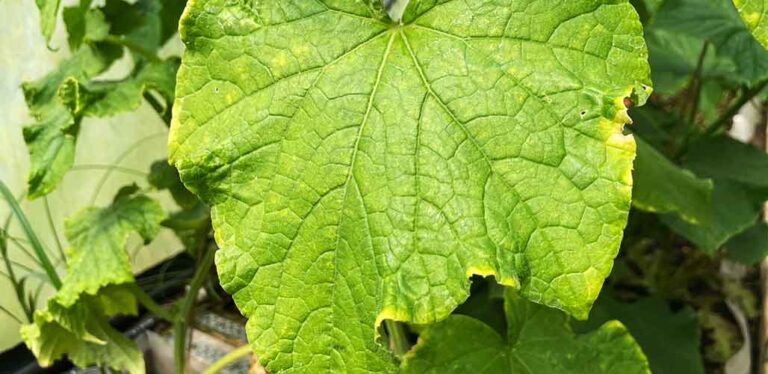
- Indoor plants get diseases too! Just different ones. Mites, whiteflies, gnats, and a range of viruses are fond of attacking indoor plants. You’ll need to keep your eye out for these and dispose of infected leaves and sometime of entire plants, in order to stop the problem spreading
My top 3 herbs for windowsill gardening
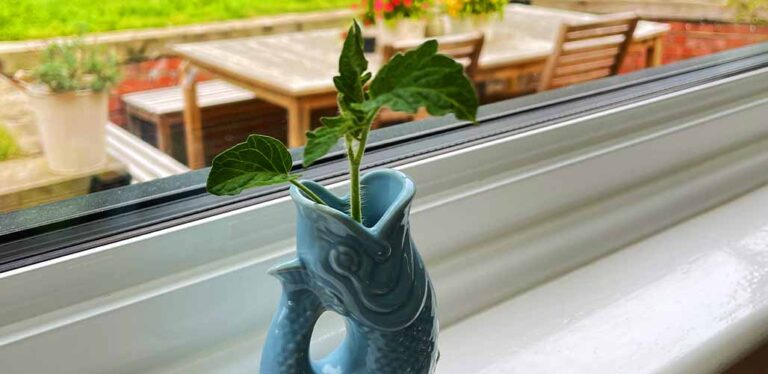
I’ve chosen herbs that can be rooted in water (because that’s fun to do) and that won’t collapse in despair when you pick some shoots for your supper.
Number 1: MINT. Delicious in salads, and dips, and sprinkled chopped over buttered new potatoes, mint is almost the perfect beginner’s herb. It grows fast, copes with low light, is fiercely tough, and will cling to life with grim determination no matter what you throw at it. The more you pick it, the more it grows and it’s usually disease free. It’s a thirsty herb though so not the best pick for a very hot south facing window.
You can read more about growing mint here: Getting Started With Mint
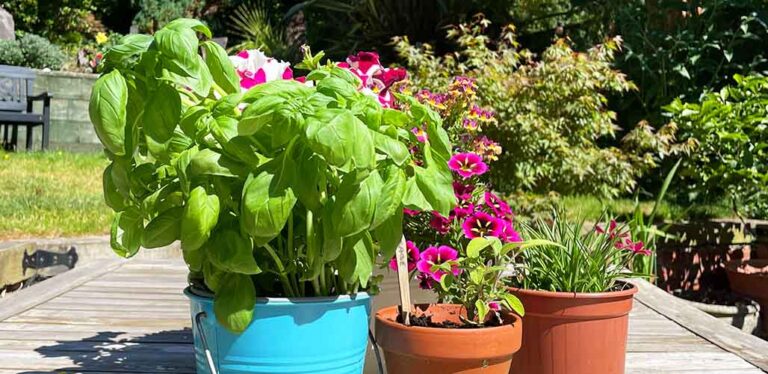
Number 2: BASIL. Wonderfully flavorsome and essential in so many italian dishes, basil is a reasonably fast grower. Like mint you can keep pinching the tips out to make a bushier plant. In fact you must keep pinching the tips out because if you don’t your basil will ‘bolt’ (make flower spikes). It’s not as tough as mint but it roots in water in a matter of days so it’s a simple matter to always have a few new plants coming up to replace your old one if it gives up the ghost.
You can grow basil and mint together in the same container. And you can read more about growing basil here: Getting Started With Basil. And check out our basil companion planting guide here: What To Plant With Basil
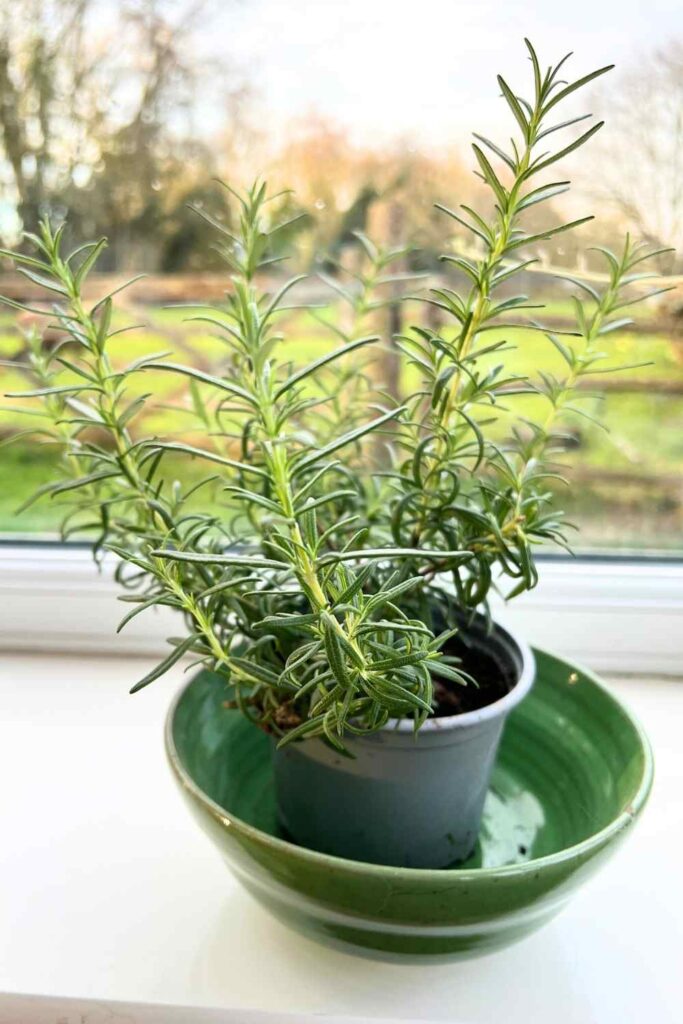
Number 3: ROSEMARY. We raise our own sheep so rosemary is an essential cooking ingredient in our kitchen! And roast vegetables are simply not the same without it. Rosemary is a perfect candidate for a hot sunny windowsill. I keep mine in our conservatory. It’s very forgiving if you forget to water it and doesn’t seem to mind how much you snip off. It even roots in water if you are patient (my last shoots took over 3 weeks but we got there)
Your choices will depend on your cooking habits and the type of windowsill you have available in your kitchen, and I’d love to hear what your favorites are in the comments below!
References
- I Burdina. Effect of the substrate composition on yield and quality of basil (Ocimum Basilicum L) Journal of Horticultural Research 2016
- Royal Horticultural Society. Artificial Lighting For Indoor Plants
- I Zutic et al. Growing of sweet basil seedlings on substrate amended by sheep wool. Sveučilište u Zagrebu
- Herb Gardening. Colorado State University
- L Chalker-Scott. The Myth of Drainage Material in Container Plantings. Washington State University