Herb Companion Planting: What Grows Well Together?
Many herbs are quite tolerant and will grow happily alongside one another. Others are less accommodating and like their own special microclimate.
Several of our most popular herbs make great partners for our favorite vegetable crops and even help protect against disease. And we’ll look at six of those happy partnerships below.
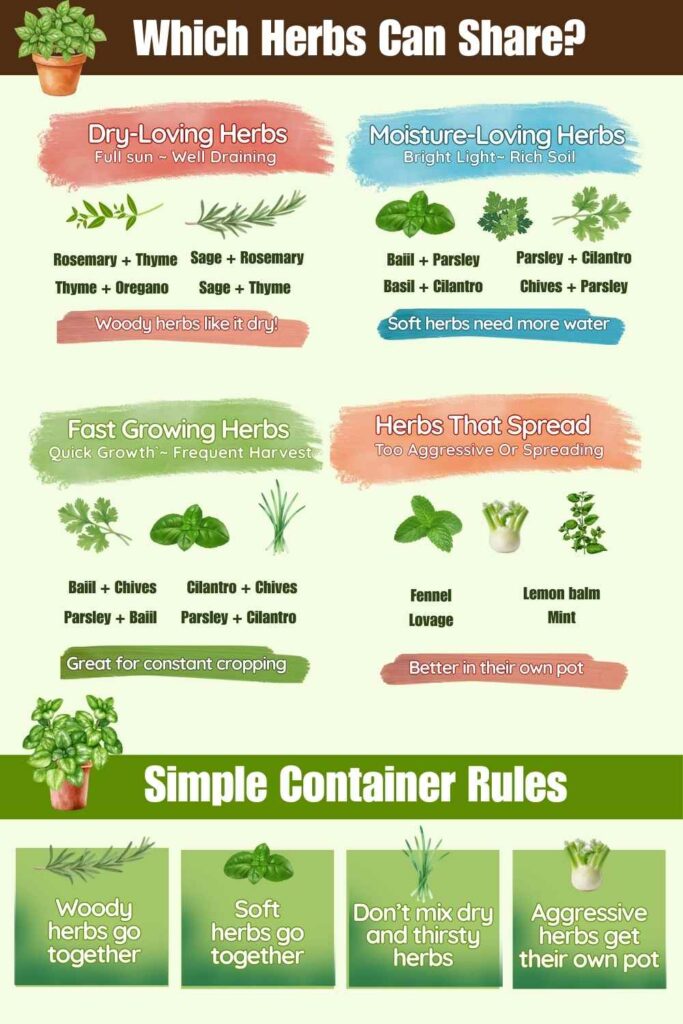
If you want to plant herbs with other herbs, in a container or border, the key to success is to pair plants that come from the same region or climate. That way you probably won’t be overwatering one and underwatering another. You can find lots of information on what each herb needs in our individual herb guides. Here are the four most popular
- How To Get Started With Basil
- How To Get Started With Cilantro
- How To Get Started With Parsley
- How To Get Started With Mint
I’ve also included a herb companion planting chart below to help you match herbs that will happily share a container or plant bed below.
The main focus of this article is on herbs that make great partners for the other plants in your vegetable garden and beyond. Let’s look at six marriages made in heaven.
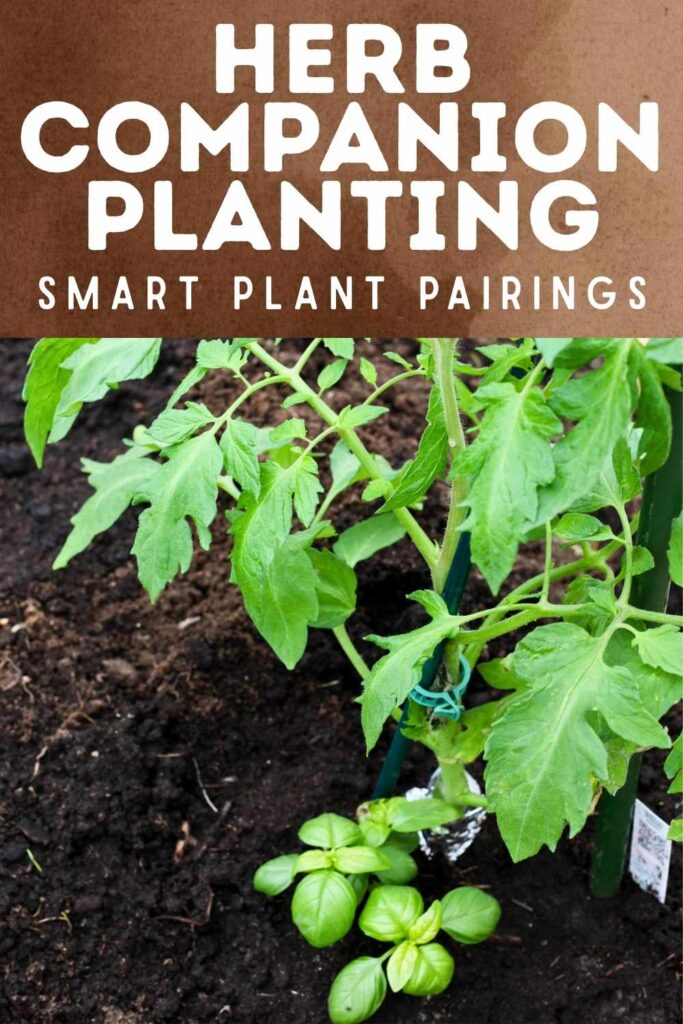
#1 Basil and tomatoes – great room mates!
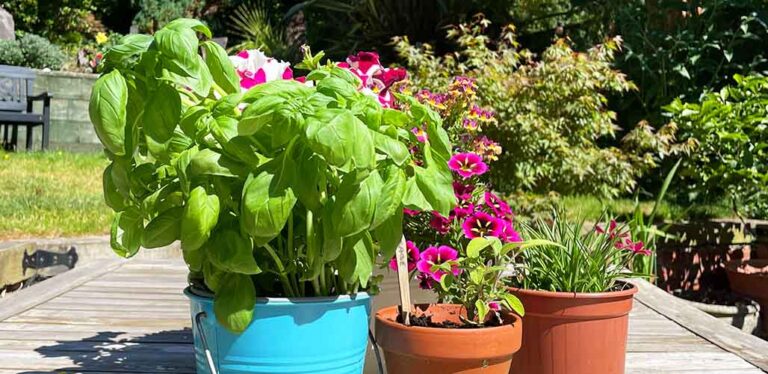
Basil and tomato go together brilliantly on our plates. But they also go together well in the ground. And part of the reason for this is tied up in that distinctive basil aroma that you can smell when you stick your nose in a bunch of basil or tear the leaves with your fingers.
If you want to get started with growing tomatoes, check out our beginner’s guide here: Getting Started With Tomatoes
How basil may protect your tomato crop
That’s because the powerful aroma that some of our favorite herbs give off, can have interesting effects on insects. The herby aroma is caused by organic substances inside the plant that evaporate very easily. Making it especially easy for us to detect with our noses.
These powerful organic substances are called ‘plant volatiles’ and studies have shown that they may confuse or deter insects by interfering with the insects ability to locate the plants they are looking for and hoping to feed on.
That does not mean that planting basil near your tomatoes will protect them for all and every pest. But it may well reduce the numbers and range of insects planning an all out assault on your salad centerpieces
Does basil improve the flavor of tomatoes?
When it comes to the culinary benefits of serving basil with tomatoes, many people agree that they are a great team.
Some people also claim that planting basil around tomato plants improves the flavor of the tomatoes that they grow near. But at the time of writing, there’s no evidence to support that particular theory.
Good room mates then?
Basil and tomato plants have similar needs when it comes to water, light and nutrients. So if you are keeping your tomatoes happy, the basil plants will likely be happy too.
#2 Rosemary and strawberries
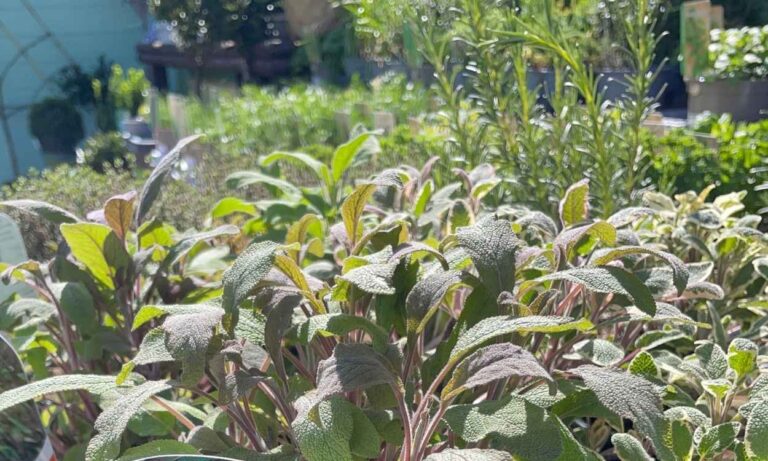
Like sage and thyme, rosemary is a herb with some mediterranean attitude. No need to shower these three with compost tea and mulches. Nor do you need to keep them constantly moist.
These are plants that like hot dry summers and very well drained soil. They are highly susceptible to root rot if overwatered or kept soggy. Overfeeding them encourages them to produce fast weak growth prone to disease
So growing rosemary together with other mediterranean herbs makes good sense, But what about pairing them with plants other than herbs?
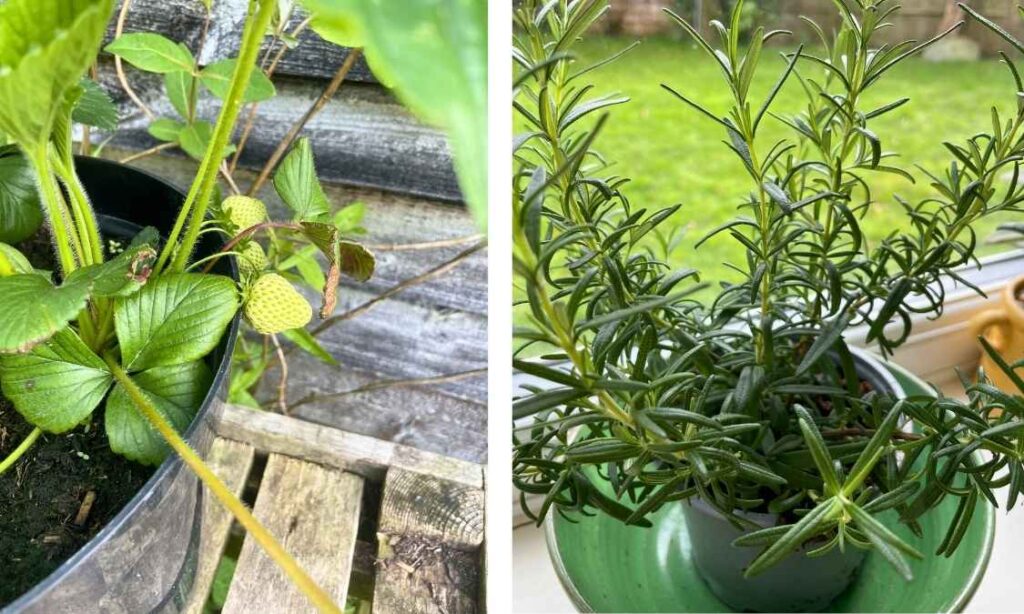
One plant in your garden that also likes free draining soil and plenty of sunshine is the strawberry. And an unusual and often successful pairing is strawberries and rosemary together.
Mutual benefits
Strawberries are shallow rooting while Rosemary is deep rooting. So they are not competing with one another. Strawberries provide ground cover that shades out weeds, something Rosemary is not able to do.
While in return, the strong aroma that Rosemary gives off may act as a deterrent to the slugs and insects that love to have a strawberry party at your expense
#3 Thyme and broccoli
I love brassicas, especially broccoli, but so do the large cabbage white butterflies that arrive in my garden every summer in large numbers, and leave behind hundreds of very hungry caterpillars.
Cruciferous vegetables in general are very attractive to pests like cabbage worms and caterpillar and studies have shown that aromatic herbs such as thyme can be your friend and ally in the battle to keep some brassicas for yourself!
That’s because aromatic herbs like thyme contain volatile oils that have some important properties
These volatile oils mask the scent of the brassicas that pests are attracted to, so that the egg laying adults can’t find them. And may also have a repellent effect on pests that are already in the area. Result, less caterpillars snacking on your favorite leafy veg.
And thyme and broccoli have a lot in common. They both enjoy full sun, and well drained soil. And a similar ph of around 6-7
Avoiding conflict
When it comes to fertilizer there’s a bit of conflict, but it’s usually workable.
Feed the soil well before you plant the brassicas, for example, by digging homemade compost in before you plant out your brassicas, and out of reach of shallow rooting thyme.
Add the thyme once the brassicas are installed. Either in between the brassicas, or around the edges of the bed. And avoid surface feeding later on.
#4 Carrots & Chives
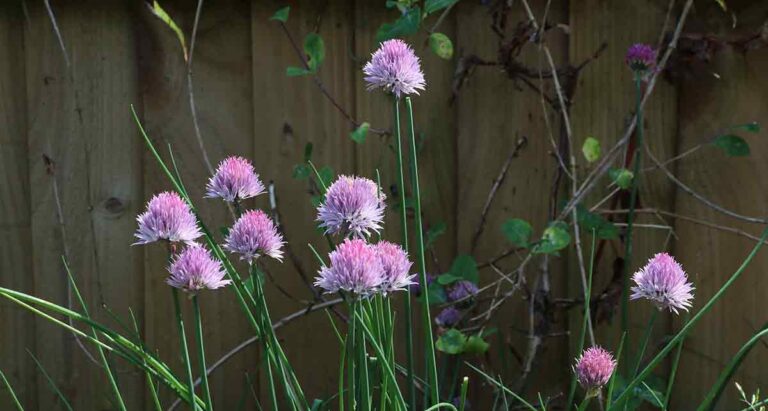
Chives are alliums, members of the onion family and the allium family of plants give off an odor that some insect pests dislike This odor is produced by volatile compounds in the plant containing sulphur. The main compound is allicin which is where the plant group (including garlic and onions) gets its name.
Allicin works in the same way as the odor from the aromatic mediterranean herbs, by repelling pests or confusing them, so that they can’t find your carrots.
While you don’t tend to see pests on your carrot leaves, carrots are still vulnerable to them. They just tend to be hidden out of sight. Pest like carrot root aphids, which also infest celery and parsnips, and transmit viruses that damage both leaves and roots. And the larvae of the dreaded carrot fly which burrow through roots, making them inedible.
Planting alliums like chives among your carrots is a great way to reduce damage from these kinds of insects. And because chives are shallow rooting rather than deep rooting, they don’t compete with your carrot crop for water and nutrients.
Chives have another big bonus. Their beautiful big purple blooms and not just lovely to look at, they also attract hoverflies and predatory wasps that are Hoverfly larvae just love to snack on aphids, and crawl deep into your carrot crowns on their search and destroy mission.
Chives really are a great gardener’s friend. Don’t forget to check out our article on harvesting and using chives in your kitchen.
And if your are not quite sure where to start when it comes to growing carrots, our beginners guide: Getting Started With Carrots will help you.
#5 Oregano & Peppers – Living Mulch Partners
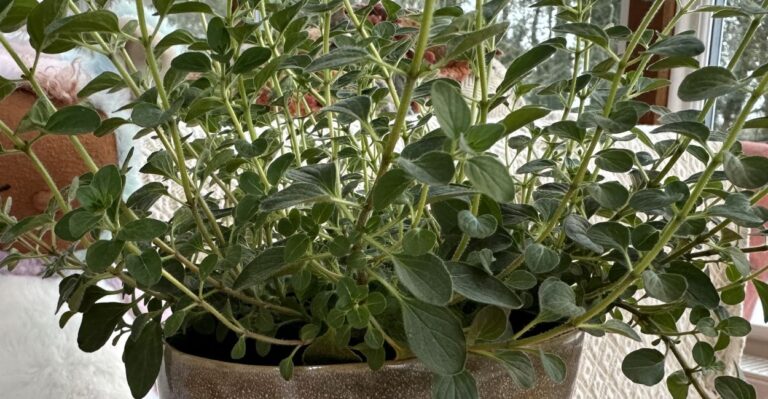
Oregano is a compact, dense herb that grows and spreads fast. In the right situation it can make an awesome living mulch, but you’ll need to make sure it doesn’t get out of hand!
The benefits of ground cover beneath your taller pepper plants are several.
The oregano plants blanket the soil in your pepper bed, helping to reduce moisture loss and soil compaction. Nutrient run off is also reduced and soil structure improved. And oregano gives off a heavenly scent which like many aromatic herbs has the added benefit of helping to ward off pest species.
However, like so many of the good things in life there is a downside. The oregano will compete to some extent with your peppers for nutrients and may cause a slight reduction in the volume of your crop.
For many of us, the trade-off is worth it. But maybe give it a try in a small area first!
You can find out how to grow oregano in this article: Getting Started With Oregano
#6 Dill & cucumbers: invite the best bugs to dinner
Dill and cucumbers are not just a classic pairing in the kitchen. They make a great team in the garden too.
Dill is a little bit different from some of our other herbs in that it belongs to the carrot family (Apiaceae). And the flowers on dill are rather special. The flowering part of the stem is like an umbrella with a tiny flower at the end of each spoke.
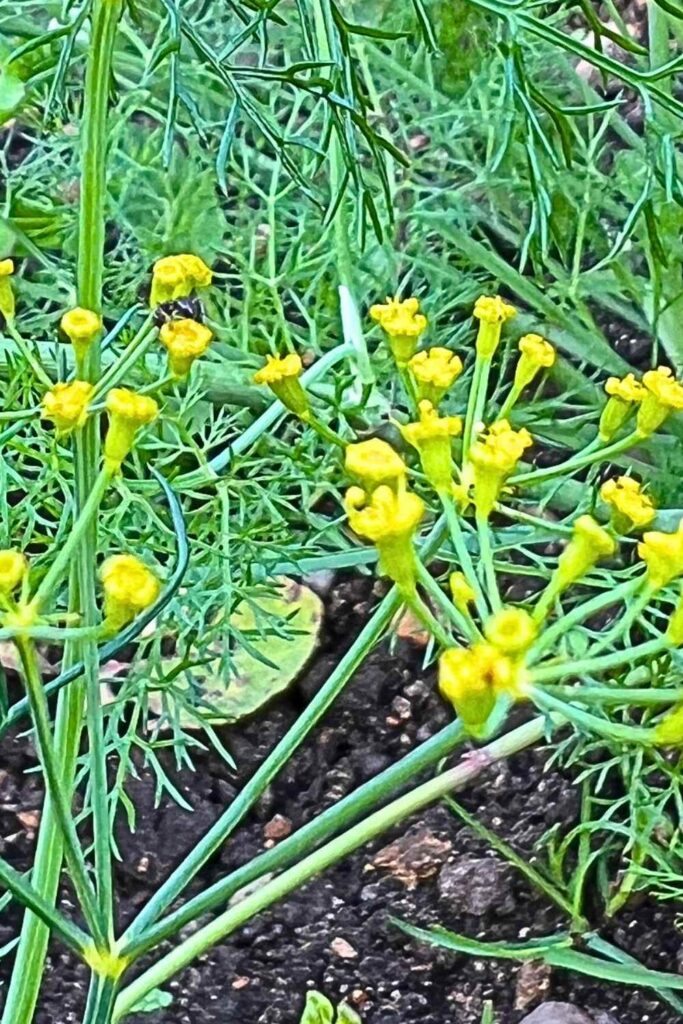
And because dill flowers are so small, bees and other large pollinators can’t monopolize them.
This gives much smaller beneficial insects such as parasitoid wasps and hoverflies a great opportunity to thrive. In fact, research published in the Journal of Biological Control found that plants in the Apiaceae family produced some of the greatest increases in parasitoid wasp longevity of any of the plants tested.
Bugs like these tiny wasps and hoverflies are proven experts at reducing pests on food crops. A study published in Frontiers In Plant Science for example, demonstrated a 95% reduction in aphid populations on melon crops when hoverflies were released!
All this is a win win for you because these tiny pest-hunters are exactly what you need around your cucumbers. With one proviso – you need to let your dill flower! It’s the presence of the flowers that attract those beneficial insects, so don’t harvest your dill too vigorously.
If growing cucumbers is still a journey of discovery for you, here’s our guide: Getting Started With Cucumbers
Choosing plant partners wisely
As you can see, companion planting with herbs is not about finding a magic bullet, but about understanding how these very different plants can interact and support one another.
Plant partners need to share an enthusiasm for similar growing conditions, but within that proviso, you can have a lot of fun choosing herb friends for your vegetables that will help them thrive. Whether its by attracting beneficial insects, reducing water and nutrient loss, or simply providing shade or shelter, a few thoughtful plant partnerships can help you grow a healthier, more resilient vegetable garden with less effort and more reward.
I hope you enjoyed these matches made in heaven, feel free to try your own combinations, and let us know what worked for you in the comments below.
You might also enjoy: