Herb Growing Success (And How to Avoid Mistakes)

Growing your own herbs can be immensely satisfying… or intensely frustrating. For me, there’s nothing quite so disheartening as discovering yesterday’s lush leaved plants are today’s wilting, yellow, tragedy. And I’ve found that with herbs the solution is almost always surprisingly simple.
Its mostly about getting three things right: light, water and drainage. I’m going to take a look at some common mistakes I’ve made when growing herbs at home in the past, starting with those three, so that you can avoid my mistakes and have awesomely happy herbs!

#1 Not Giving Them Enough Light
If your herbs are looking sad, you can brighten their day by, literally, brightening their day. Many popular herbs are originally from hot dry places like the Mediterranean.
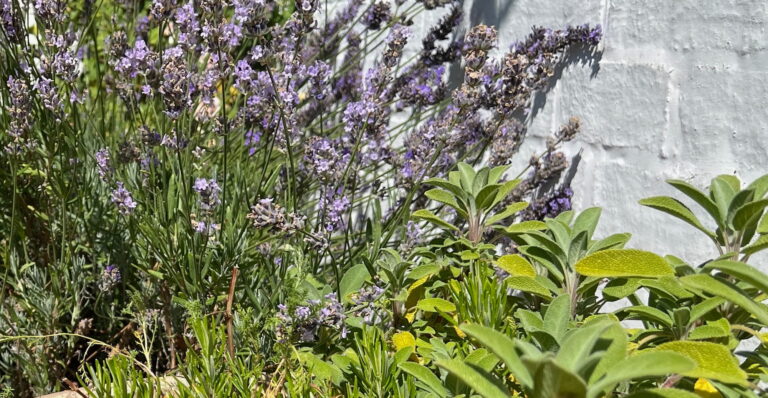
They need up to 8 hours of full sunlight per day, to thrive. For outdoor herbs this means being placed in a part of your yard that gets sunshine for most of the day. I keep my most of mine on a south facing wall. But the most important thing is to avoid shady spots!
Lights, Camera, Action
Indoor herbs are especially likely to struggle due to low light. They only get direct light if they are near a window, when the sun is at the right angle to shine in. And passing through glass reduces light intensity.
If your herbs look pale and leggy, they’re probably reaching for more light – and failing to find enough of it. To make sure mine don’t suffer from low light , I pop my indoor pots nice and close to a south or east facing window.
On a warm day I’ll open the window to let direct light fall on my herbs. Move curtains or other light blockers aside. If you don’t have space for all your plants on suitable window sill, you can buy grow lights to expand your plant friendly space, or just rotate your pots on and off the good windowsills weekly, so everyone gets a turn at the good stuff.
#2 Water, Water, Everywhere
Your herbs probably need a lot less water than you think. Rosemary, thyme, sage, oregano, and many more of your Mediterranean kitchen favorites evolved in dry rocky soil.
To these desert dwellers, your generous daily watering may feel more like drowning than being given a nice drink.
Sitting in excess water can lead to infection with rapid killers such as the fungus-like Phytophthora, a big cause of root rot. Going forward, test the soil with a finger before watering. If the top inch is damp, it’s not time for more! Once the top inch is dry, water generously. Then repeat!
#3 Drainage or Death
There are two ways to overwater your herbs. Giving too much water, and trapping that water in the pot. Water fills the air spaces in soil. So too much water can suffocate the roots, stopping essential oxygen from reaching them.
Your herbs will hate these wet swampy conditions, and the pathogens that cause root rot will love them.
Check under your poorly herb’s pot. Does it have drainage holes? If so, are those holes able to do their job? Are they blocked or too small?
If you’ve planted your herbs directly into a pot with no holes for drainage, it’s decision time. You may be able to drill holes in the existing pot. (Don’t forget to pop a saucer under it to save your surfaces if you’re growing your herbs indoors!). Or it might be time to gently move your plant to a pot with better drainage.
Want to keep using the pretty pot too? Place a plant with a smaller root ball into a boring ugly pot with good drainage, like a plastic nursery pot, and stand that in the bigger, pretty, pot. Make sure the fit isn’t too tight – leave room for the water in the bottom of the larger pot to evaporate.
#4 ‘Soil’ Is Not Just A Fancy Word For Dirt
Potting mix isn’t cheap. But using garden soil from your yard to pot up your herbs can be a false economy. It may even cost you more in replacement herbs than it saved you on compost! And it will almost certainly cost you in heartache.
Garden soil can be quite dense, and slow to drain. Remember, we want to encourage drainage so that roots can breathe and pathogens don’t start multiplying down there. Good quality potting mix is designed to encourage good drainage.
Good soil also carries the nutrients your plants need to grow and build flavor. Herbs do best in soil that has enough nutrients, but isn’t too rich in fertilizer.
Too much fertilizer can lead to lots and lots of leaves, but a lower concentration of oils, meaning less flavor. A 2008 study published in HortScience showed that increasing the amount of fertilizer in soil did increase the amount of oil produced by Basil plants to a point. But adding too much fertilizer had the opposite effect, and reduced oil concentration, making for less flavor.
If your potting mix seems a bit rich, mixing some sand through will dilute it and will also help drainage. This can help Mediterranean herbs like rosemary and thyme to grow well.
#5 Not Giving Them Enough Air
You probably thought we were done talking about water. But there is one other place too much water can get trapped. And that’s around the leaves of your herbs.
When herbs are planted to densely, the humidity around the leaves and stems rises. This damp environment lets fungal diseases like powdery mildew thrive and spread, even if your soil isn’t being overwatered.
It’s (Not) A Jungle) Out There!
To improve airflow, give your herbs plenty of space, to help the leaves dry faster after watering. This is especially important for plants that naturally grow in dry Mediterranean climates.
If you’re growing herbs in pots, moving the pots apart with also reduce disease spread between plants. Your kitchen windowsill or herb bed will look less packed and lush, but your plants will thank you for it over time.
#6 Grocery Store Blues
If you’ve bought a nice bushy, happy looking, herb plant at the grocery store, and it’s died within a few weeks, you’re not alone! Big grocery stores are looking for a quick sale, not a ‘forever’ plant. So their pots tend to be overfilled with seedlings to make them look full.
Remember that humidity issue? That’s part of the reason grocery store herbs collapse quickly. Seedling crowding also reduces airflow at the soil surface, increases the chance of disease, and can make plants stressed, especially if you’re growing your herbs indoors.
Gently splitting your new herb into several separate pots with a nice potting mix like we discussed above, may save it! If this feels unexpectedly hard work for an ‘easy’ herb, try to see it as getting several herbs for the price of one. For healthy long lived plants that don’t need extra care, trying buying your next herbs from a specialist grower with a reputation to maintain.
#7 Forgetting To Trim
Herbs are bushes, not trees. They like to be trimmed. Gently. Don’t be nervous of pruning your herbs. But don’t hack them down to stumps either!
Untrimmed herbs tend to mostly grow up. This is called ‘apical dominance’. Trimming basil and other herbs prone to bolting helps unwanted flowers appearing. And trimming regularly redirects the plant growth hormones, called auxins, to help your plant grow wider instead. There’s a balance to be struck though. If you take too many leaves – your plant’s energy factory – you’ll slow growth down and cause your plant stress.
Herbs Love Haircuts (But Don’t Get Too Carried Away)
A good rule of thumb is to never take more than ⅓ of the leaves. Always cut just above a node. These little bumps on the stem are already prepped to put out new growth, so you’ll avoid leaving a long empty stem where you trimmed. Overtime, your bushier plan will give you a better yield of tasty clippings.
Trimming also helps with that humidity problem we mentioned above. It reduces the density of foliage, and lets more light and air movement in between the stems. This creates a healthier environment with fewer opportunities for pathogens to grow.
The best way to remember to prune your plants is when it comes naturally…. by using them! Your herbs will naturally get more pruning, and more attention, if you love to cook with them. If you’ve chosen your herbs ‘just for show’, that might have led to them being a little neglected.
Going forward, aim to buy herbs you know you’ll use. And if you’re feeling really ruthless, take a hard look at the herbs you already have and don’t use. Ask yourself if you’re going to start using them, or if they’re just freeloaders taking up your precious growing space and contributing to overcrowding. If they are, why not offer them to someone who’ll love them the way they deserve, and make more room for the herbs you’ll use, love, and trim!
#8 Wasting Their Energy
Flowers can be very pretty, but they are also a huge energy sink. Flowers are the reproductive organs of a plant. And herbs that are focused on making babies are not putting their effort into growing. The solution? More trimming!
Ban All Flowers!
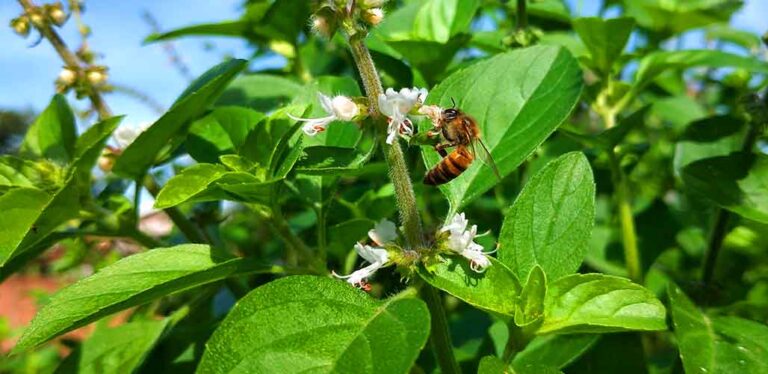
Sending up long stalks with flowers on is known as ‘bolting’. Basil loves to do this! Bolting doesn’t just waste energy, it can also change the flavor of the plant. If you want to collect seeds, flowers are great. But if not, pinch the buds out as soon as they start to develop, to remind your herb what it’s meant to be doing.
And be kind to yourself. If your herbs are flowering you haven’t failed – they’re just doing what comes naturally!
#9 Not Giving Them A Break
Speaking of what comes naturally. Herbs change with the seasons. Even if they are grown indoors. Slower growth and some yellowing of leaves is normal in the winter.
When light levels are low your plant makes less energy. This means less growth. Plants are triggered to enter a more dormant phase when days get shorter. This ‘photoperiodism’ affects how they grow and when they flower.
Embrace The Slow Season
If you’re growing herbs indoors, this sleepy phase still happens, because there are fewer hours of sunlight coming through your windows. Don’t worry, they will perk up when the light comes back! For now, just give them a bit less water, and trim them a bit more gently.
#10 Not Getting To Know Them
Most of the tips above can be applied to most common kitchen herbs. But it’s also helpful to be aware that not all your plants come from the same place, or like the same conditions. Different regions have different cycles to their climates. How your plant responds to the environment and the time of year will vary depending on its origins, and on how it’s adapted to them.
Reading Helps Your Plants Bloom
Understanding your herbs’ personalities will help you know how to help them thrive – and when you’re just expecting a bit much! For example, basil and cilantro are ‘annuals’. Left to their own devices they complete their entire lifecycle in one year. And then they die.
But if you can stop your basil from bolting, keep it indoors in the winter, and give it plenty of hours of light all year round, sometimes you can keep it alive for a couple of years longer. With a bit of a fight. In short, basil was born to die. Dead basil isn’t a failure, living basil is a win!
Similarly, parsley, a biennial, grows brilliantly for the kitchen in year one, but tries to go to seed in year two. Whereas rosemary, a perennial, is naturally inclined to stick around for years.
Follow this link to read more about perennial vs annual herbs
And knowing how your plant reproduces is helpful too. Cilantro bolts when the weather is hot. Mint is a playground bully that spreads under the soil. It needs segregating in it’s own pot or it will take all the other herbs’ lunches. You can read more about growing (and containing) mint here: Getting Started With Mint And Putting It To Use
If your herb is unhappy, take 10 minutes to read about where it’s from, and how it’s lifecycle works, so you can offer it the light, space, water and temperature that it likes best. It will repay you generously for you time!
#11 Choosing The Wrong Companions
Speaking of stealing lunches, if you’ve planted two herbs together, and one is happy while the other is sulking in the corner, you might be trying to meet two very different sets of needs, in the same way.
Companion planting is the principle of planting plants with partners that love the same things as them and grow at similar rates, or, even better, actively support each other’s needs. Pairing plants like this reduces competition, and makes it easier for you to help them thrive.
Try pairing rosemary with thyme, parsley with chives or cilantro, and sage with oregano, for simplified low stress gardening.
It’s Not You, It’s Them
Finally, don’t beat yourself up over mistakes and dead plants. Gardening is a learning curve, herbs can be picky, and even the best horticulturalist loses some plants.
Try to see changes in your plants as information rather than a sign of failure. A plant with yellow leaves, or that droops in the corner instead of growing, is letting you know it needs something from you. With time and practice you’ll learn to interpret those cues, and your herbs will get happier and happier.
You’ve got this!
References
“Productivity, Oil Content, and Oil Composition of Sweet Basil as a Function of Nitrogen and Sulfur Fertilization” Zheljazkov et al. HortScience 2008 43(5)