Tomato Trellis And Support Systems: Creative Solutions And Ideas
Most of us picture tomatoes growing pruned and suspended in a tidy, upright position. And today we’re going to look at 4 affordable DIY support systems.
Left to their own devices, many tomato plants would simply grow in a tangled mess along the surface of the ground. So why do we string up or stake our tomatoes? And is it even necessary?
It helps if we understand a little bit about how tomato plants grow, and what the consequences of natural growth are.
Vines Vs Bushes
There are actually two types of tomatoes available to gardeners. Bush tomatoes (also known as determinate tomatoes) and vines (or indeterminate tomatoes).
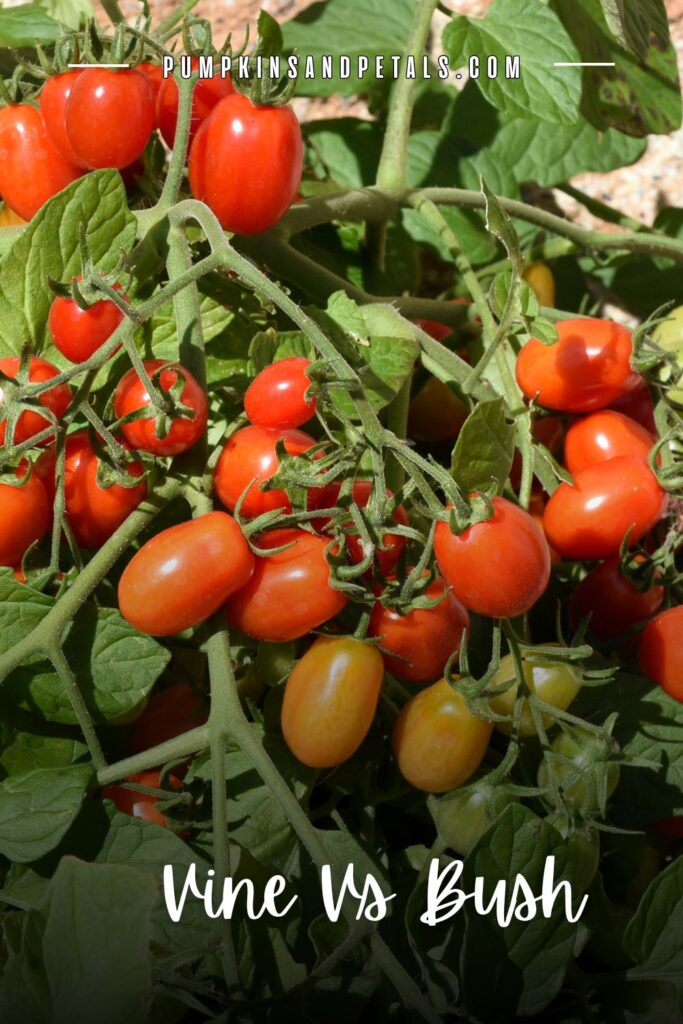
We’ll be talking mainly about the traditional vine or indeterminate type of tomato today. If you have bush tomatoes, they don’t need so much support, though they may benefit from a little help.
Why We Support Our Tomato Vines
Vine tomatoes grow naturally along the surface of the ground. This works well for the tomato and the fruit is in close contact with the soil and the seeds can quickly find a new home and make more tomato plants.
But this type of growth has a number of disadvantages if we want to harvest a good crop for our own consumption. So we support our tomatoes for a number of reasons
- To save space
- To keep the fruit away from ground dwelling pests
- To keep the fruit clean
- To allow air to circulate around the fruit and leaves
- To make it easy to prune our tomatoes
- To allow sunlight to fall on the fruit
- To make it easy to harvest the fruit
- To improve yield
Most of us don’t have the space to grow tomatoes along the ground, but if you do, and are tempted to try it, you may be interested to know that a study carried out in 2022 showed that yield is significantly improved with staked tomatoes, compared with tomatoes that are not staked.
Growing Tomatoes Vertically
Because of these numerous benefits, almost all indeterminate (which simply means that they don’t stop growing!) tomatoes are grown vertically. And there are a number of ways of supporting your tomato vines in an upright position.

We’ll look at four DIY tomato support systems today. These are the ones we have found to be most practical and easy to implement here on our homestead.
The main thing is not to be daunted by the task. It isn’t difficult or expensive to keep those tomato plants up off the ground and they’ll be much healthier for it.
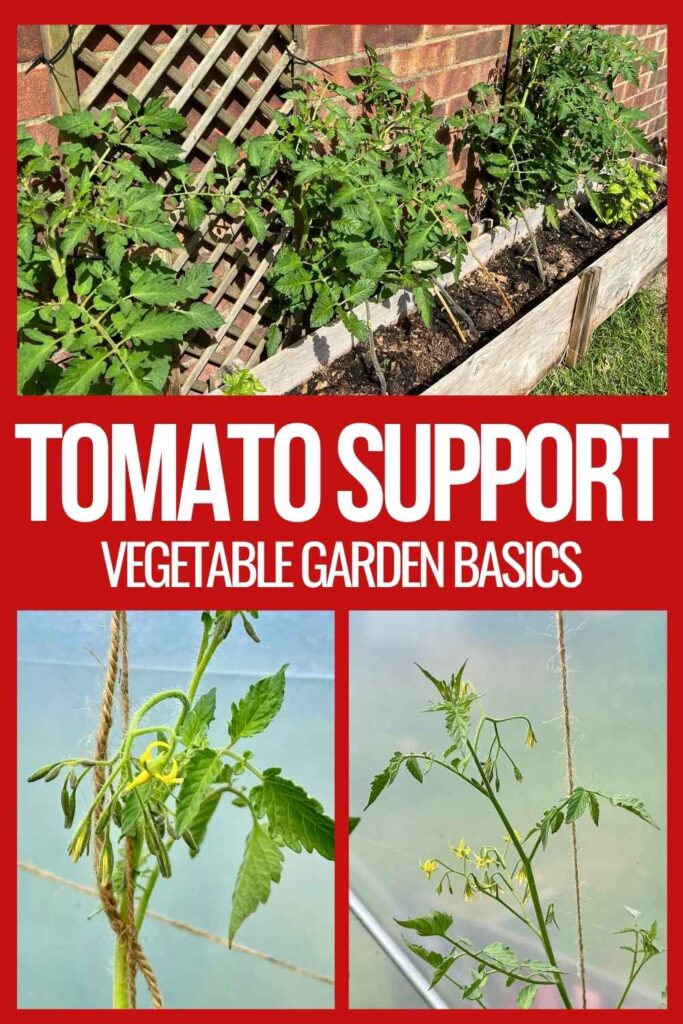
#1 Classic Staking
Attaching each tomato plant to a sturdy stake is the most simple approach. You’ll need a separate stake for each plant and your stakes need to be five to seven feet tall depending on the variety of tomato you are growing. And you’ll need to start staking your plants as soon as they have been transplanted into their permanent pots or beds
You can buy stakes from gardening centers and online. Or make them from sticks or bamboo canes if you have them.
If you are using a sharp cane it’s a good idea to put an upside down yohurt pot on the top of each one to reduce the risk of someone accidentally poking themselves in the eye.
To attach the tomato to the stake you can use garden twine, or garden wire, or zip ties. Don’t tie the plant tightly. The loop should be loose to allow for the growth of the stem.
You’ll need to place the attachments at 6 inch intervals when the plants are small then 1-2 foot intervals once they are over 2 feet in height.
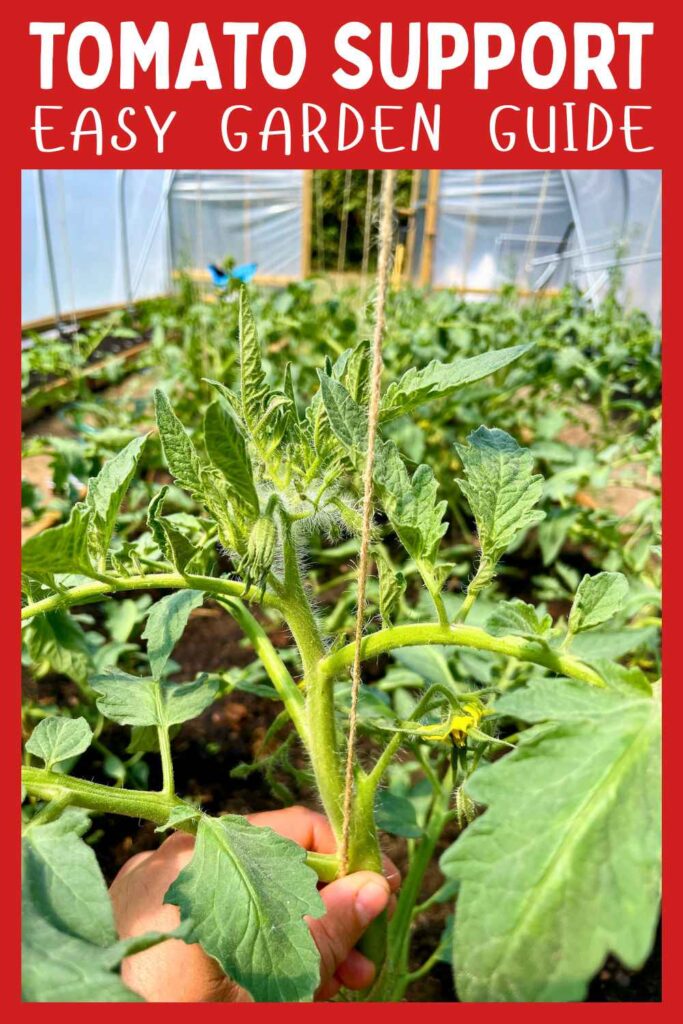
#2 Overhead Stringing Support
An overhead tomato support can be as simple as a string attached to the roof of your greenhouse or high tunnel.
You then attach the tomato plant to the string at intervals as it grows.
Obviously this method isn’t ideal for outdoor tomatoes, unless you build some kind of frame to support the strings first. And if you are going to do that, then you might just as well, use the third method, which is a wooden or wire trellis.
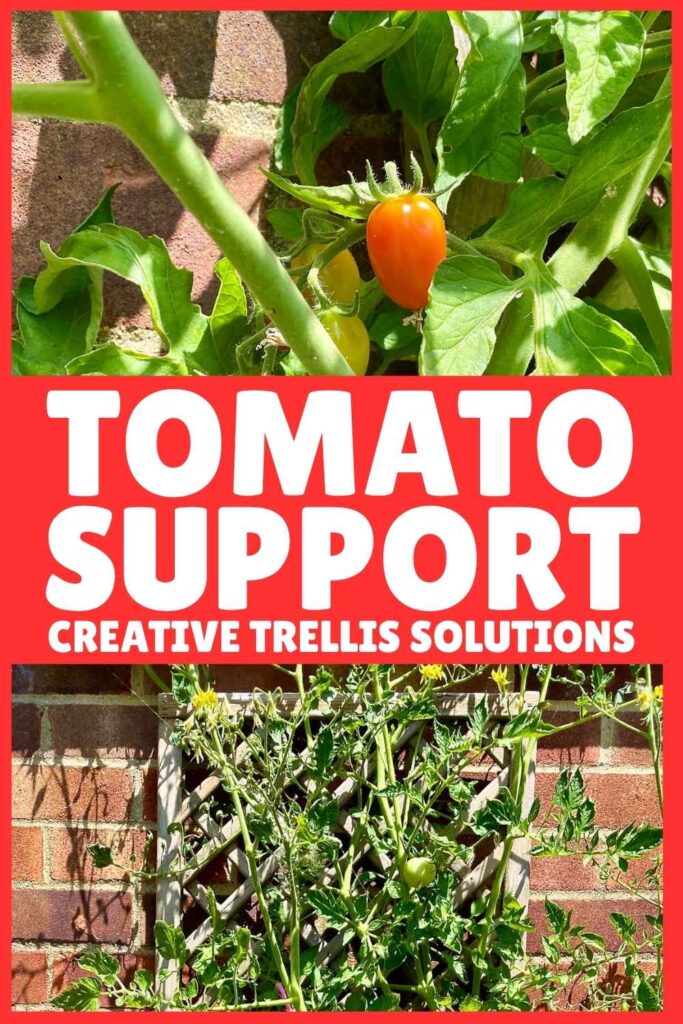
#3 Tomato Trellis
A trellis is a support system with both vertical and horizontal elements. We usually use a stock wire frame supported at either end by a sturdy wooden post. We use these for growing pumpkins vertically too. And for climbing green beans.
You can also use wooden trellis, which looks pretty and can be purchased in panels from garden centers or online. You’ll still need to support it at either end, but it offers better protection against the wind than a wire panel.
You can also grow tomatoes up against a warm wall or fence with strands of garden wire criss crossed over it.
#4 In A Cage
Our current favorite is to grow tomatoes up the insides of these old chicken pens, attaching them to the wire as they grow.
If you are lucky enough to have a fruit cage you can grow tomatoes up the insides of that, or you can make a wire hoop with a large cattle panel bent into an arc.
There’s no limit to how long the vines can grow in this cage as they can be trained up one side and right across the inside of the roof, and down the other side if necessary!
In fact the only limits on supporting tomatoes are those imposed by your imagination!
Supporting Bush Tomatoes
Bush tomatoes are much less dependent on your help, but if you grow them up through a simple plants support stand, they will appreciate the help and less of your tomatoes will droop onto the ground
You can also make a small mini-cage or tube of wire netting around each bush. The branches will grow out through the wire and be supported by it.
The Best Way To Support Tomatoes
The best way to support your tomatoes is the way that is easy and practical for you, using what you have available in your yard or garden. There are no right and wrongs here.
The heavier beefsteak varieties of tomatoes will probably benefit from the studier frame or trellis type support, but it is possible to grow even very large tomatoes with any of these methods
Supporting tomatoes reduces disease, improves yield, makes it easier to care for your plants and harvest your crop. And it saves you a ton of space. All for the cost of a bit of string or a few stakes. So we definitely recommend it!
Don’t forget to share your favorite support techniques below!
References: