Growing Greener Grass With Homemade Compost
We’ve been using compost from our compost pile in our vegetable garden and flower beds for many years. But this year, we decided to give the grass on our homestead a bit of a boost.
We tend to be pretty good about making sure our vegetables and flowers get enough nutrients. But feeding grass is often something that gets neglected.
Constant mowing, dry spells wet spells, and general wear and tear on a lawn takes its toll over time. In our case, our grass had been heavily grazed by our sheep for three years and was looking, well, tired.
Having raised four kids I can safely say that the impact of four sheep on our small field was very similar to the impact of four children playing daily on a lawn. There were bare patches. Patches where moss was getting the upper hand. And after a very dry spring, the ground was hard, and sad looking.
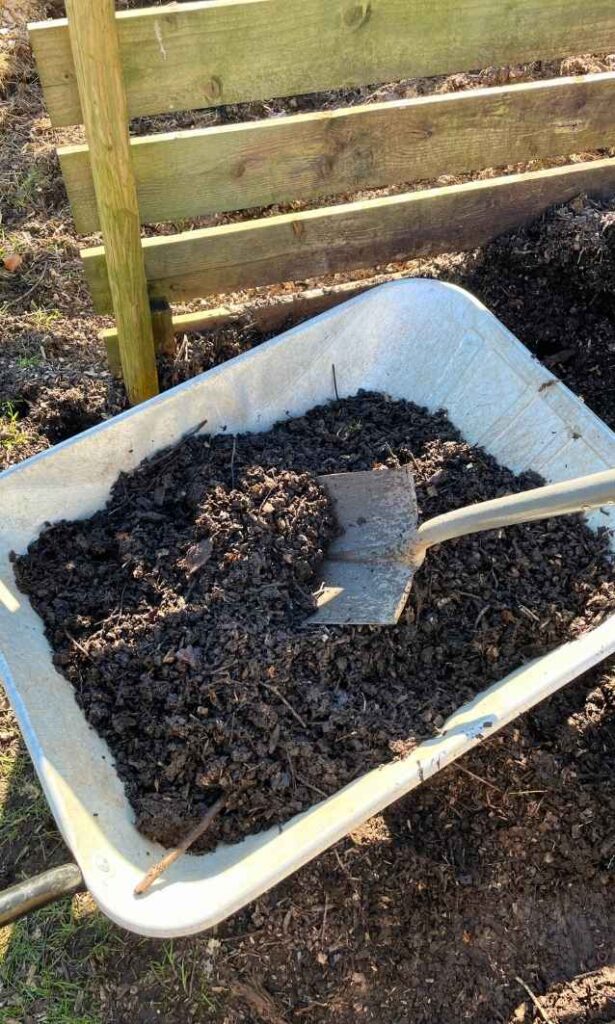
Why Use Homemade Compost On Your Lawn?
Isn’t it easier and a lot more convenient to just by a sack of lawn feed and scatter it all over the lawn. Or what about a liquid feed that you attach to a sprinkler?
Well yes, these methods are convenient. But they have several major downsides.
- Rapid nutrient release
- No structural improvement
- No moisture retention
- No habitat improvement
- Unfriendly to the environment
- Expense
And when you apply compost you have the opposite effect
Slow nutrient release
Commercially produced lawn feed is a quick fix but it does nothing to improve the structure of the soil beneath your grass. And that is where the magic happens. Compost improves the soil first, and the grass second.
Fresh homemade compost is not a fine, homogenous tilth, it has more structure to it and generally has lumps of different types of content inside it. Many of the nutrients in compost are locked away inside those lumps and are released gradually over time.
Structural improvement of the soil
The reason grass grows greener after composting is not just because nutrients are added, but because the soil itself improves and these improvements have a knock on effect.
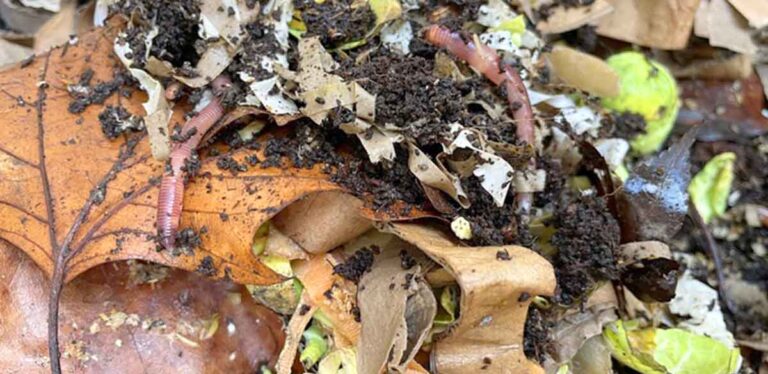
Worms are attracted by the application of compost which they pull down into the soil so that you literally see it disappear over the course of a few days.

You can see this very clearly in the photo above of our grid application where we added a square of compost most days over a period of more than a week. The compost in the earliest grid (far left) has all but disappeared.
Improving moisture retention
I mentioned watering, because many of us water our lawns in dry weather to avoid the dreaded brown patches. But one of the problems with watering is that it washes nutrients out of the soil
When you apply compost directly to the grass it holds water, and prevents water running straight through the surface layers of the soil.
Habitat improvement
I love the fact that compost provides a habitat for a wealth of invertebrate and microscopic life.
Commercial lawn feed on the other hand is completely lacking in any kind of life at all.
It’s environmentally friendly
Who knows where the lawn food on the shelf in the shop has come from, but it almost certainly involved being trucked across the country, maybe even flown in a plane.
And the chemicals that go into it have all had their own journey and made their own carbon footprint.
Made at home has to be a whole lot more environmentally friendly than that.
It’s free!
Last but not least, homemade compost is free. What more can I say on that one.
Well, in fact compost is even better than free, it adds value to your soil, and improves your fitness (you did turn your compost pile didn’t you?)
Are there any disadvantages?
For some people I think the appearance of compost spread over grass might be more than they can live with! Even if its just for a few days.
And maybe they wouldn’t be happy raking up any leftover bits from the grass after the worms have worked their magic. It depends on your point of view.
In other words, if your lawn is your pride and joy, and you want it to look immaculate at all times, you might not be happy with the temporary scruffiness of an application of compost.
If you are not sure (and even if you are sure) it’s important to do a test with a small area first (see below)
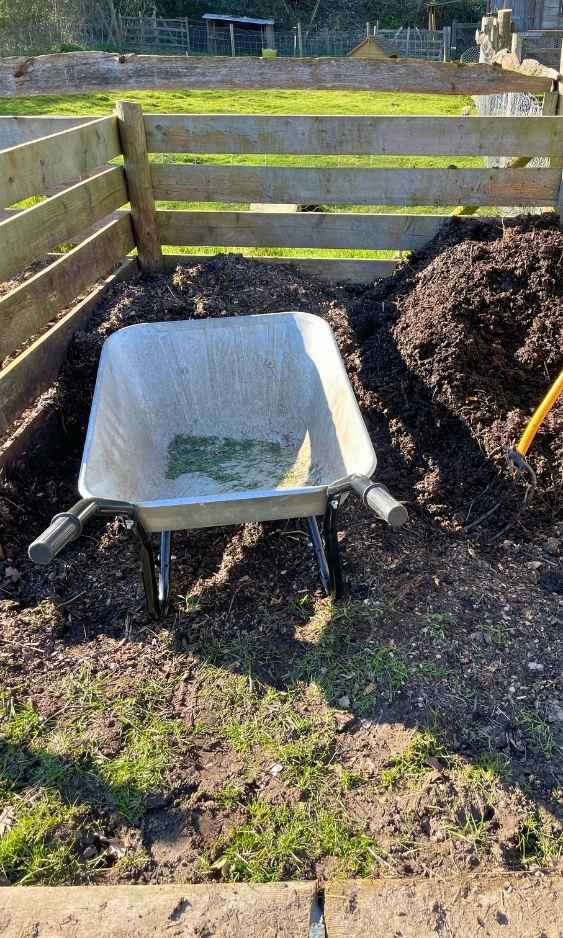
How to apply homemade compost to your grass
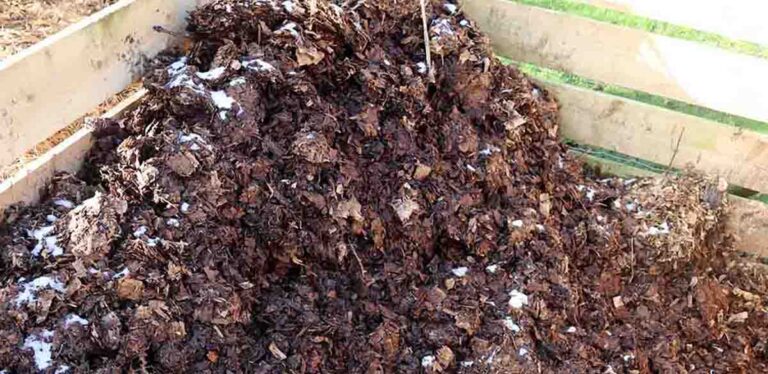
It’s important that your compost is well rotted before you spread it on your grass. We have lots of information to help you get to that point. Our introduction to composting is a good place to start.
You don’t have to apply it in separate squares like we did on our field. We did that so that we could get a clear picture of the impact the compost was having where it was applied compared with the areas that did not get covered.
If you don’t mind raking, then it doesn’t matter if your compost still has a few bits in it that look less attractive than you had hoped, as you can clear these up with a lawn rake once the worms have pulled the bulk of it underground.
How much to apply?
That depends a bit on how much you have available, and how much you care about what your lawn looks like during the treatment. A thin layer that does not completely cover the grass is a good starting point.
If you put a lot of compost on the grass, the grass will find a way through eventually, but it will take longer for the worms to carry the compost down beneath the surface of the soil.
IMPORTANT: Make a test patch
Because of the variation in compost, grass, climate etc, its important to do a test before applying your compost to large areas.
Both to check how much to apply. And to make sure that your compost is well rotted enough not to burn or smother the grass.
Put a layer of compost in a square and take before and after photos to make sure you are happy with the result. You’ll need to wait a couple of weeks to get the initial effects underway.
When to apply?
If you have cool winters and warm summers, then late spring or early summer is ideal, as it lets the grass recover quickly during that early flush of growth.
If you spread compost when its still too cool for the grass to grow much the compost will just sit there and you won’t see results for ages. So hang on until the grass starts to grow.
For information on applying compost to your beds and borders checkout: The When And How Of Applying Homemade Compost
Ready to give it a go?
In our view, home composting is a great way to feed your grass. So if you have any to spare, do a little test and see what you think!
Constantly removing nutrients from your grass, through mowing and watering (which washes nutrients down into the soil) or in our case through grazing, is a one way street.
And with gardening we need to put back what we take out. Homemade compost does exactly that.
Let us know in the comments below if you put compost on your lawn and what you thought of the results. And if you haven’t started composting yet, don’t miss this article: Where To Build Your Compost Pile