Perennial Vs Annual Herbs: What You Need To Know
Perennials, annuals and biennials are words that gardeners throw around a lot. It took me a while to figure them out and it’s very common for people to find them confusing.
If you are not quite sure what they mean, then this is the place to be. I’m going to give you a simple clear cut definition of each term and then I’ll give you some examples.
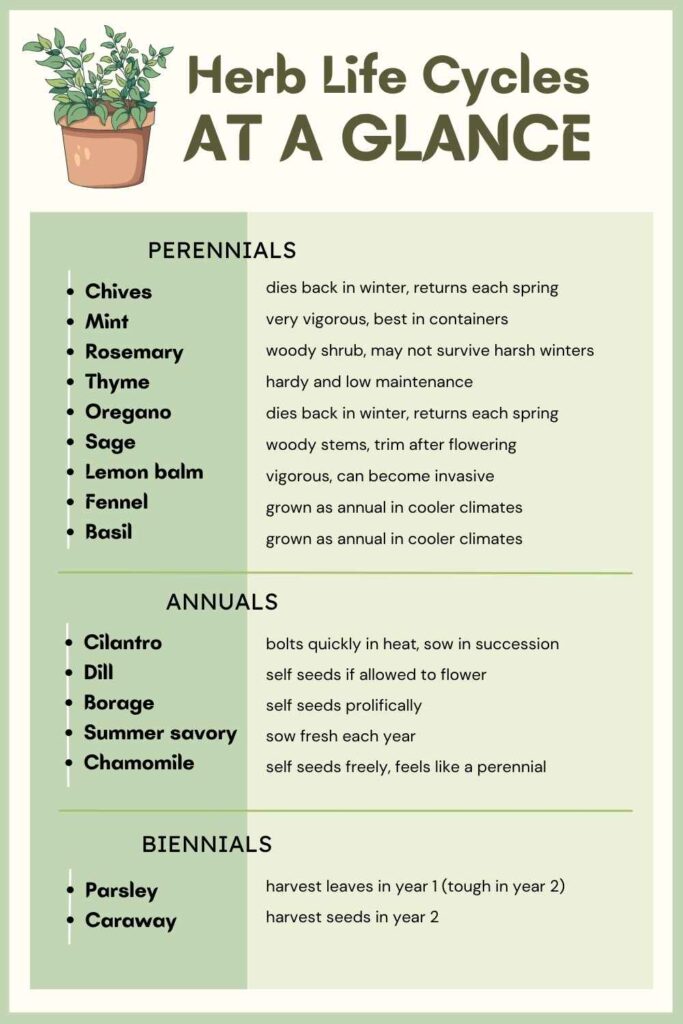
Why does it matter?
Some gardening terms group together plants with similar attributes. I find these very useful, as they help me match plants that grow in similar ways, or need similar conditions to thrive.
The terms we are talking about today fall into this category. They group plants according to how long they take to complete their life cycle. This is definitely useful to gardening fans because it affects whether or not you buy these plants, and where you put them.
We mention the terms perennial, annual and biennial here and there throughout this website, when they might be useful to you.
You are most likely to hear them in the context of herbaceous plants – the soft leafy plants like dahlias and petunias, and of course our herbs.
In this article I’ll be using herbs as examples. But strictly speaking the terms could be used with respect to any kind of plant including trees or shrubs.
What is a perennial herb?
A perennial is a plant that lives for three or more years. It’s a huge, group covering vast numbers of plant species.
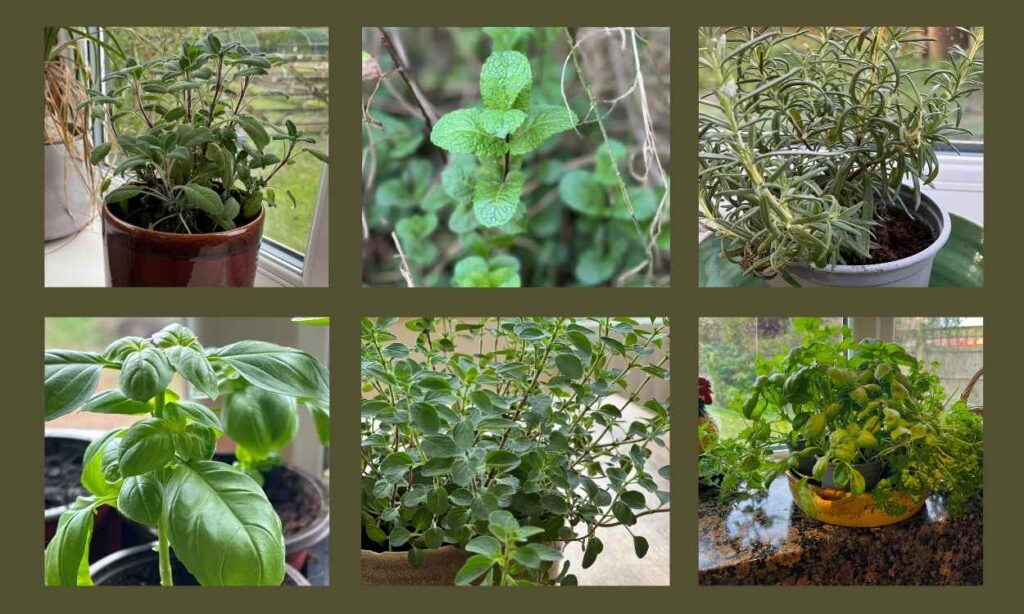
Although they are quite different in appearance both rosemary and mint are examples of perennial herbs. Rosemary is a more woody and shrub like herb, whereas mint is a softer herbaceous plant. Yet both are perennials because their life cycles can last for many years.
Find out how to get started with growing mint here
Many herbaceous perennials can live for ten to fifteen years. And trees can live for hundreds of year. But more than two years or ‘growing seasons’ is the definition of perennial.
It’s important to recognize that we are talking about the potential of your plant’s life cycle. Not the plant’s longevity. Because longevity is also influenced by environment.
And that’s where some of the confusion begins. A perennial plant that is native to one region, may not be capable of surviving outdoors for more than a single growing season, never mind two in another region. In these cases, their lifespan is limited by their environment. We’ll take a closer look at that in a minute.
What is an annual herb?
The term annual is much more self explanatory. This is a plant with a one year life cycle.
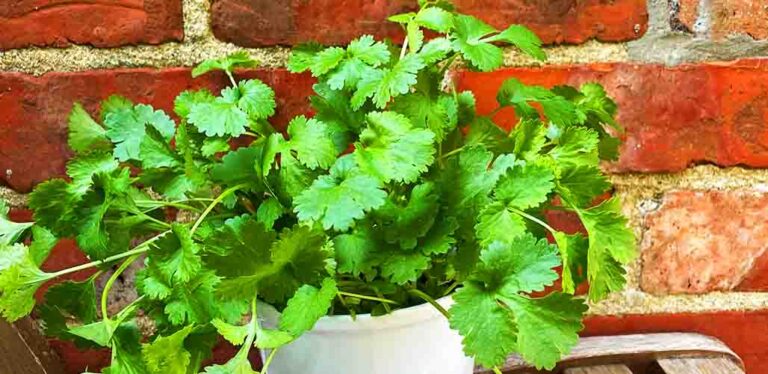
At the end of the year, it dies off completely and has to start over the following year from seeds. Cilantro is an example of a popular annual herb
Tender vs hardy perennials
Many of the tender herbs we think of as annuals are actually perennials. And in the right conditions can survive for several years in a row. Those conditions might include: living in a warmer region (zone 10 or warmer) being overwintered indoors, or spending the winter in a heated greenhouse.
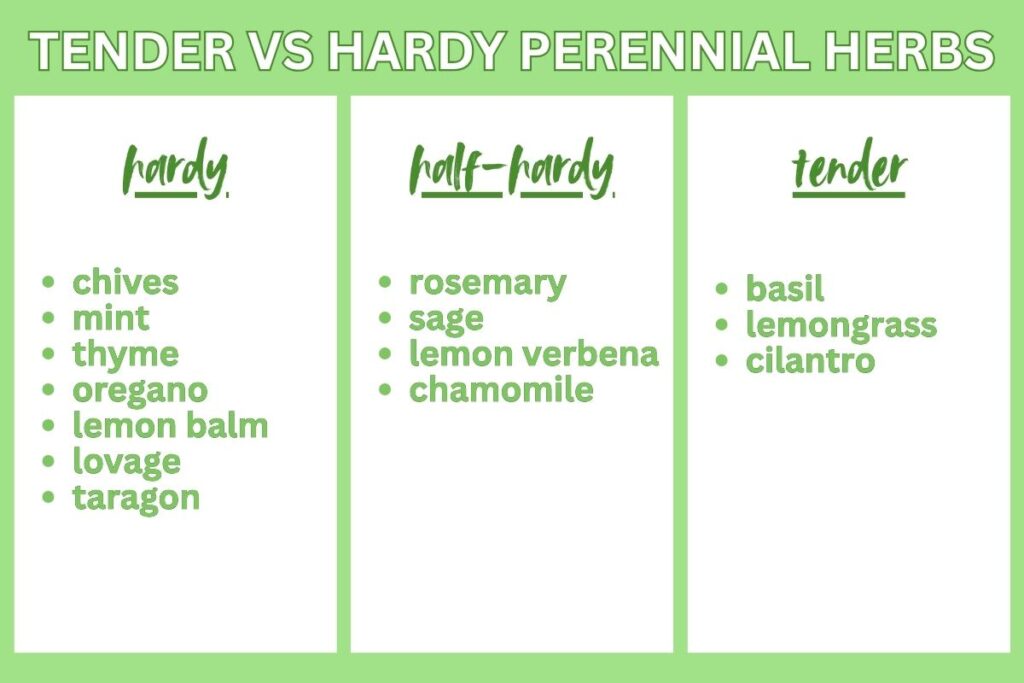
Other perennial herbs are tougher and survive outdoors all year round. In fact we can divide perennial herbs into 3 groups
- Hardy
- Half hardy
- Tender
Hardy perennials
Hardy perennial herbs can survive the kinds of winters experienced in zones 8 and 9, possibly zone 7. And even if their foliage dies back during the winter they are able to grow fresh foliage in the spring.
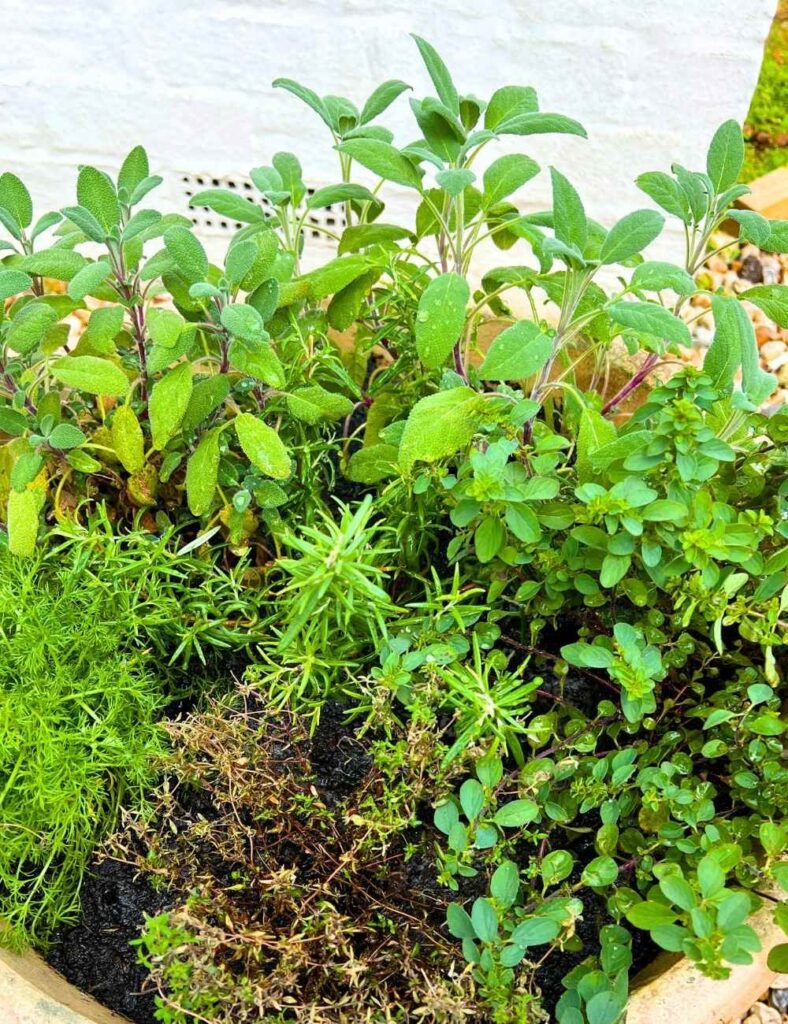
Thyme is particularly tough and we’ve had our outdoor pot of thyme for many years.
Half hardy perennials
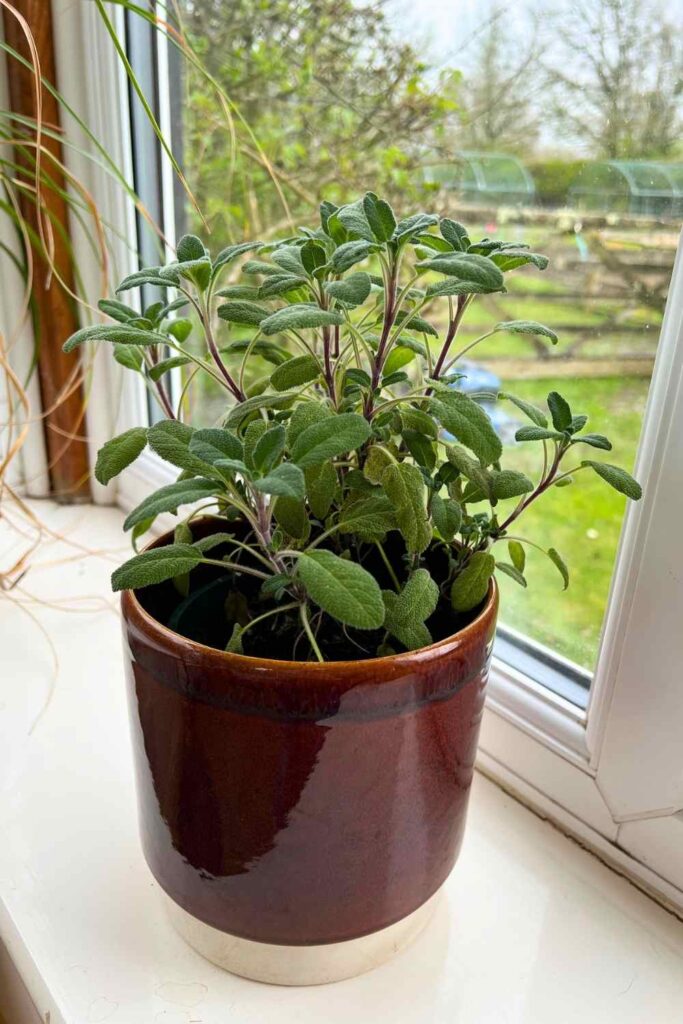
Half hardy herbs might be ok in an average winter but may succumb to severe frost or waterlogged soil in a bad winter. We lost our sage plants here in southern UK this winter. We are equivalent to a USA zone 8 but the winter has been very wet and sage really doesn’t like having constantly wet feet (who does!).
Cooking without sage would not be the same. Fortunately we kept one back indoors! (If you like the idea of growing herbs indoors as a back up, check out: Windowsill Herb Gardening)
And thankfully, our rosemary plant, also half hardy, and planted right next to the sage that sucumbed, has survived.
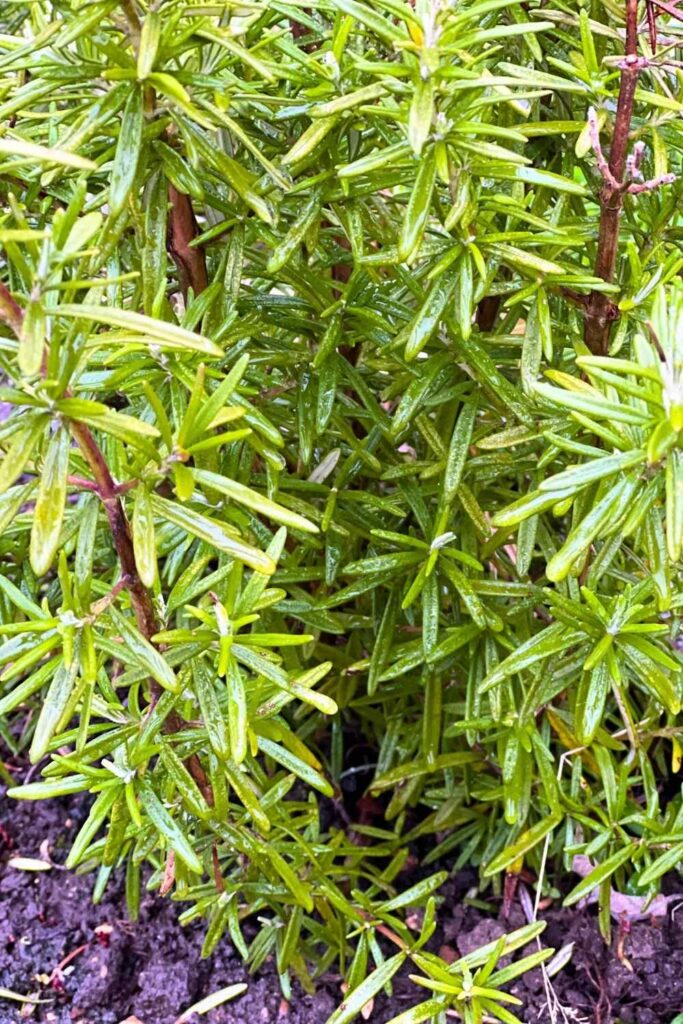
Tender perennials
Other perennials are tender. This means they are unable to survive harsh winters. Many of our perennial herbs are tender. Their origins lie in the mediterranean where winters are mild and summers hot.
A perennial herb that dies in cold winters may be confused with an annual herb.
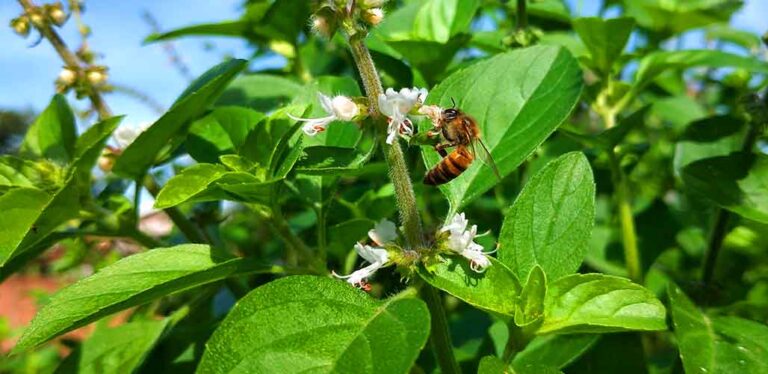
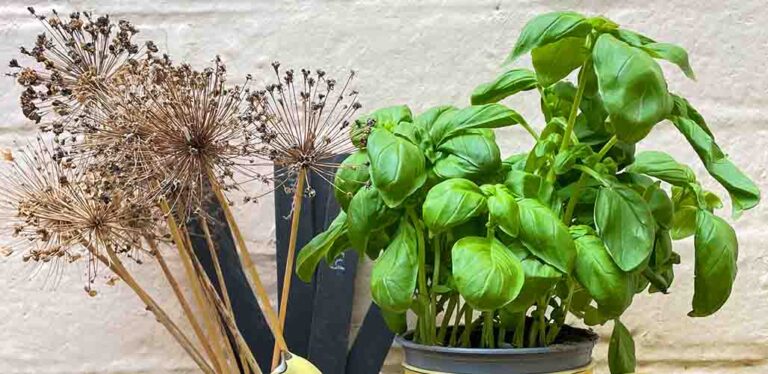
Basil is a great example. Many people think of basil as an annual because it dies off in the fall and has to be grown again from seed the next spring. Basil does flower and make seeds if not harvested regularly, but it is also a perennial. And in the mediterranean where it originates, and in regions with a similar climate, it lives for years.
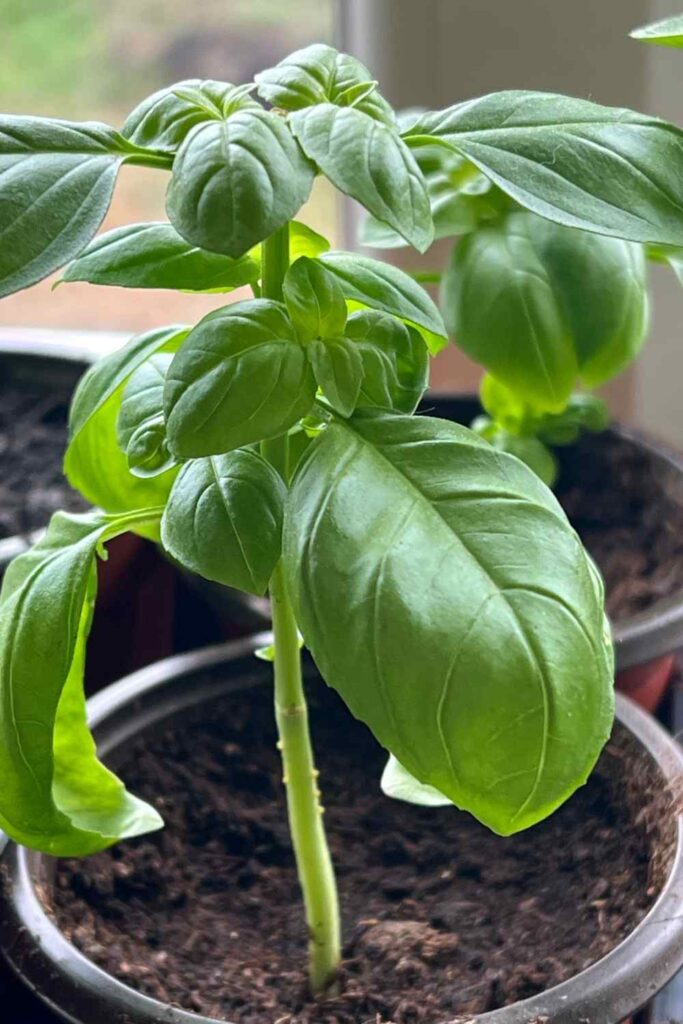
Many of the tender plants we think of as annuals are actually perennials. And with the right care and attention can survive for long periods of time.
That doesn’t mean you are wrong to grow your basil from scratch each spring. It’s fine to do that if you want to. (How To Grow Basil)
But it does mean that if you want to grow your basil indoors or in a heated greenhouse, it’s actually capable of growing for many seasons in a row.
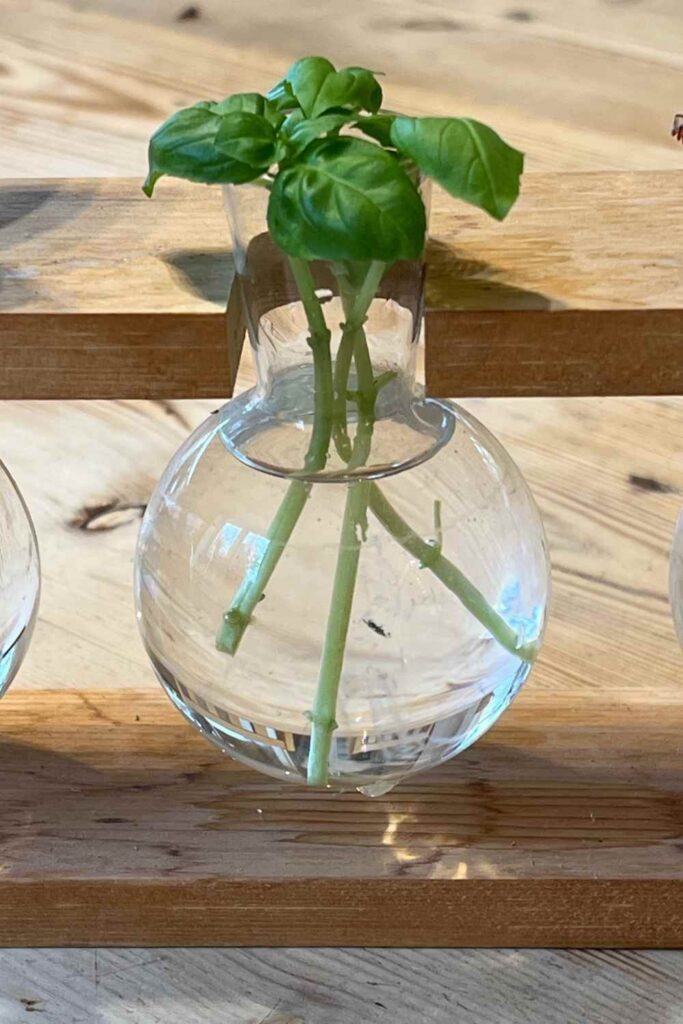
Basil cuttings also root easily in water. You can find out how to have a never ending supply in How To Grow Herbs In Water
What about biennials?
The life cycle of a biennial is like a two-act play. Act I is the first year when the plant focuses entirely on growth.
It develops a strong root system, and strong foliage where it gathers and stores energy, all in preparation for act II. And as fall turns to winter, the biennial lies dormant waiting for spring.
In the spring of the plant’s second year of life, it switches into reproductive mode.
Act II culminates in the production of the all important flower stalk.
Parsley is a great example of a biennial. It’s fairly hardy too and can cope with cold weather. But from a gardeners point of view there is little to be gained from parsley’s second act. As this involves the plant focuses on producing flowers, and the leaves lose their flavor and become tough. So for most of us, it’s better to start over each year with fresh parsley grown from seed.
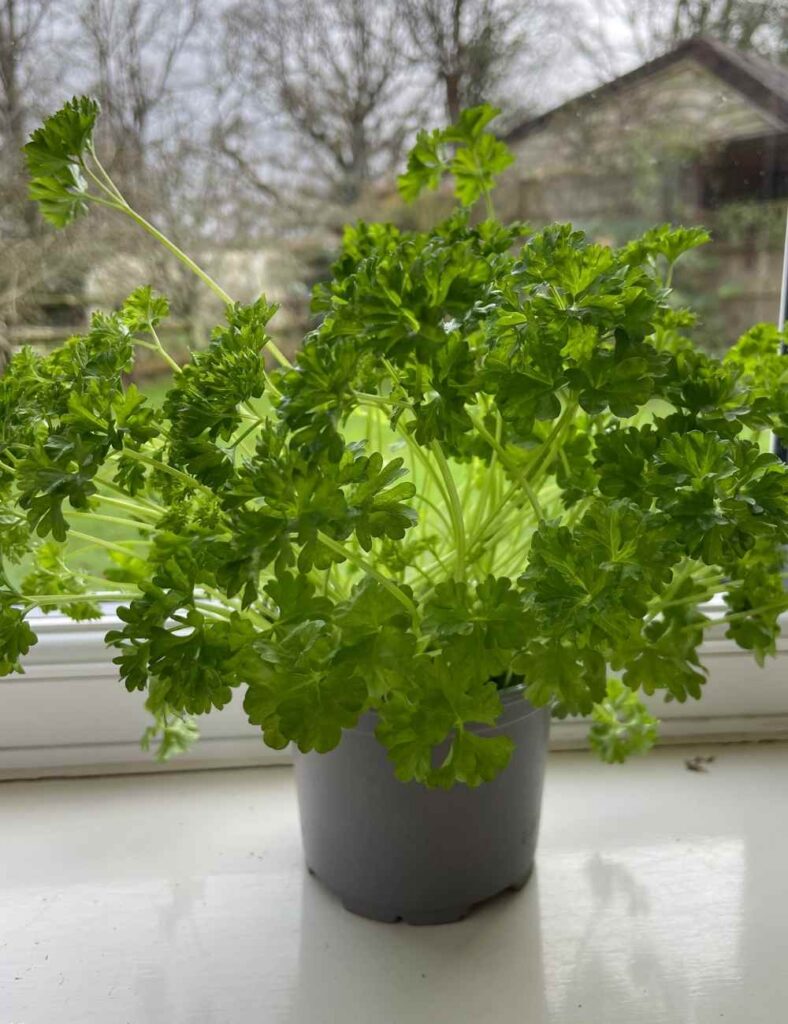
True biennial herbs are fairly rare, and biennials are more commonly found among some of our favorite flowering plants like foxgloves and sweet william.
Getting the most from your herbs
Knowing whether or not your herb is an annual, biennial or perennial will help you get the most from them.
Annuals burn out in just one year and you’ll need to start afresh with them each spring. Most biennial herbs have little value in their second year so you may as well treat them in the same way.
Perennials may be able to flourish for years if your climate is right, especially if they are woody like many shrubs and trees.
But in many cases you’ll need to protect your perennials from cold weather or start over each spring just as you would with annuals and biennials.
Let us know how you get on with growing herbs in your garden in the comments below! And have fun with your herbs this summer!