Propagating Herbs In Water – What Works, What Doesn’t And Why

There’s something quite magical about putting a cutting in a glass of plain water and watching new roots appear and grow.
But are water roots as vigorous and healthy as roots grown in soil? How long do they take to grow? And can our favorite herbs be propagated this way?
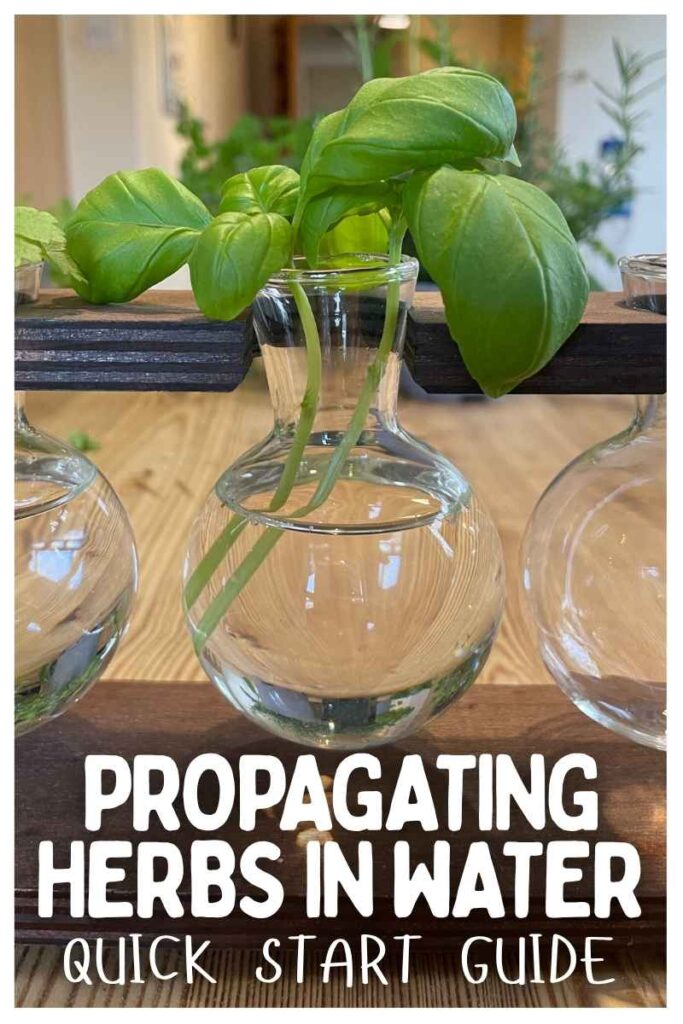
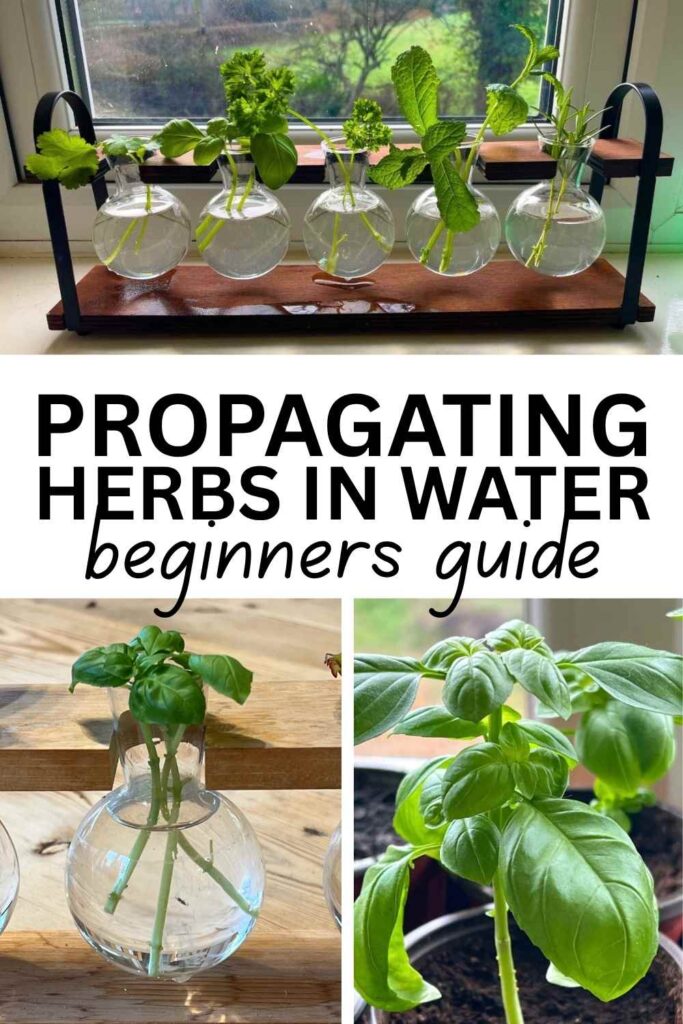
I’m going to answer those questions today and I’ll show you what can be achieved with herb cuttings and a little water, and how to get the best results! I’ll let you know what happened to the cuttings I took in the photo above. And we’ll talk about why some failed and why some thrived.
We’ll also look at the growing trend for hydroponics. That’s where plants spend their entire lives in water and skip the soil stage entirely. And see if that’s something that might work for your herbs.
Water Rooted Herbs
Taking cuttings and rooting them is great fun. What’s not to like about making ten new plants out of a single old one?
To make those cuttings take root, you can plant them in soil, or you can put them in water.
Many of the most popular herbs that we use in cooking, will form roots happily in plain water. But water roots are not the same as roots that form in a seedling.
What are adventitious roots?
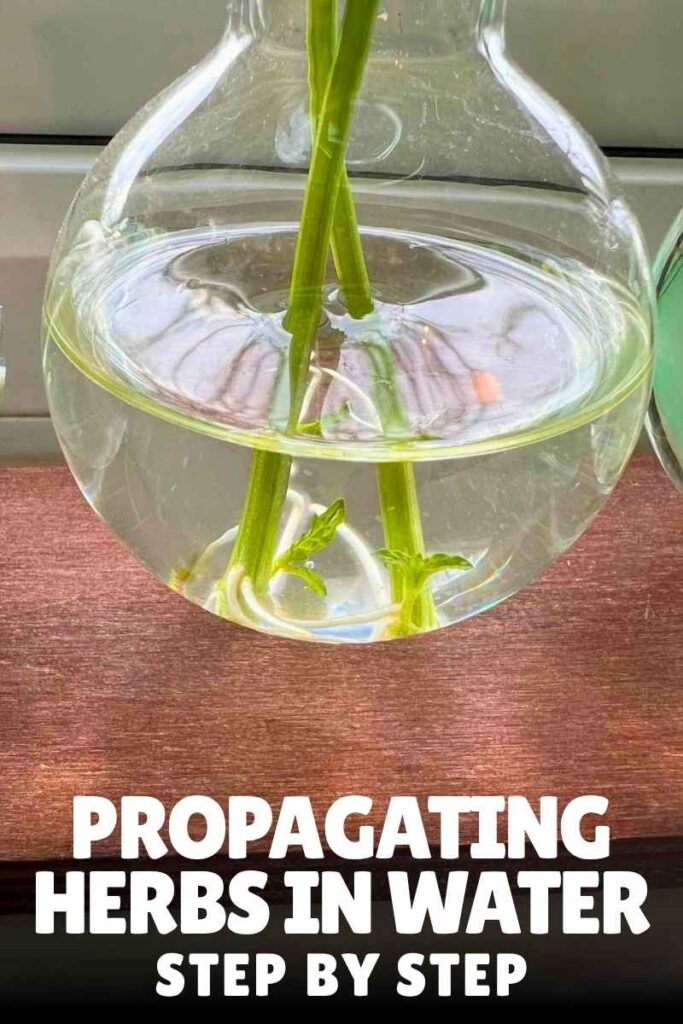
Adventitious roots are a specific type of root that forms in ‘nodes’ on the stem of the cutting. Basically any cutting removed from a plant has to form adventitious roots because they don’t have any actual root tissue.

Some plants are much better at forming adventitious roots than others. We’ll come back to that when we look at which herbs are best for water rooting.
To make a cutting grow adventitious roots, we can place them either in soil, or in water. And there are pros and cons to each
Less Disease
Water rooting is a great way to avoid some of the plant pests that love to take up residence in the moist compost in your flower pots.
That can mean fewer or the root diseases that can easily overwhelm young plants
More fragility
On the other hand, water roots on cuttings are more fragile than soil roots which grow millions of microscopic hairs to seek out nutrients and oxygen in the spaces within your potting soil.
Water roots don’t need these hairs because they are constantly bathed in nutrients and can absorb oxygen from the water all around them.
Transplant shock
The downside is that when you eventually transplant your water rooted cutting to soil in a pot, they cannot extract nutrients efficiently from the soil and have to get to work and make these microscopic hairs as fast as they can.
The impact of this change is called ‘transplant shock’ and there is a risk that you will lose some of your water rooted cuttings at this point.
However there are things you can do to minimise the stress of transplanting your water rooted cuttings. And I’m going to give you some great tips to help you avoid transplant shock below
Better Growth
Fortunately there are some more upsides to growing herbs in water. Even keeping them in water for the entire life of the plant. A perhaps surprising benefit is increased growth rates.
A study published in 2024 found not only higher yields in basil grown hydroponically, but also more essential oils. That means more flavor for those of us that are eating the leaves!
Growing herbs hydroponically
Achieving total hydroponic growth for your herb garden is a little more involved than simply rooting cuttings in water.
It usually means providing an indoor environment where the plant has continuous supply of nutrient rich water, and importantly daylight.
And that means investing in some basic hydroponic equipment, including full spectrum lighting. It’s a fascinating topic and one we’ll be going into in a bit more detail in another article.
For most people, rooting herbs in water and then transplanting them into pots to grow on the windowsill or outdoors in the herb garden, will be a more achievable target. And that’s what we’re going to focus on today
Convenience and fun
There are other differences between soil and water as a rooting medium for your herbs (I’ll list them in the table below) but one we shouldn’t overlook is the pleasure to be derived from being able to see roots growing.
It’s a fun activity, and not just for younger family members!
I defy anyone to not be delighted to watch your tiny cuttings develop a network of roots on your windowsill.
Can any herb grow water roots?
Remember that we are looking for the nodes that are able to produce those adventitious roots we talked about.
A plain bit of stalk or stem with no nodes is unlikely to produce roots because the hormones necessary for rooting are only found in those nodes.
That means some herbs, such as cilantro, that grow long single stems from a taproot, are difficult to water root because they don’t have much in the way of nodes.
In our little experiment below after just one week, you can see that the mint and basil are both growing water roots. The cilantro (far left) and the parsley (3rd from left) still had no water roots after a month. Nor did the rosemary. But the rosemary surprised us later – I’ll put that in another photo below

Herbs like mint, lemon balm, and basil make better choices for your first water rooting attempts as they have clearly defined nodes along the stem
How to take cuttings for water rooting herbs
Read through the steps and assemble everything you need (scissors, a glass, your herbs) before you start.

It’s fine to use growing herbs you can purchase in pots from the grocery store, but the ready cut leaves you buy in a bag probably won’t be suitable.
Step 1: Choose your containers
Have some containers ready that are deep enough to hold about three inches of water.
I like plant propagation stations – I have the one in the photo below, I bought it from Amazon. It required a few minutes self assembly but I like the ‘labroratory’ vibe!

Of course, you don’t need a plant propagation station to water root your herb cuttings. You can use a tumbler or glass vase.
Does it have to be glass?
Absolutely not! In fact an opaque container is even better as the plant roots like the darker environment and the water is less likely to grow algae.
My view is that watching them grow is half the fun, so I like to use clear glass.
Step 2: Adding water
I suggest you do not use tap water. Most plants prefer water that isn’t chlorinated, and the chlorine in tap water may cause chemical burn on the sensitive newly forming adventitious roots.
Each day I fill a large jug of water and leave it to stand on counter for 24 hours before using it to water my houseplants. And I used this water in my propagation station. It’s probably not 100% free from chlorine but it’s much better than tap water.
Add the water to your container.
Step 3: Taking cuttings
You need a good length of stem for your cutting. Four to six inches long is ideal.
Snip through the stem at an angle just below a node.
You are going to want the bottom two to three inches of the stem to be submerged in the water so remove any leaves off this part of the stem. They’ll just rot otherwise.
Don’t leave too many leaves on the cutting – a couple is fine. Remember that the leaves will lose water through transpiration and the plant stem will find it harder to push that water up to the leaves before it has a root system to help.
Be careful not to damage the node when you snip off the leaves. Place the cuttings in the water in the container
Step 4: Positioning your container
Place the container on a windowsill. Avoid a south facing window especially in summer, as your container will get too hot and you risk cooking your cutting and burning the leaves.
An east facing or north facing window is ideal. Bring the herbs off the window sill for the night if temperatures outside are still cold.
You should also avoid placing your herbs in an unheated room if the weather is cold, most herbs like some warmth in order to grow well.
Roots will be unlikely to grow on most mediterranean herb cuttings below 50F and growth will be boringly slow if temperatures in the room keep dropping below 60F
How to avoid transplant shock
Water rooted herbs are at their most vulnerable when the time comes to move them to potting soil.
But there are several steps you can take to minimise the chances of transplant shock.
- Get the timing right
- Use the muddy method
- Make a quick plant sauna
- Keep it shady
- Make some tea
Get the timing right
Watching the glass container fill with roots is fascinating, but don’t let it take priority. A massive tangle of roots may look impressive but they will have a hard time adjusting to life out of the water
The longer you leave your cutting in water, the more specialized and ‘water adapted’ those roots become.
Once they reach between 1-2 inches long, it’s time to make the leap from water to soil.
Use the muddy method
When you transplant your cutting into potting soil, instead of ‘firming the roots in’ like you might with a soil rooted cutting, pack the compost very loosely around the roots and add a lot of water to create a muddy consistency.
Keep this muddy puddle around the roots very wet. That way the roots still have access to a lot of water until they have built up a nice network of root hairs.
Make a quick plant sauna
This simply means placing a clear plastic bag or upturned clear plastic container of some kind, over the whole plant pot to keep the air around your plant nice and humid.
Leaves lose a lot of water through transpiration and the immature root system will struggle to replace this.
Having a little humidity tent around the plant reduces this moisture loss. It also reduces drafts so helps to keep the newly transplanted herb warm.
Keep it shady
Even herbs that like bright sunlight will benefit from a shadier spot for the first few days after transplanting.
That’s because direct sunlight increases the plant’s need for water.
So if you had planned a very sunny spot for your newly potted herbs, it’s a good idea to move them back from the light for a few days. Or place a some card behind them to provide shade. You can then move them back into the sun once they’ve had a week to settle into their new pots
Make some tea
That’s for the plant not you! For those of you that have some willow to hand. You can soak willow twigs in water for a while and give this willow ‘tea’ to your cuttings to drink.
It contains salicylic acid that will help with root growth.
Alternatively you can head down to your local garden center and buy a little bottle of seaweed extract, which has a similar effect.

The pros and cons of growing herbs in water
As you can see, water rooting herb cuttings is not without its challenges. Growing herbs in water can reduce exposure to soil-borne pests, but water-grown roots are more fragile and may experience transplant shock when moved into soil. With the right techniques, however, this transition can usually be managed successfully.
Some herbs, such as mint and basil, are better suited to water propagation. While others, like cilantro, are less cooperative.
But there are practical steps you can take, such as using dechlorinated water, and picking a good location for your cuttings to grow, that will improve your chances of success.
Whether you’re simply having a bit of fun, or wanting to expand your kitchen garden, growing cuttings in water is a fascinating and valuable experience. Especially for anyone that wants to learn more about the way plants grow and develop.
Follow the steps above and let me know how you get on, in the comments below!
You might also enjoy
- The 8 Easiest Herbs To Grow
- What To Plant With Basil
- Should I Let My Basil Plant Flower?
- How To Propagate Tomatoes From Side Shoots