The Best Herbs For Natural Pest Control
I describe myself as an “aspirationally organic” gardener.
I don’t like to use synthetic pesticides. But I do let them sneak in from time to time. I almost never use commercial weed killer – I have three strong teenagers to pull weeds for me! I do use synthetic fertilizer – but only sparingly. You get the picture! I try to find a compromise between planet-friendly gardening, and low maintenance gardening.
Over the years I’ve gradually become better at managing without man-made chemicals in my backyard, but there’s always more to learn. And the stories we’re handed down from other gardeners aren’t always as helpful as we might hope! So I’ve been reading up on the actual evidence for using herbs for pest control. And the results are fascinating.
What Is Natural Pest Control?
To me, ‘natural pest control’ as a gardener doesn’t just mean avoiding synthetic formulations. It means, growing a garden that can protect itself. Without the need to extract or concentrate plant oils.
Some herbs produce amazing essential oils, that can act as pesticides, insect repellents, and even antiseptics. But my favorite herbs for pest control are the ones that are helpful just by growing nearby – so that’s the focus of our article today. It’s been so interesting to discover which of the plants I use are truly effective against pests, which are overhyped, and which may actually be a lot more helpful than I gave them credit for!
So without further ado, here are my fourteen, evidence-based, favorite herbs for natural pest control!
Mint: A Tale Of Two Varieties
Let’s start by clearing up something that I didn’t know for a long, long time. Peppermint oil, does not come from garden mint. (If you already knew that, please don’t laugh….)
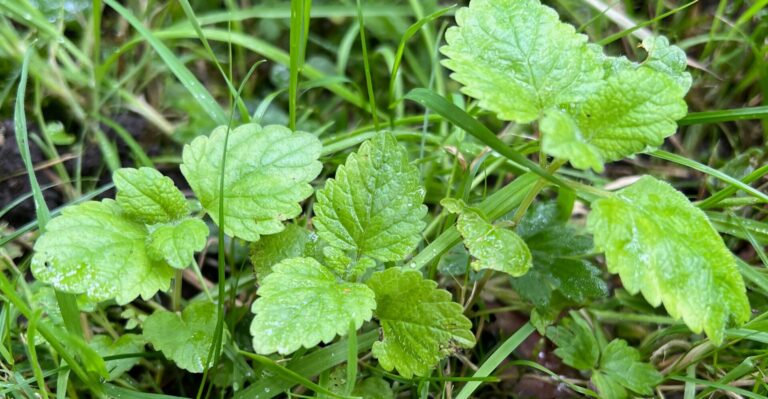
The mint (mentha) family has a range of varieties. The one commonly found growing wild in gardens across Europe, Asia, and North America, is spearmint (Mentha spicata), often known as garden mint.
Garden mint does have some pest repellant properties, but the menthol levels in the leaves are relatively low, and tend to just protect the mint plant itself, rather than any neighboring plants.
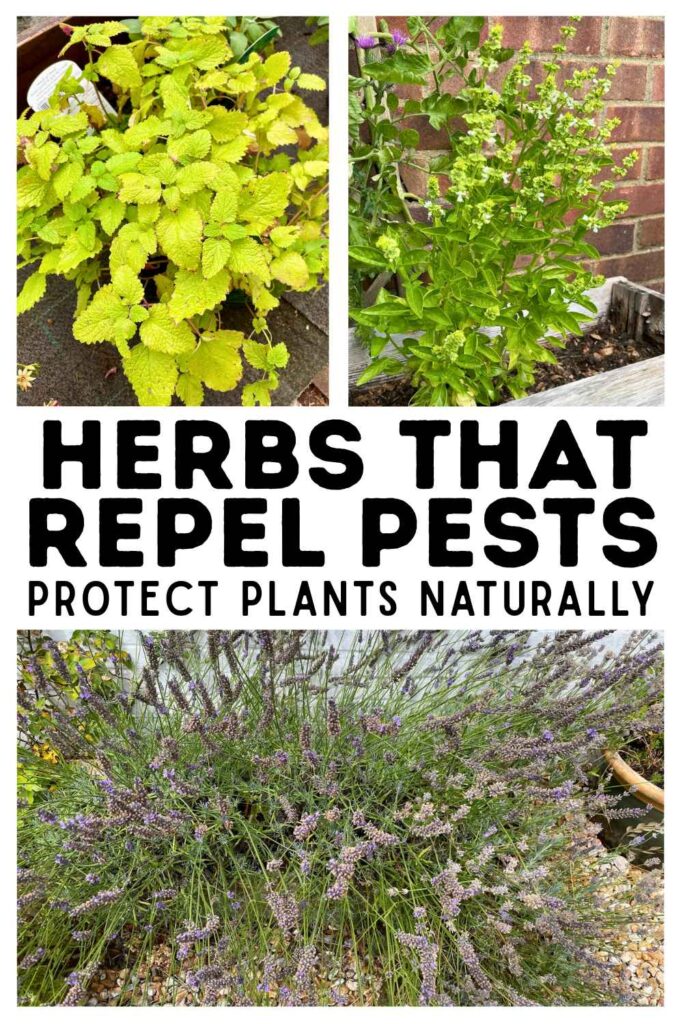
Garden mint’s close cousin, peppermint, on the other hand, might be a bit more helpful. Peppermint (Mentha x piperita) is a naturally occurring hybrid of spearmint and water mint. It has smoother, pointier, leaves than garden mint and, crucially, a lot more menthol. The ‘lemon mint’ in my garden is actually a variety of peppermint, so less closely related to my regular garden mint than I once thought. And variations like ‘chocolate mint’ and orange mint all tend to be peppermint cultivars too.
The menthol levels in peppermint plants are very high. Concentrated peppermint oil is a proven insect repellent, confuses ants looking for the way home, and can even kill some soft bodied insects. And as a side benefit, mice hate it too!
But these are all benefits of the essential oil. There’s no doubt that extracted peppermint oil is chemically powerful – but it doesn’t really meet my goal of ‘a garden that protects itself’. Peppermint plants are great at protecting themselves. But there isn’t much evidence that they pass that protection on to the plants around them. A study planting peppermint alongside tomato plants, failed to protect the tomatoes from tomato fruitworm. And studies that planted peppermint alongside melon or peach crops showed no decrease in aphid counts.
The evidence shows that peppermint oil is great for ‘natural’ pest control. But that the traditional of planting peppermint to keep pests away, may be a lot less valid. Which I find a little disappointing. So let’s take a look at a plant whose traditional uses actually hold up under examination.
Lavender: The Great Bed-Bug Deterrent
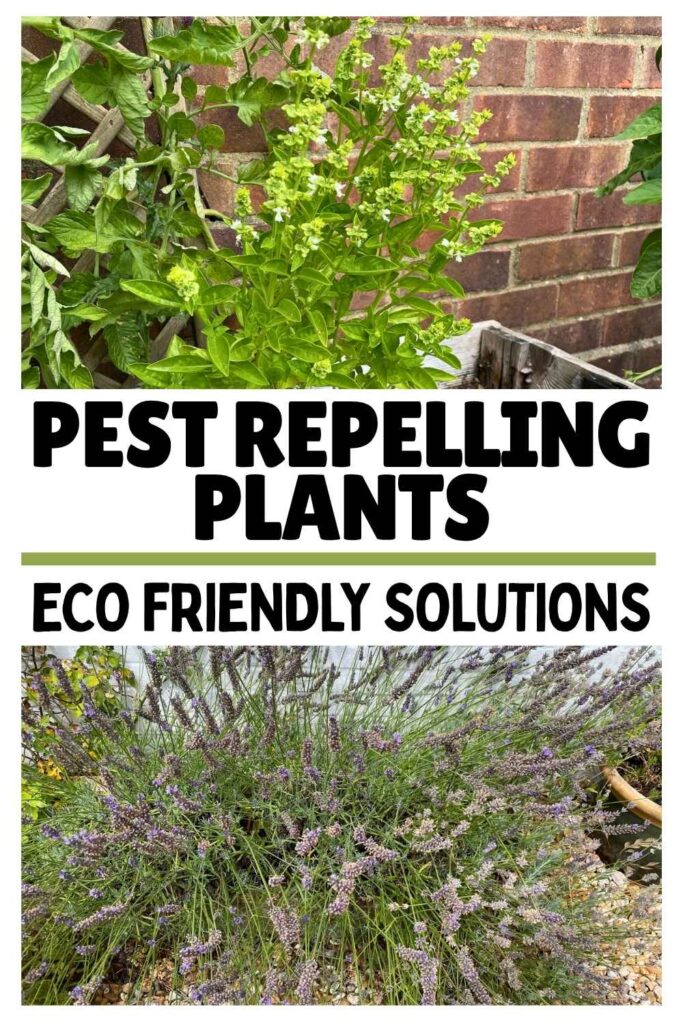
I love lavender. I find the smell genuinely peaceful and relaxing, the flowers are beautiful, pollinators love it. As someone who does a little sewing in her spare time, I find small lavender filled pouches fun and easy to make, and a lovely treat to leave on a pillow.
The traditional of leaving lavender in with stored bedding and clothes has very logical roots. Lavender contains a compound called linalool that disrupts insect nervous systems, and one called linalyl acetate, that acts as an insect repellent. Extracted as an oil, lavender is a potent insecticide and will kill mites, aphids, and clothes moths, among other insects. And in the days before central heating and proper damp proofing, dried lavender, renewed regularly, probably did help reduce insect infestations in clothes and bedding. So bedding that smelled like lavender was probably a lot more restful to sleep in, for more reasons than just the pleasant smell.
Nowadays, I use lavender indoors because it smells nice, and I like it! It’s unlikely that it’s doing any pest control in my modern house. But could it be helpful outside?
Sadly, the answer is probably not. There’s not much evidence that lavender plants repel insects strongly enough to protect neighboring plants. If you’re planting lavender anyway, you may like to pop it near your more aphid-prone plants, just in case. But the evidence suggests that it’s the concentrated oil that really does the work, and that the plant alone just doesn’t make a real world difference.
Fortunately, there are other herbs that do….
Lemongrass: Natural Mosquito Repellant
Lemongrass contains a high percentage of citral – an aromatic oil with a strong lemon scent, that is chemically very similar to citronella oil. Studies show that citral is great at repelling mosquitos and fruit flies, among other insects. So much so that planting lemongrass amongst your berries, cherries, tomatoes, and plums, is genuinely likely to help protect them. And some people make up dilute solutions of lemongrass, to use instead of shop bought mosquito repellent. But concentrated oils can burn the skin, so I don’t recommend you wear these unless you’ve made them up under professional guidance, or bought them from a reputable professional.
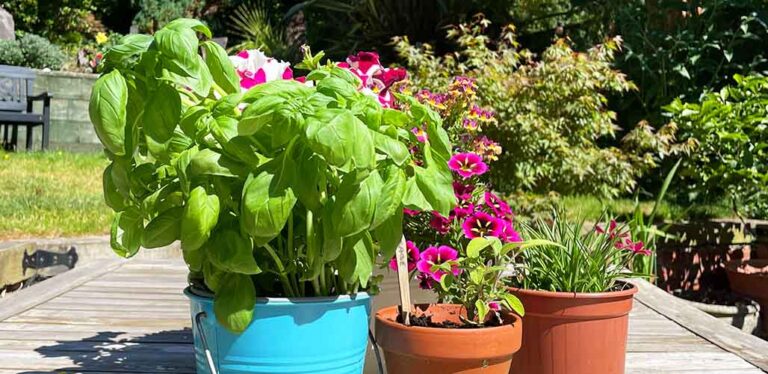
Instead, I like to grow lemongrass in pots, around my favorite outdoor chairs. And I just reach over and snap and crush a handful of stems when I’m sat out in the evening. I can’t tell you for certain that it reduces the numbers of mosquitos – but it feels like it helps. And it does smell better than citronella candles! Just don’t forget to bring any lemongrass pots indoors over winter if you get frosts, or you’ll need to replant next year.
Lemongrass also protects companion plants in a more complex way. A study showed that planting lemongrass with tomatoes increased the range and variety of insects on the tomatoes. More ‘good’ or helpful insects – and more ‘bad’ ones too. This increased biodiversity can be a good thing for crops – but striking the right balance can be tricky. To really make this system work, you need to use more than one ‘natural pest control’ herb. For example, planting lemongrass, to repel, and a second herb that attracts plant eating insects away from the crop, can magnify protection.
Basil: Controls Pests By Attracting Them
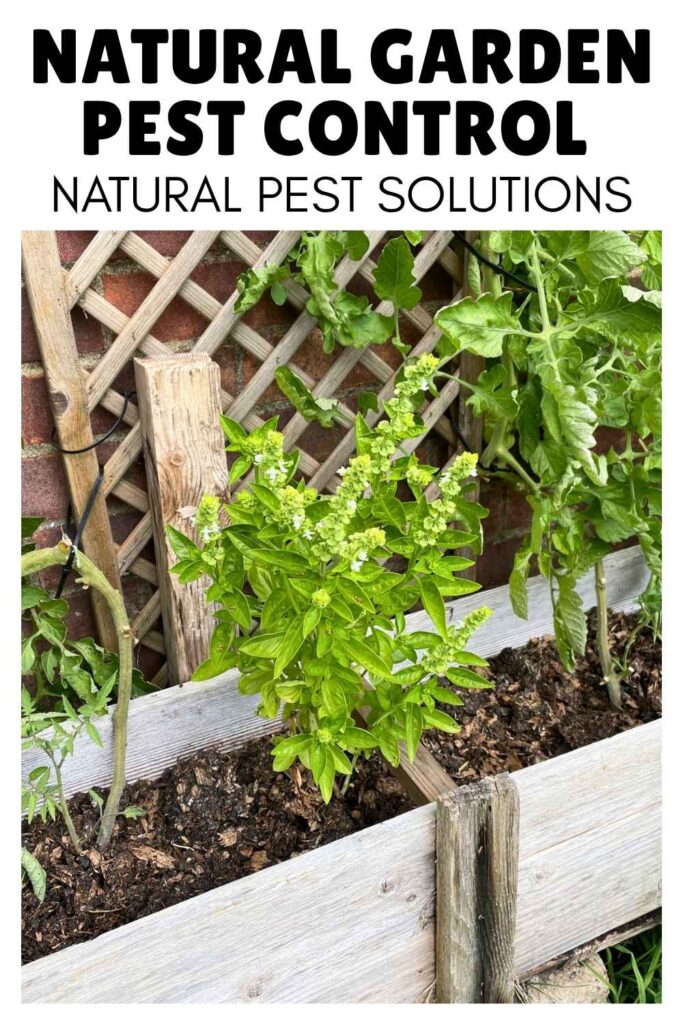
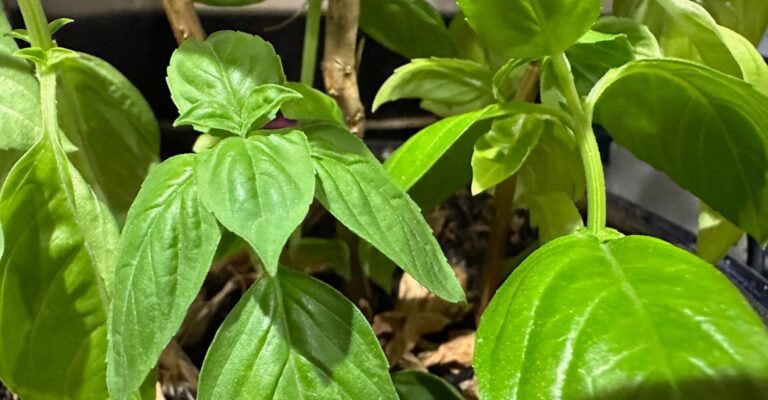
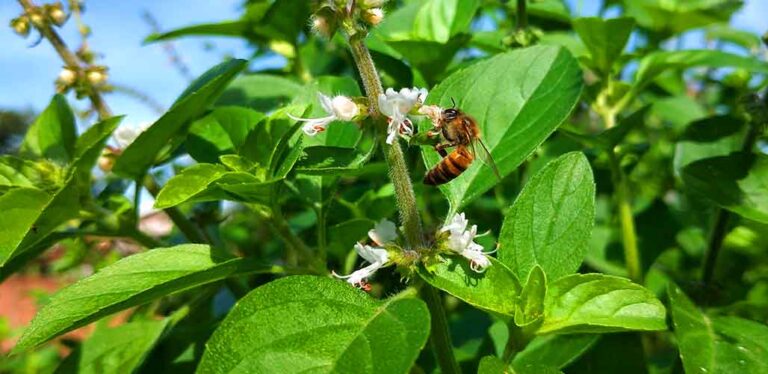
Basil works in partnership with lemongrass in a ‘push me pull me’ relationship that reduces the number of fruit flies on vulnerable crops like tomatoes.
I love that basil can help protect tomatoes, because basil is my favorite herb to eat with tomatoes! It just feels very fitting that they work together while growing, as well as on my pizza.

In mixed planting, basil’s strong smell may also confuse pest insects that are looking for specific plants, and make it harder for them to find your crops. This idea of herbs working together, rather than one of two magic super herbs keeping pests down, is key to good natural pest control. Keep an eye out for it coming up again as we move on!
And last but not least, basil also contains compounds that repels mosquitos, plus some other insects. For this to work really well you do need to use the essential oil, and not just a few plants. But if you have some basil nearby when you’re sitting outside, it’s worth crushing a few leaves, for a little extra deterrent.
Rosemary: The Medieval Gardener’s Pest Control
It’s traditional to plant rosemary near carrots and beans, to help repel carrot flies, and bean beetles. And for good reason. Rosemary oil contains naturally insect repellent compounds, including camphor and cineole, that have been shown to deter insects. And its own strong smell may also mask the smell of carrots, which attracts carrot fly.
I actually prefer to plant onions or garlic around my carrots, because I can keep them in nice tidy rows! Rosemary tends to get quite big and busy quite quickly. But it can work nicely as a bush each end of a bean frame!
Rosemary oil also deters mosquitoes. We grow a pot of “Rosemary Barbecue” in our outdoor cooking area, specifically to use as kebab skewers, and I like to add a handful of rosemary to the coals when we cook out on a summer evening. In theory the rosemary scented smoke helps keep the mosquitos away – and it does my food no harm either.
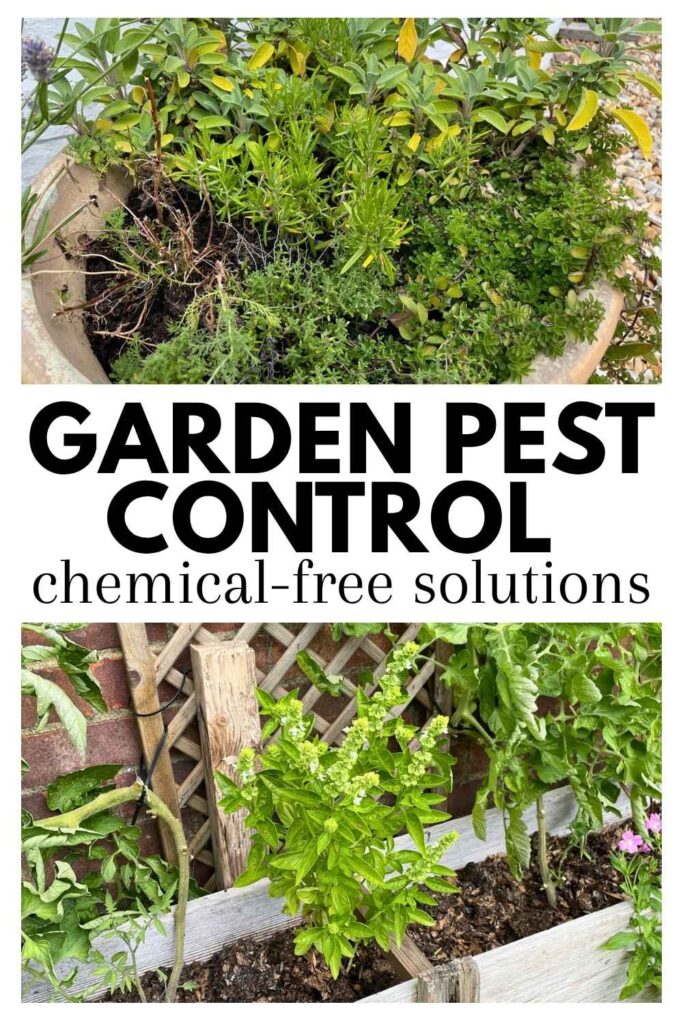
Rosemary is rumored to deter slugs. But I am typing this now, on my patio, whilst looking at a tub of rosemary, lemon thyme, and winter savoury, that has been thoroughly ‘slugged’ during our recent wet weather. The rosemary is untouched. But the lemon thyme, planted just 6 inches away, is missing half its leaves. And the winter savory is a bit nibbled, and covered in slime. So rosemary appears to deter slugs from eating itself…. but not to put them off other plants in the neighbourhood. Which is a shame.
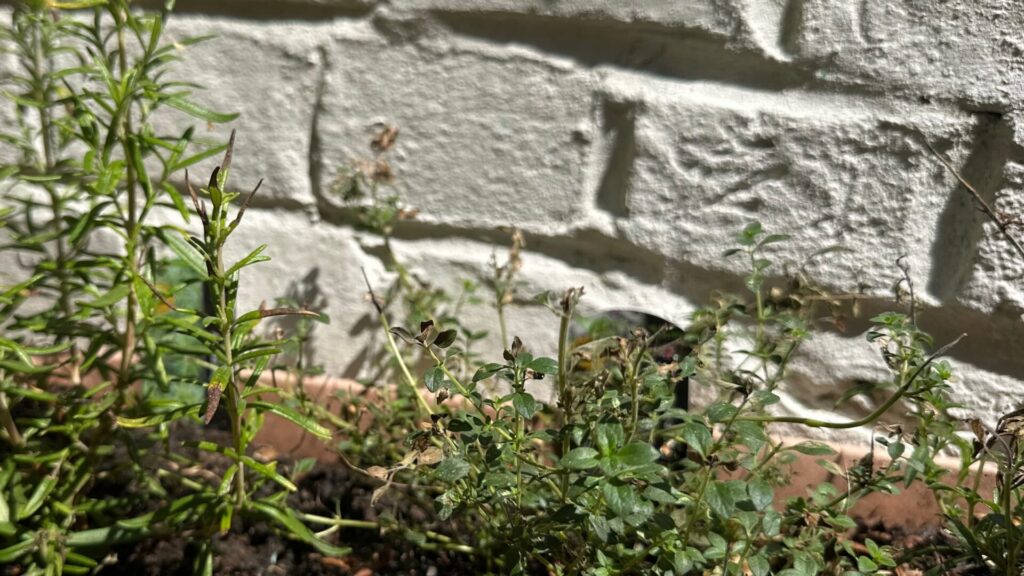
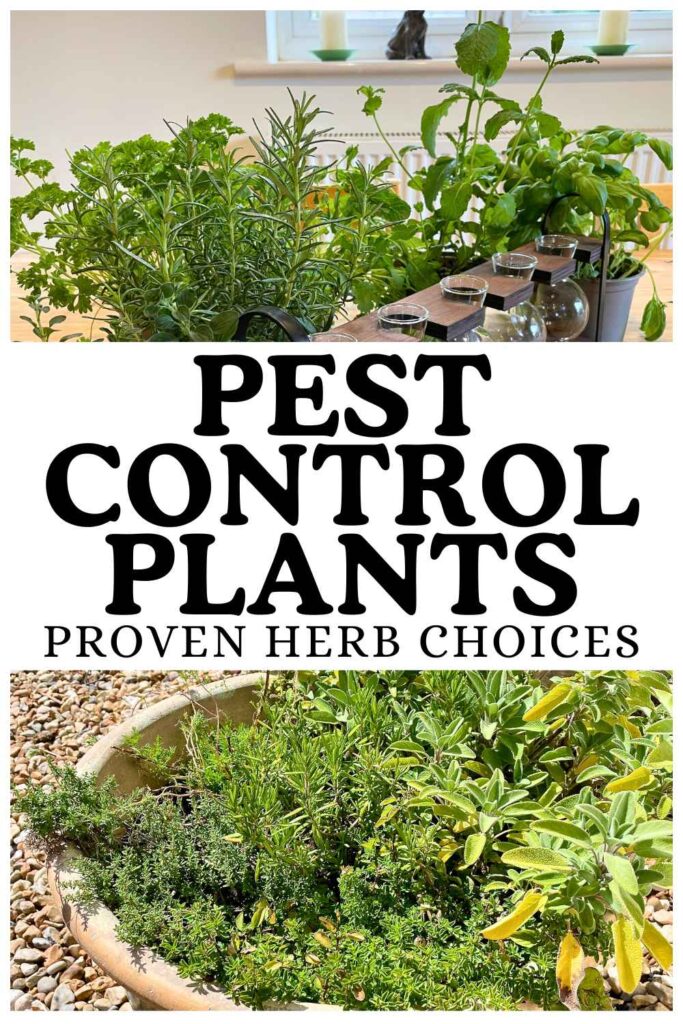
No plant is perfect at repelling pests, and rosemary is still susceptible to aphids, thrips, and some other small flying insects. You can help protect your plant by harvesting regularly and letting lots of airflow around the stems. I also find growing my rosemary outside, rather than indoors, tends to help it stay pest free. Perhaps that’s partly because of the other mediterranean herbs I grow nearby….
Sage, Oregano, and Thyme
These three mediterranean herbs all make essential oils that are proven insect repellents in their extracted, concentrated, form. Thyme oil is especially useful for natural pest control. It disrupts insect hormones, repels insects, and kills bacteria that attract plants, too. But thyme, sage, and oregano plants are sadly not as helpful. At least not on an individual basis.
Sage plants reduce mosquito numbers by about a third, and may help deter cabbage moths. Thyme deters slugs from eating it (to some degree – see my lemon thyme disaster above) but doesn’t discourage them from entering the area. And oregano, like basil above, is actually attractive to some pests, like aphids. In fact all three are officially quite aphid prone. But oregano is the most vulnerable in my experience.
Thyme and sage are plants I think of as being ‘no trouble’. Low maintenance, getting bigger every year without taking over my herb garden, and forgiving of busy gardeners who forget about them stretches of time! I’ve had less luck with oregano. It should be happy wherever thyme and sage are happy – but somehow my oregano just doesn’t thrive the way my other mediterranean herbs do, and I’ve already lost one plant to black fly this year. (A rosemary plant was struck at the same time, and has made a full recovery. Oregano is just not quite as tough, in my opinion).
Where these three herbs do seem to help, is as part of a team! Together, and alongside your other pest control herbs, they release a cocktail of insect repellents, and create a misleading, scent muddled, environment, that confuses pests looking for a particular type of plant.
Thyme, sage and oregano also all attract parasitic wasps and pest eating insects, which help keep the ‘bad’ (plant eating) insects in the neighborhood down. And they’re not alone in this skill…
Cilantro, Fennel, and Dill: The Pest Prevention Dream Team
I was taught that letting my cilantro ‘bolt’ – put out flowers – was a bad plan. It turns out, that might not be entirely true…
Cilantro (coriander), fennel, and dill all come from the ‘apiceae’ family. These plants make big clusters of small shallow flowers. The nectar in their shallow flowers is easily accessible for a wide range of insects. They attract parasitic wasps, ladybirds, and flies, like lacewings and hoverflies, that feed on the insects that damage your plants. A single hoverfly larva can kill hundreds of aphids.
Studies have shown that planting dill or cilantro in alternating rows with cantaloupes reduced the population of tobacco whitefly on the cantaloupes by at least two thirds. Dill reduces cabbage aphids. Dill and cilantro together reduced corn-borer moth populations on pepper plants. And co-planting cilantro and fennel reduced damage to broad beans by pea weevils. These plants just keep on proving themselves a simple, effective, natural form of pest control over and over again.
To show how they protect crops, a study intercropping dill, fennel, or coriander with sugar beets measured the number of predator insects in the area. They showed that when any of the three apicaea plants were present, the density of predator insects increased, and the damage caused by cotton leafworm (moth larvae) and sugar beet fly larvae decreased.
The key point for us as home gardeners, is that it’s the flowers that attract the beneficial insects, that attack the unwanted pests. So letting some of your cilantro, fennel, or dill plants bolt could actually be a good plan after all.
I do just want to remind you that fennel is truly bitter once it’s bolted, so do only let a small proportion of your crop flower, if you’re hoping to have enough to eat, too. But dill and coriander can still be eaten and enjoyed after flowering – you just need need to eat a different part of the plant. Instead of eating the leaves, which become less tasty once the plant has flowered, you can eat the flowers. And then, in due course, the seeds!
Honorable Mentions
We can’t finish this article without a quick shout out to a few other herbs that are great for natural pest control.
First, chrysanthemums. The beautiful chrysanthemum flower hides a deadly secret. It makes a natural insecticide called pyrethin, that attacks the nerves of insects. It’s so deadly in it’s concentrated form, that modern synthetic pesticides are often based on this molecule.
Just as a quick side note here – pyrethrin is deadly to insects, but doesn’t affects humans, or other mammals. So you don’t need to worry about having this flower in your garden! And, like many of our herbs above, the effect works best as concentrated oil. We don’t have strong evidence about whether planting chrysanthemums near your other crops will protect them – but many gardeners do feel it’s worth a try! To maximise the chance of it helping, you’ll need to regularly dead head your chrysanthemums so to encourage new flower growth.
Next up – catnip! Catnip oil contains a chemical called nepetalone, that repels mosquitoes more effectively than DEET. But like so many of our herbs above, the plant itself doesn’t seem to be as effective. And of course, if you intercrop it, it does encourage all the local cats to come roll on your plants… which can be a little self defeating!
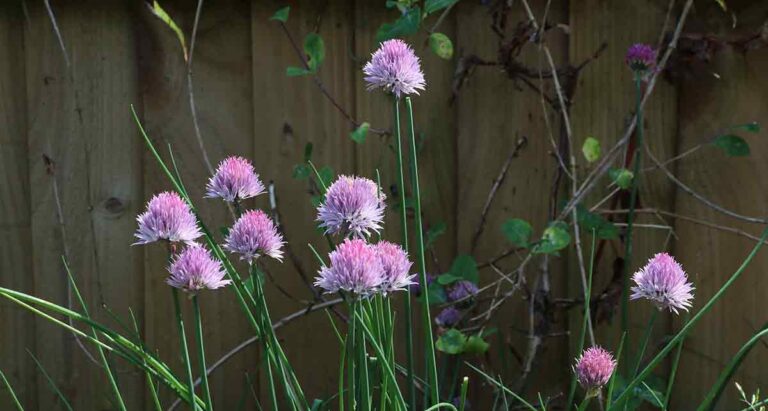
And last but not least in our natural pest control line up, is the humble chive plant. Chives and their cousin, garlic chives, are part of the allium family. The same family as onions and garlic. And they release some of the same sulfurous compounds that onions and garlic do. I tend to intercrop my carrots with garlic or onions, to make it harder for carrot root fly to find them. But could a humble herb do the same job for me instead?
The answer is probably not – carrot root fly is pretty determined, and chives and garlic chives have a more subtle scent than actual onions and garlic. But they may be helpful in improving the balance of ‘good and bad’ flies around less tempting plants, like the flowers in your garden. Planted in your borders, chives not only look great, they also may deter some of the insects that want to eat your decorative plants. And their flowers, like the apiceae flowers we looked at above, attract carnivorous flies that help keep aphids and other pest insects down.
Like so many of the other plants we’ve looked at here, chives probably work best as part of a team effort. And that teamwork idea really is the strongest overall message when it comes to natural pest control.
Teamwork Makes The Dream Work
Herbs have evolved amazing natural defences against pests and diseases. Repellent smells, oils that kill bacteria or disrupt the nervous systems of insects. The compounds that achieve this protection are often the same chemicals that give our favorite herbs their distinct smell and delicious flavor. But most of these mechanisms are only for self defense. The herb protects itself, but not the plants around it.
To extend that protection to our other plants, humans either need to extract and concentrate the essential oils, or we have to help our herbs to work as a team. Because teamwork really is the overriding message here.
Herbs protect the plants around them best by working as a biodiverse team. Whether that’s a push me pull me relationship like lemongrass and basil, by attracting a wide range of predator insects like the dream combo of fennel, dill and coriander, or just by working together to create such a confusing scent map that pests can’t find their way to their favourite tasty treats. Herbs protect your crops, flowers, and garden best, when you let them work as a big, beautiful, complex team.
Moving Forward
This summer I’m putting what I’ve learned here to use. I’ll carry on growing rosemary and lemongrass by my barbecue and outdoor seating areas, but I’m also planting lemongrass and cilantro in my polytunnel, between my tomatoes and bell peppers. And basil just outside the tunnel.
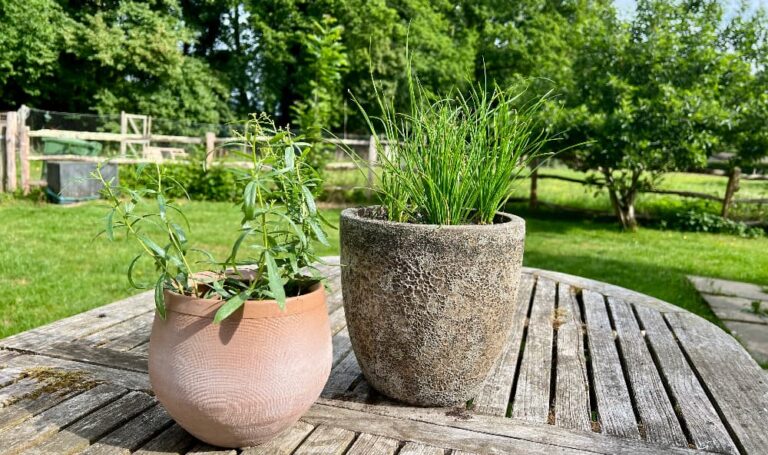
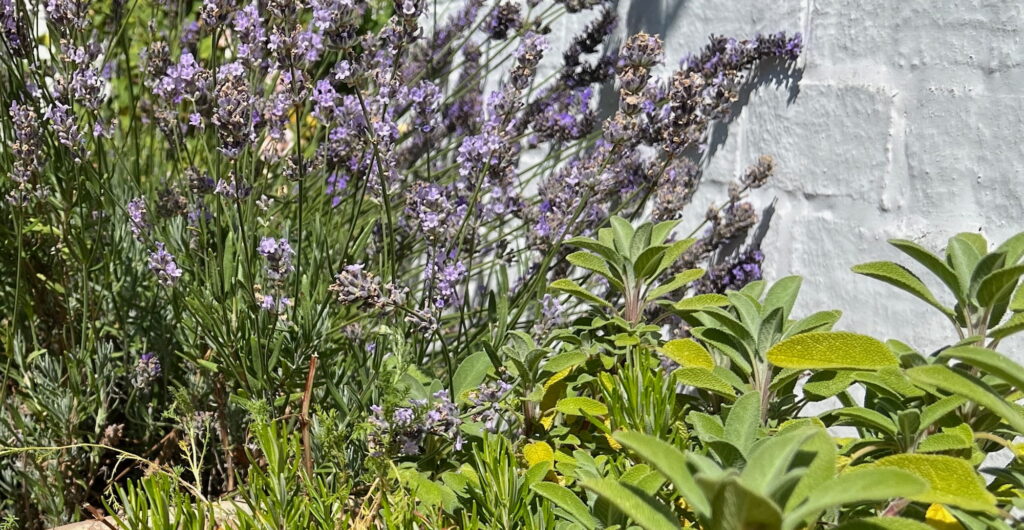
I won’t be switching the garlic between my carrots for garlic chives. But I will be splitting my chives and spreading them out a bit more around the garden, to help confuse pests on the look out for specific plants to munch on. And I’m working on spreading my other kitchen herbs out more, too; adding dill, sage, and oregano to the patches of rosemary, lavender, thyme, and chives already dotted through the borders, rather than keeping them clustered in pots by the kitchen door.
My garden mint (spearmint) and lemon mint (peppermint) plants will be staying firmly in their containers though. Mint is never willing to just stay where it’s put – and I want to make my garden more diverse, not less!
I hope I’ve inspired you to make some small changes of your own, to make your own yard more biodiverse, more welcoming to a range of beneficial insects and, hopefully, just a little bit easier to care for. If I’ve busted any myths for you, or changed your garden plans for this year, please do let me know in the comments below – we love to hear from you!
References
“A review of the bioactive components and pharmacological properties of Lavandula species”. Batiha et al. 2023. Archives of Pharmacology.
“A Modern Herbal”. Grieve, M. 1931.
“Plant science at the dinner table: peppermint”. Sandborn, D. Michigan State University MSU Extension.
“Repellency of essential oils to mosquitoes (Diptera: Culicidae)”. Barnard. 1999. Journal of Medical Entomology.
“The effects of biotic interaction between tomato and companion plants on yield”. Carvalho et al. 2012. Acta Horticulturae.
“Peppermint Oil”. University of California Integrated Pest Management. Pesticide Active Ingredients Database.
“Peppermint interplanting and nitrogen fertilisation for green peach aphid management in peach orchards: Field evidence of VOC-mediated effects”. Borg et al. 2026. Crop Protection.
“Companion plants may increase beneficial populations in horticultural crops: An evaluation of Arthropod fauna of three companion aromatic plants”. Pancarte et al. 2024. Environmental Analysis and Ecology Studies.
“Effectiveness of plant-based repellents against different Anopheles species: a systematic review”. Asadollahi et al. 2019. Malaria Journal.
“Innovative control of fruit fly (Bactrocera dorsalis) on tomato plants (Solanum lycopersicum) using the push-pull technique for sustainable food security”. Hulwani. 2025. Journal of Agrosociology and Sustainability.
“Utilization of Basil Leaf Extract as Anti-Mosquito Repellent: A Case Study of Total Mosquito Mortality (Aedes aegypti 3rd Instar)”. Husna et al. 2020. Journal of Physics.
“Repellent Activities of Ocimum basilicum, Azadirachta indica and Eucalyptus citriodora Extracts on Rabbit Skin against Aedes aegypti”. Kiplang’at & Mwangi. 2013. Journal of Entomology and Zoology Studies.
“Pest Management for Herb Bedding Plants Grown in the Greenhouse”. Pundt & Smith. 2023. University of Connecticut, College of Agriculture, Health and Natural Resources.
“Plant-based insect repellents: a review of their efficacy, development and testing”. Maia et al. 2011. Malaria Journal.
“Thyme Guard ®”. Agro Research International.
“Thyme Oil”. University of California Integrated Pest Management. Pesticide Active Ingredients Database.
“Plant Flowers to Encourage Beneficial Insects”. Wisconsin Horticulture, Division of Extension.
“Attracting Beneficial Insects”. PennState Extension.
“Reducing infestions of Bemisia tabaci (Hemiptera: Aleyrodidae) in cantaloupe using intercropping with non-host aromatic plants”. Yomna. 2018. Egyptian Journal of Plant Protection Research Institute.
“Effects of Intercropping With Flowering Plants on Predation of Ostrinia nubilalis (Lepidoptera: Crambidae) Eggs by Generalist Predators in Bell Peppers”. Bickerton et al. 2012. Environmental Entomology.
“Effects of an intercrop on the insect pests, yield, and quality of cabbage”. Kenny et al. 1988. New Zealand Journal of Experimental Agriculture.
“Impact of aromatic plants intercropped with sugar beet on infestation by cotton leafworm, sugar beet fly and associated predators”. Ibrahim et al. 2022. Egyptian Journal of Plant Protection Research Institute.
“Pyrethrins”. University of California Integrated Pest Management. Pesticide Active Ingredients Database.
“Catnip Essential Oil and Its Nepetalactone Isomers as Repellents for Mosquitoes”. Peterson et al. 2011. American Chemical Society.