Aroid Potting Soil: Make The Perfect Mix For Pothos, Monstera, and More
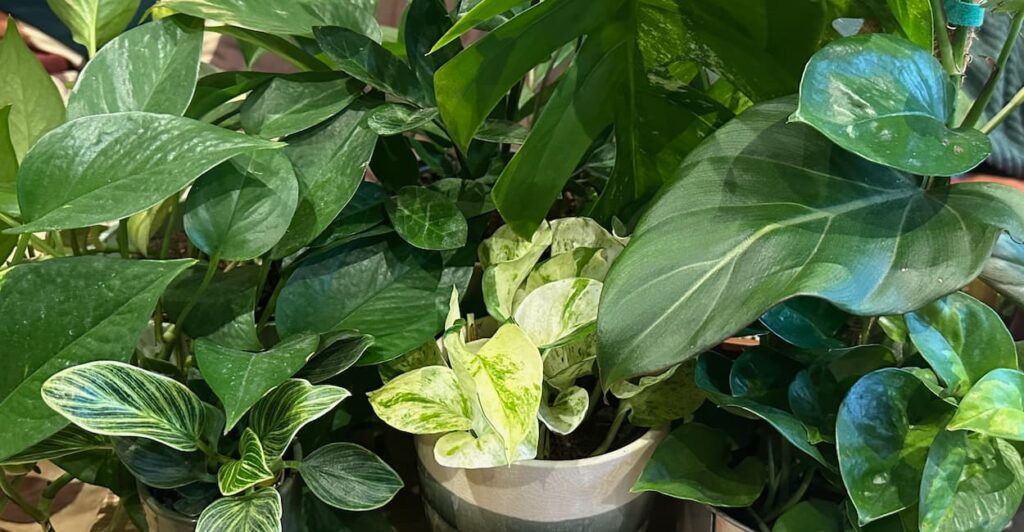
Aroids are a broad family of plants (the Araceae) that include everything from giant jungle-dwelling monstera and philodendron to compact little Pothos cultivars. I love this group of houseplants, and have plenty of them cluttering up my windowsills.
Aroids all like the same basic ‘starter mix’ for potting soil, with just a few tweaks to accommodate their different needs. The right soil is easy to mix, and makes a huge different to root condition, helping your whole plant stay strong and healthy.
Today we’re going to look at some of the most common aroid houseplants, in a few distinct soil-type groups. So that you can make up a “quick and dirty” potting mix that will keep all your aroid plants happy, whenever you need to.
Aroids By Soil Type
- Climbers (Monstera, Pothos, Philodendron, Scindapsus, Arrowhead Vine)
- Moisture Lovers (Alocasia, Peace Lily, Anthurium)
- Uprights (Chinese Evergreen, Dieffenbachia)
- ZZ Plant
Why We Need A Special Mix
Normal potting mix is much too dense for this family of plants. It waterlogs too easily, and settles too tightly around the roots, reducing airflow, and making them prone to fungal infections and root rot.
It is possible to buy specialised potting mixes for your plants, that already have everything your plant needs. But a good quality mix from a reputable supplier is expensive. So I prefer to make my own!
All you need is a bag of standard potting soil, and two magic ingredients; perlite and orchid bark.
The Magic Ratio
A basic aroid mix is so simple to make up, that I have my six year do mine for me! If you have a helpful child, they will need a large mixing bowl, and a measuring cup. If you don’t have a measuring cup, an ordinary cup or mug will work just fine.
Tell your assistant to put two full cups of potting soil in the bowl. Then one cup of perlite, and one of orchid bark. If that doesn’t look like enough potting mix, just send them round again. (This is also a fun practical way to teach your kids about ratios).
And then invite them to get their hands right in and mix it up. If they don’t want to touch the mix, a big wooden spoon works too…. but does make more mess. Weather permitting, I recommend doing this outside!
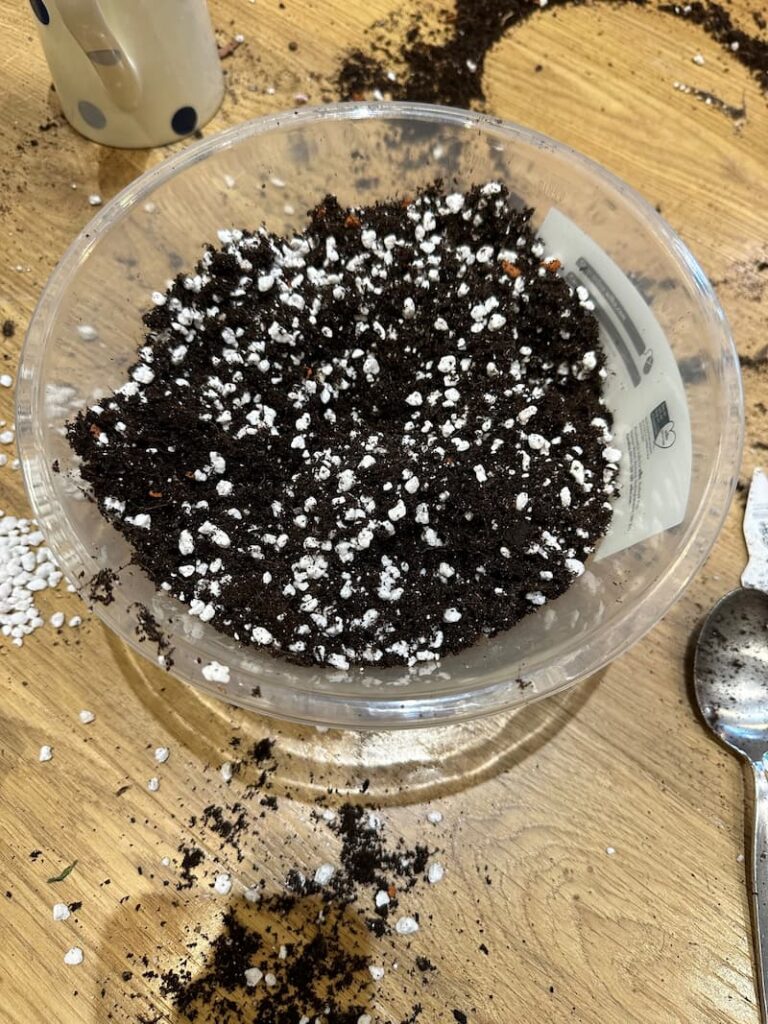
This mixture is ‘good enough’ for any aroid plant. But if you want to maximise the benefits, we can make a few tweaks to take into account the natural growing conditions of each group of plants. Let’s start with a quick look at how each of those magic ingredients help our soil quality.
Perlite
Balanced soil contains a mix of micro-sized spaces, that naturally retain water, and larger spaces that drain easily, and hold air. This helps the roots have a healthy mixture of oxygen and water.
Normal potting mix is very tightly packed. It holds a lot of water and not a lot of air. This doesn’t make for happy aroids! Perlite helps create larger airspaces that let your plant’s roots breath, and reduces the percentage of water held by the soil.
As a side benefit, because it is very light, including perlite in your mix will make larger pots less heavy, and easier to move, than pots filled with standard compost. We particularly notice this when handling our biggest monstera!
Not a fan of perlite? You can also use pumice, which is heavy but has the benefit of staying inside the soil better, instead of working it’s way to the top like perlite. Or you can use large grit sand, which holds less moisture but does the job. Or rice husks, which are a great eco choice but will degrade over a year or so, so you’ll need to repot at least that often.
Orchid Bark
Orchid bark is made from chips of pine bark. It’s called ‘orchid bark’ because it’s traditionally used to grow orchids. But it’s also really handy to mix through with your potting soil for aroid plants.
The uneven chip sizes create quick draining air spaces in your soil. This improves the ratio of air to water, just like perlite does. The chips are larger than perlite; they create even larger spaces, and give the soil structure, helping prevent fine particles from settling and packing down together.
But orchid bark also does one interesting extra thing, that perlite cannot. It absorbs a small amount of water. And some of that water is accessible to your plant’s roots. This means soils that include orchid bark can have a higher amount of water available to your plant, without sacrificing air spaces.
Less helpfully, orchid bark naturally breaks down over time, and this process reduces the amount of nitrogen available for your plants. You can offset this by adding a little fertilizer now and then.
Your orchid bark will do the best job of providing structure and aeration if you buy a coarse variety. Very fine bark will settle and make fewer air spaces.
Now lets look at how we can adjust those bark and perlite ratios, for the healthiest possible plants.
The Climbers
My favorite group of aroids. And goodness me, did I make mine suffer, until I got the hang of mixing enough chunky substrates through the soil for them. Fortunately I’m a very sporadic waterer, or I would have lost a lot of plants in the early days.
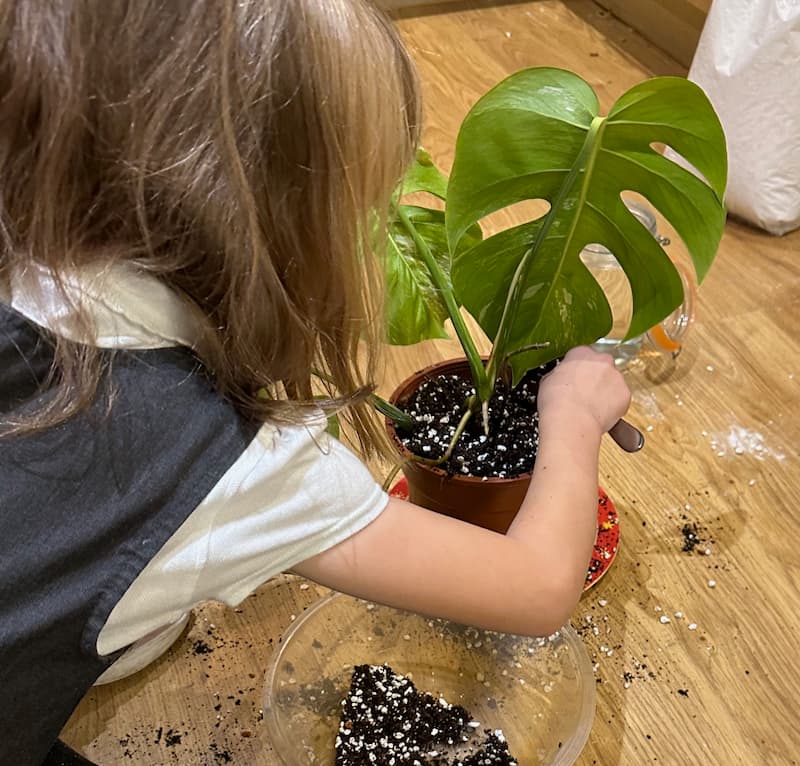
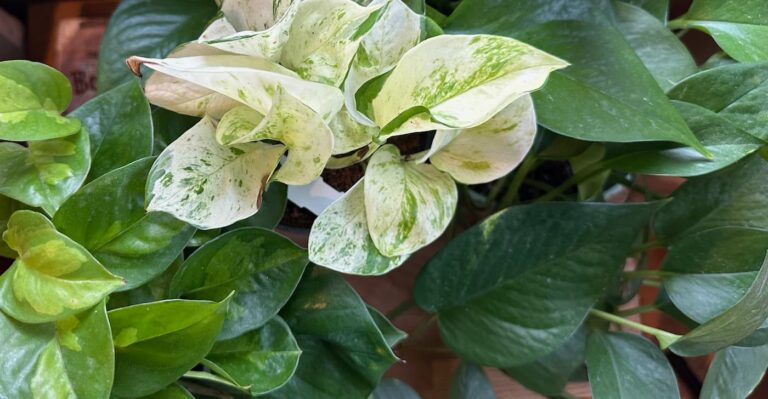
The most common climbing aroids to find in people’s homes are philodendron, monstera, pothos, satin pothos (not a pothos at all, but it likes the same soil!) and syngonium, also known as Arrowhead Vine.
These jungle climbers all love the basic 2:1:1 potting mix above. There are just a couple of exceptions, and they are to do with you, not your plants! If you’re an overwaterer, you can help your plants drain by changing to equal volumes of potting soil, perlite, and bark. And if you’re an underwaterer, especially if you live somewhere very hot or dry, you might like to help your soil hold more moisture by doing 3 parts soil, to 1 each of perlite and bark. The higher the percentage of soil, the more water will be held…. and the fewer airspaces there will be when the potting mix is wet.
The Moisture Lovers
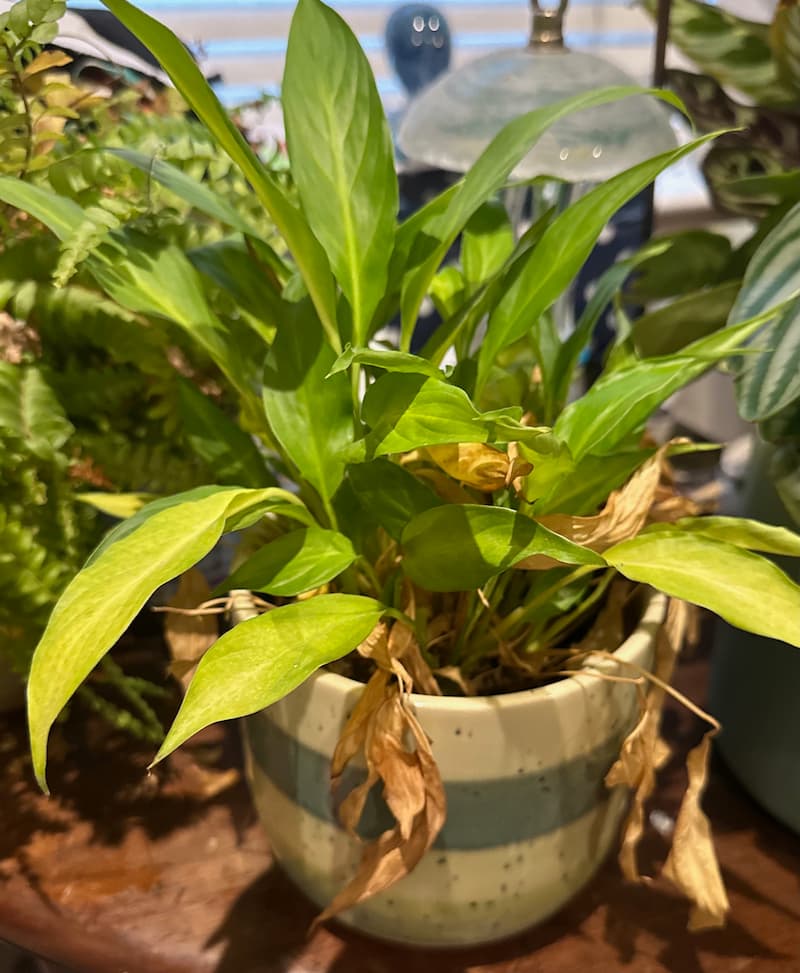
Alocasia, peace lilys, and Anthurium, like more moisture than their climbing friends. The aim is to keep soil consistently damp without waterlogging it and removing the air. Adding a handful of peat moss or coconut coir to the magic ratio above helps ‘buffer’ the water content. They absorb excess water, and then gradually release it as the soil dries out, helping prevent your plant becoming extremely wet or dry.
The Uprights
Sturdy upright aroids like chinese evergreen (Aglaonema) or dumb cane (Dieffenbachia) like a little moisture. The magic ratio is fine for them, but if you’re short on ingredients, 3:1:1 mix will work equally well for them. They don’t mind their soil being a little more dense.
ZZ Plants
Another favorite in my home is our ZZ (Zamioculcas) plant. This plant is another upright but it’s not at all moisture tolerant. ZZ plants are perfect for forgetful waterers, needing very little water. Think snake plant or succulent, rather than standard upright aroid.
ZZ plants have thick rhizosomes under the soil that rot if they stay moist for too long. So the recommendation is to use extra perlite. And they don’t seem to benefit from orchid bark as mch the other aroids too. Orchid bark is usually the priciest part of my mix, so I leave it out for my ZZs. They seem very happy with 2 parts soil to one part perlite.
If you want the reassurance of the faster draining bigger airspaces that come with orchid bark, 3 parts soil, 2 parts perlite, and 1 part orchid bark, can also work well for ZZ plants.
One Final Note
Try not to worry too much about the perfect soil mix. It’s just one piece of how you’ll take care of your plant, and if you’ve got roughly one to two thirds of potting soil, at least one fifth perlite, and a good sized handful or orchid bark, you’re already getting your plant off to a better start than most people do.
Have fun mixing!
References
“Hydraulic Performance of Horticultural Substrates—3. Impact of Substrate Composition and Ingredients”. Schindler et al. 2017. Horticulturae
“Nitrogen Immobilization in Plant Growth Substrates:Clean Chip Residual, Pine Bark, and Peatmoss”. Boyer et al. 2012. International Journal of Agronomy
“Particle size and the physical properties of growing media for containers”. Handreck. 1983. Communications in Soil Science and Plant Analysis
“Role of Growing Medium in Yield and Quality of Anthurium: A Review”. Singh et al. 2019. Agricultural Reviews
“Determination of the water and air capacity of 25 substrates employed for the cultivation of Dieffenbachia amoena and Euphorbia pulcherrima”. D’Angelo & Titone. 1988. Acta Horticulturae