How To Get Started With Pumpkins
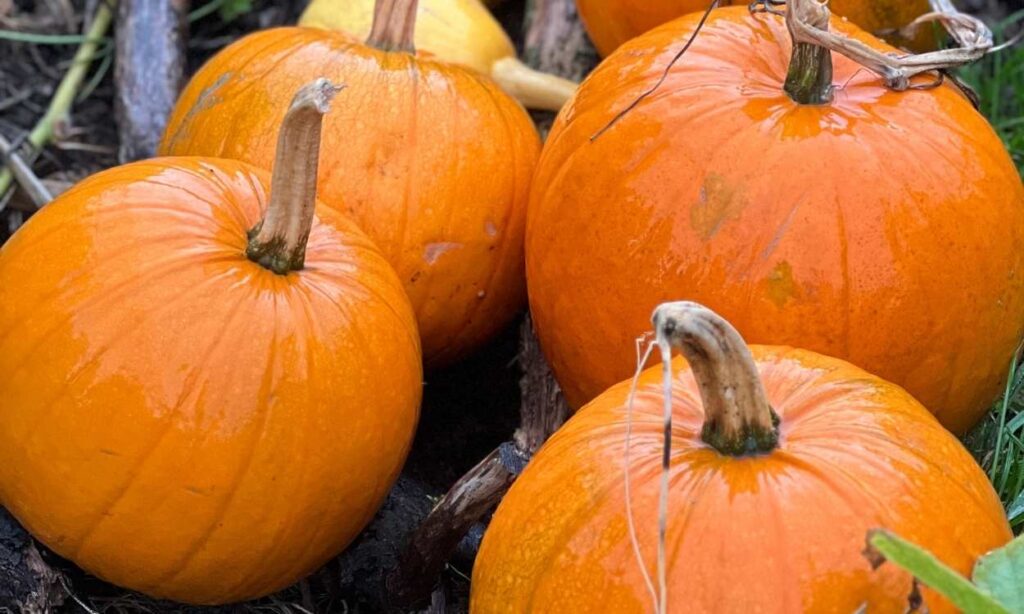
We plant pumpkins every year because we love them! Whether you want pumpkins to put in a pie or carve at Halloween, they are heaps of fun to grow. These are big plants that need sunshine and warmth to ripen. And some water and food to thrive. Other than that pumpkins are not difficult to grow.
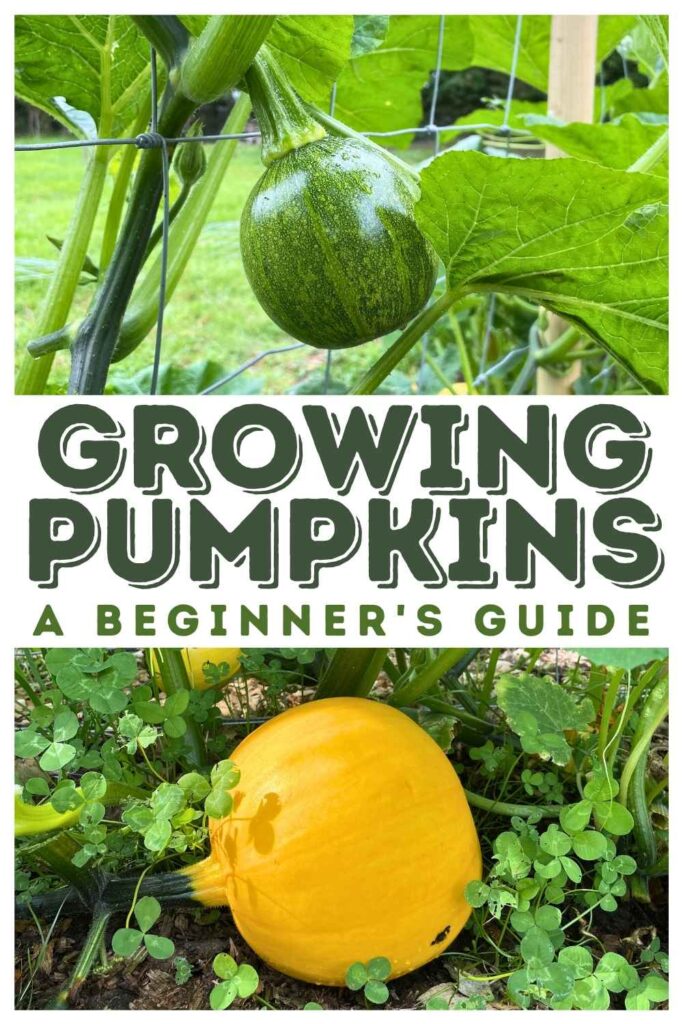
We’ve tried many different varieties and also successfully grown pumpkins vertically on a wire frame. Perfect if you want to save ground space in your vegetable patch.

If you have children or grandchildren, pumpkins will be a welcome gift in the fall and I’m going to give you some great tips to help you get started in the spring. We’ll talk about
- choosing the right varieties for the space and conditions in your yard
- planting and transplanting seedlings
- caring for your vines
- harvesting and storing your pumpkins until the big day
Choosing pumpkin seeds
You’ll need to pick the right variety of pumpkin. Some grow huge, others are quite small, so think about what you want to use them for. Seed packets usually have the final size and purpose on the label.
Best for carving
If you are growing pumpkins for halloween, they need to be big enough to impress the carver, and small enough to manhandle onto your kitchen table! You might want to limit the size to 20lbs or so.
Try: Connecticut Field. One of the most widely grown varieties by commercial jack o’lantern farms. If you’ve ever bought a pumpkin to carve from the grocery store, there’s a good chance it was a Connecticut Field. Vigorous, reliable, and easy for beginners.
Best for eating
Try: Dickinson. This is the pumpkin for making pumpkin pies. In fact a specific and closely guarded strain of Dickinson pumpkins are grown by Libbey’s for their famous pie filling. Fruits reach 10 – 40lbs.
Growing a giant!
If your aim is to impress your family with a super sized pumpkin you need to look for seeds labelled giant.
Try: Atlantic Giant. Probably the biggest variety of pumpkin you can grow. Whilst still technically edible, the bigger they get, the more bland and stringy they become. This variety is definitely just for fun, and impressing the neighbors at halloween. Think about how you’re going to move the fruits before you plant it, because they can get truly massive.
Growing vertically
If you want to save space you can grow your pumpkins up a trellis. But you’ll need to aim for more modest fruit size.
Try: Jack-Be-Little. Palm sized pumpkins you can cook in the microwave then stuff and roast. A favorite among growers because they can be grown vertically in a small space. Each vine produces up to 10 fruits each.
Whatever kind of pumpkin you plant, your top priorities are going to be finding enough sunny space for them to reach full size, and keeping them well fed and watered.
Along the way, you’re going to make decisions about growing them horizontally or vertically, in containers or in the ground, and whether to aim for lots of small fruits, or one show-stopping big fruit.
Pumpkin basics
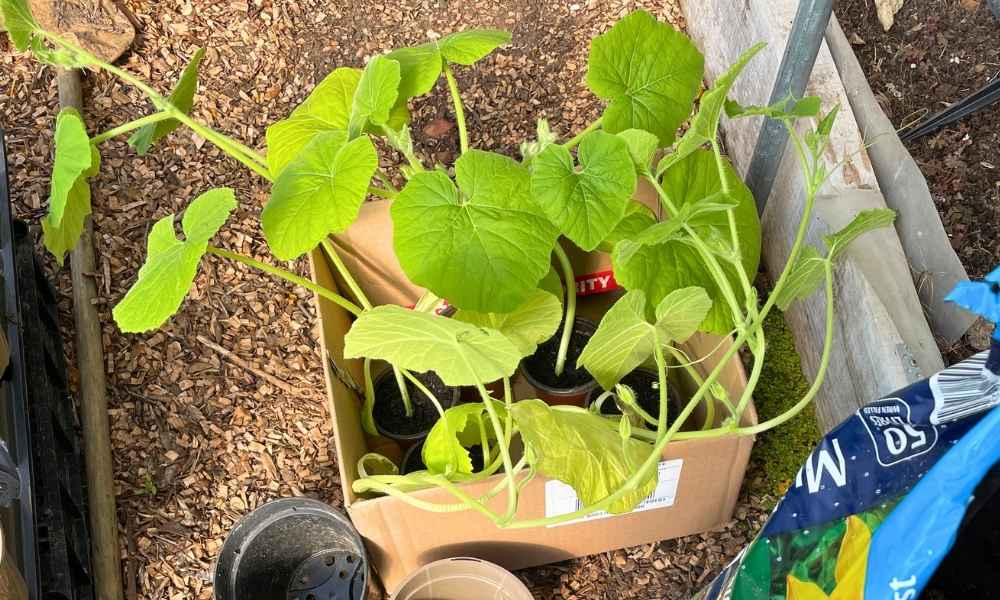
Pumpkins grow on vines. And the small seedlings you plant in late spring or early summer send out vines in all directions but especially towards the sun.
Pumpkin vines’ demands aren’t complicated, but they aren’t modest either. They need generous amounts of:
- Space
- Warmth and sunshine
- Water
- Food
Space
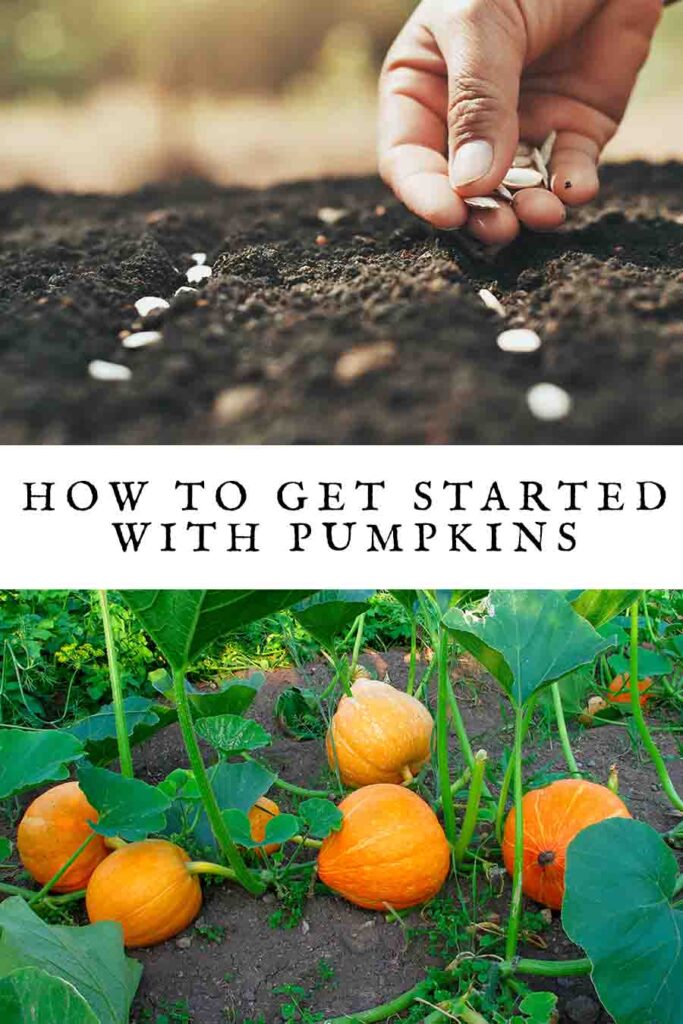
Pumpkin vines can grow up to 20 feet long, and their roots can spread even further still. Large varieties should be planted at least 3 feet apart, in rows 6 feet apart.
Smaller varieties can be planted closer together. The smallest pumpkins can even be grown in 10 gallon planters or grow bags.
Warmth and sunshine
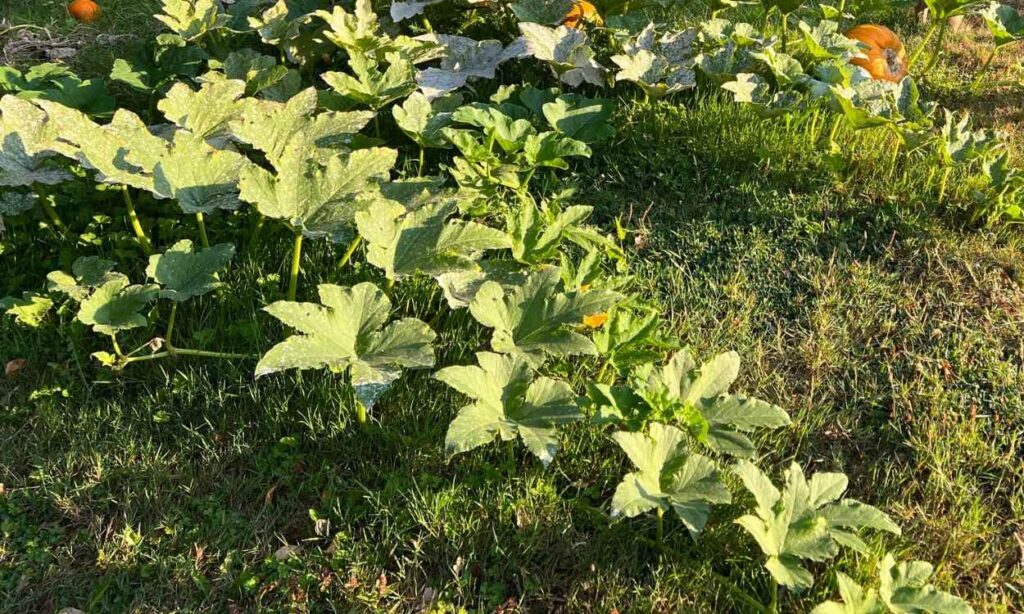
The leading pumpkin growing states in America are Illinois, California and Texas. So it’ll come as no surprise to hear that they love warm conditions and heaps of sunshine. Pumpkin seeds need soil temperatures of at least 65°F in order to germinate. Their leaves will also be damaged or killed outright by frost, so if you germinate the seeds indoors you’ll need to keep them inside until it’s safe to plant them out. If you live in a region with a short growing season between the first and last frosts, choose a variety which is ready to crop quickly. Jarrahdale, or any of the mini varieties, are a safe bet.
Water
Pumpkins are thirsty plants. They need a lot of water, and vines left to dry out usually fail to set fruit. Water-stressed pumpkins are also more prone to diseases like mildew, and infestations of pest species.
Food
Pumpkins are also greedy plants. You’ll need to make sure they have access to plentiful nutrients in the soil. In my experience, and something I definitely overlooked in the first few years I grew pumpkins, is that it is never too early to think about how you’re going to keep them fed. Probably the easiest solution, but it requires a bit of foresight, is applying a thick mulch of compost to the place your pumpkins will grow at least two months before you plant them. Then the worms can drag the goodness deep down into the soil for you. If it’s too late for this, you can feed them weekly during the growing season instead.
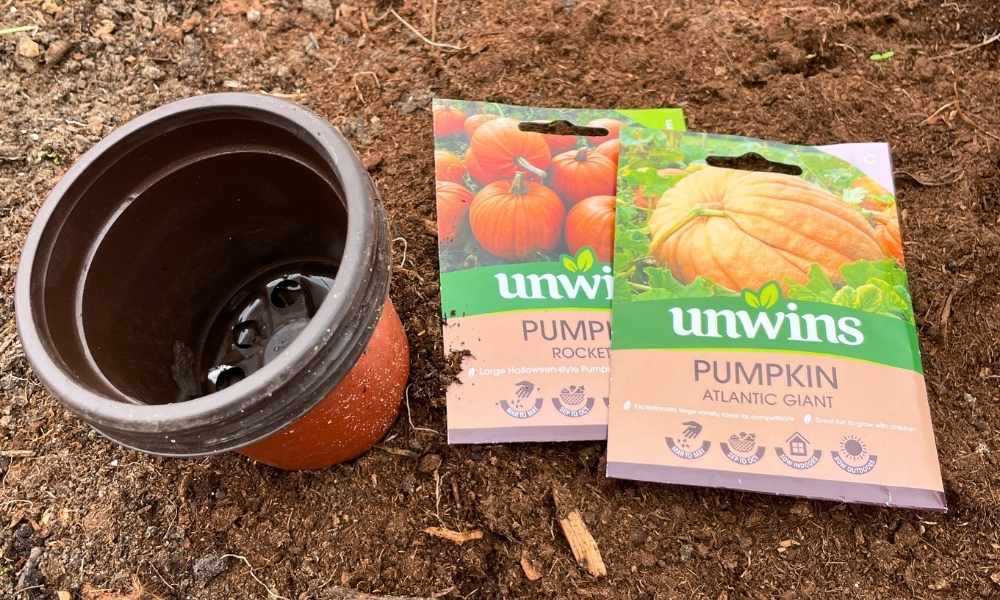
Getting started with pumpkins – sowing and growing
Now we’ve looked at what your pumpkins need, let’s turn to how you’re going to provide it. Pumpkin seeds can be sown directly into their final location as soon as the night time soil temperatures are above 65°F.
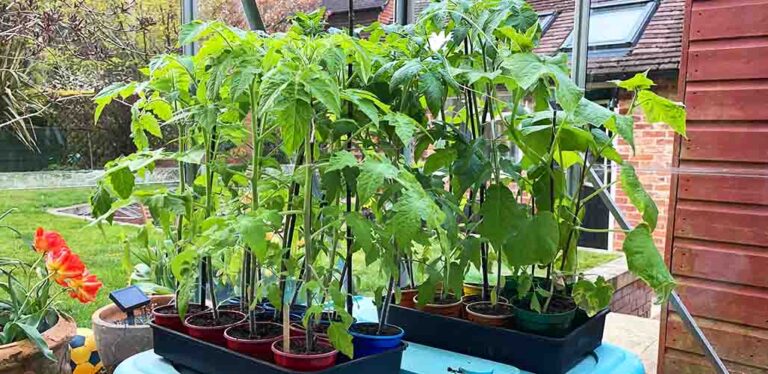
Alternatively, sow them indoors in 3” pots a couple of weeks before your last frost date, and plant the seedlings out when the weather warms up. If it’s already later than that, check here if it’s too late to plant pumpkins seeds this year.
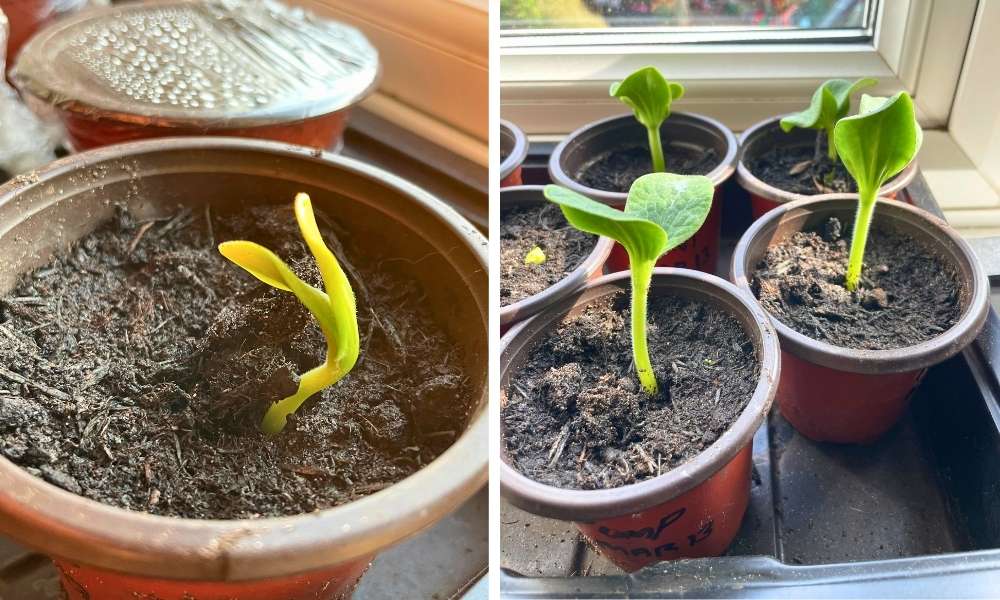
If you’re growing pumpkins in quick draining soil, it’s a good idea to dig a shallow saucer in the soil about 12 inches across, and plant your seed or seedling in the center. This will help direct the water straight down into the soil around your plant. If you’re planting in heavy or slow draining soil, plant your seed or seedling on a small mound or ridge, to stop water puddling around the stem and causing rot.
Sow seeds flat on their side, and 1 inch deep. If you’re sowing directly outdoors, plant 2 or 3 seeds together, and remove the two weakest seedlings.
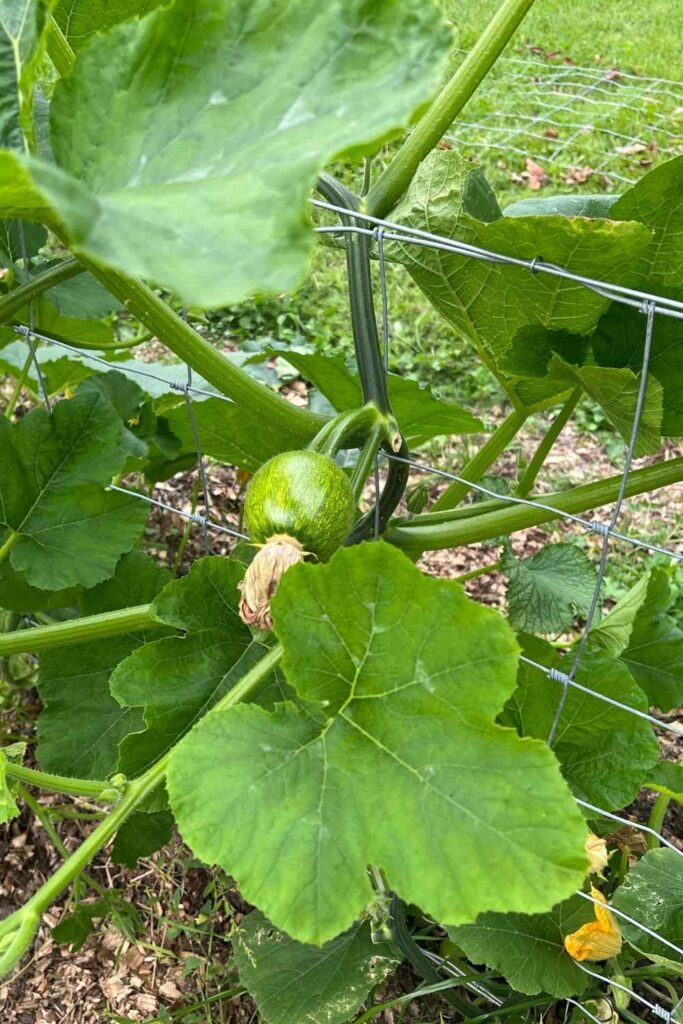
Large pumpkin varieties can only be grown horizontally due to the weight of their fruit. But lots of small and medium varieties can be grown vertically over trellises or garden arches. To grow pumpkins vertically, position the supporting structure first, and then sow or plant your pumpkins at the base.
Caring for pumpkin plants
Pumpkins take 80-130 days to get from sowing to harvesting, depending on the variety. Small varieties are the quickest to crop, and large varieties take longer. During that time you’ll need to keep them watered, feed them if you didn’t mulch the soil before planting, and protect them from pests and diseases.
- Water vines in the ground deeply once a week if there has been less than an inch of rainfall. It’s better to water deeply and less frequently, than lightly every day. When you water lightly, the moisture evaporates off the soil surface before it can soak down to your plants’ roots.
- Vines in containers usually need watering every day.
- Vines can grow up to 20 ft long. If you don’t have space for them to travel in a straight line you can gently reposition them so they grow in a circle instead.
- When your vines start to bear flowers, start feeding them once a week with tomato food. Tomato food is rich in potassium, which supports the production of flowers, and the setting and ripening of fruit.
- To grow large pumpkins for carving, limit your vines to a single fruit each and remove any subsequent ones which start to set.
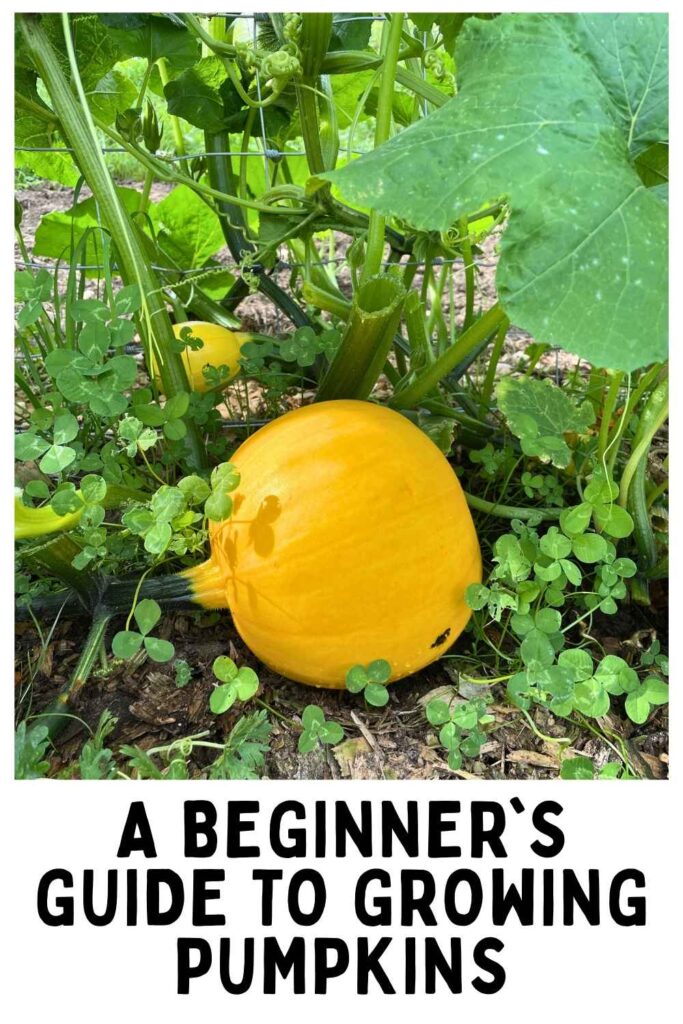
- For large pumpkins trailing on the ground, rest growing fruit on a piece of wood, a large tile, or a few sheets of cardboard. This prevents contact with the soil, which can cause rotting.
- Some climbing pumpkins vines can easily support the weight of their own fruit. Others might benefit from a bit of help. Make a sling using old pantyhose and tie it to the trellis or arch.
Troubleshooting common pumpkin growing problems
Pumpkins are generally unfussy and easy crops, but that doesn’t mean growing them is always plain sailing. Some common problems are:
- Mixing them up with other cucurbits
- Getting lots of flowers, but no fruit
- Leaves turning yellow
- Fruit drop
- Pests & diseases
Mixing them up with other cucurbits
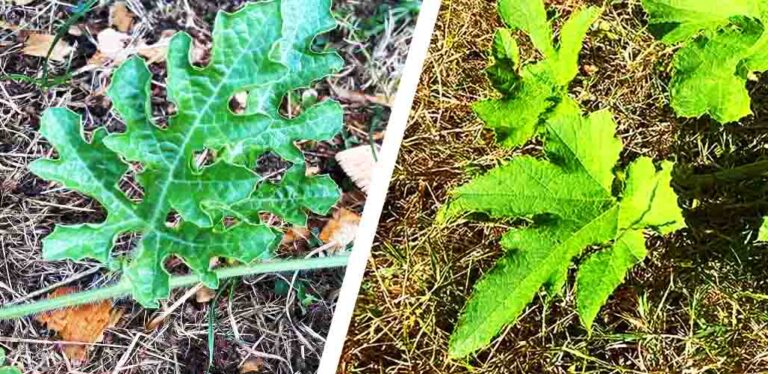
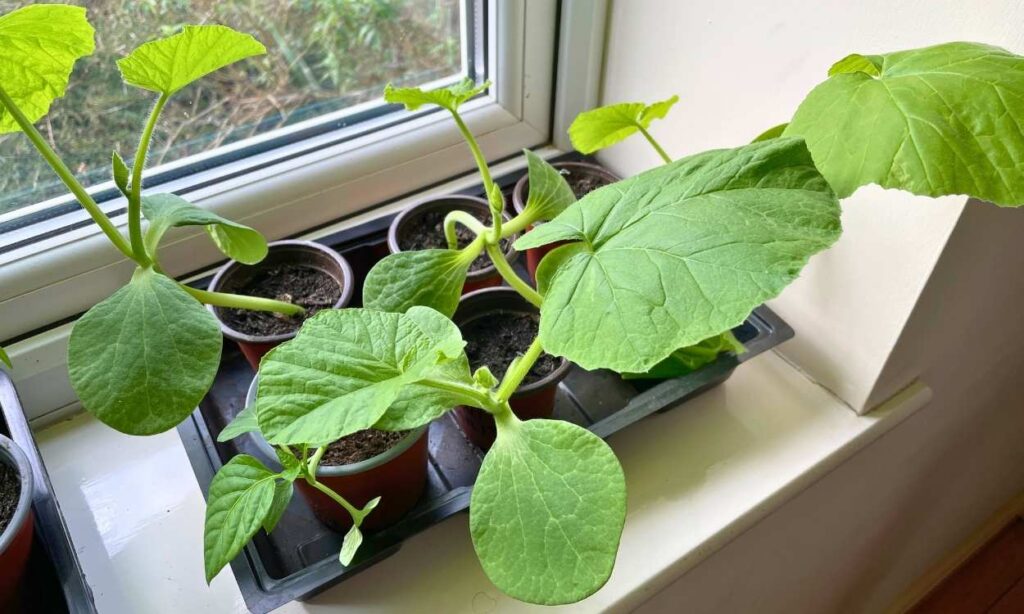
A surprisingly common pitfall is getting unlabelled pumpkin and watermelon seedlings mixed up! If this has happened to you, your pumpkins have the more blue-green leaves with jagged edges. And your watermelons have the more yellow-green leaves, with rounded edges.
Getting lots of flowers, but no fruit
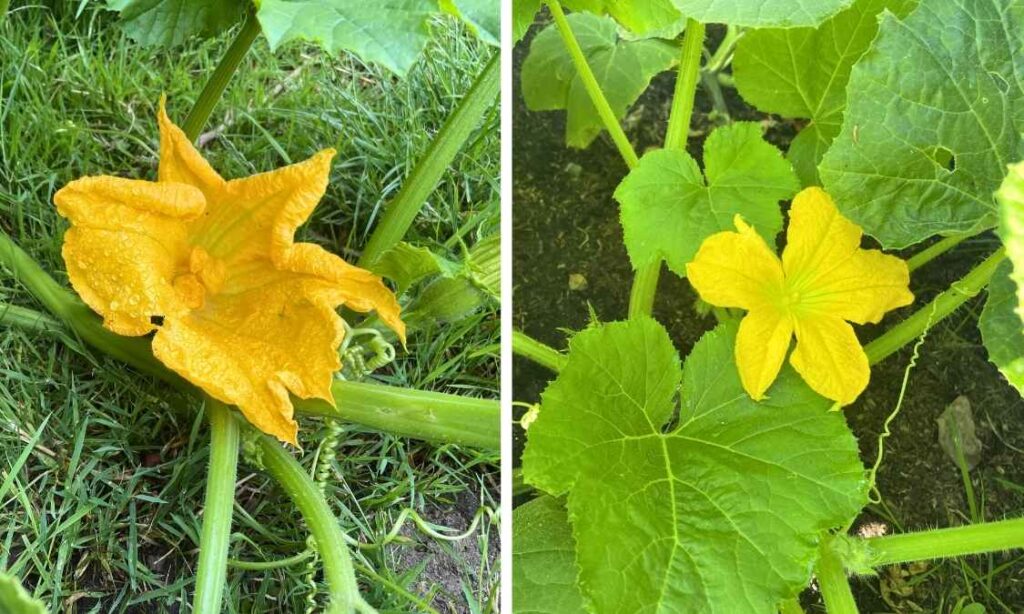
Another common problem is vines which seem to be producing all flowers, and no fruit. Pumpkins produce separate male and female flowers. Female flowers can easily be identified because they have a swollen stem, which eventually turns into the fruit if they are pollinated. It’s pretty normal for plants to produce a flush of male flowers at first, followed by female flowers later. However, if the conditions are wrong somehow – too shaded or too dry for example, it can inhibit female flower production. If you’ve got both types of flowers and you’re still not getting fruit, it’s likely to be because pollination isn’t happening. For example because you don’t have many pollinating insects visiting your yard. You can pollinate them yourself by swirling around the inside of a male flower, and then a female flower, with a soft fluffy paintbrush.
Leaves turning yellow
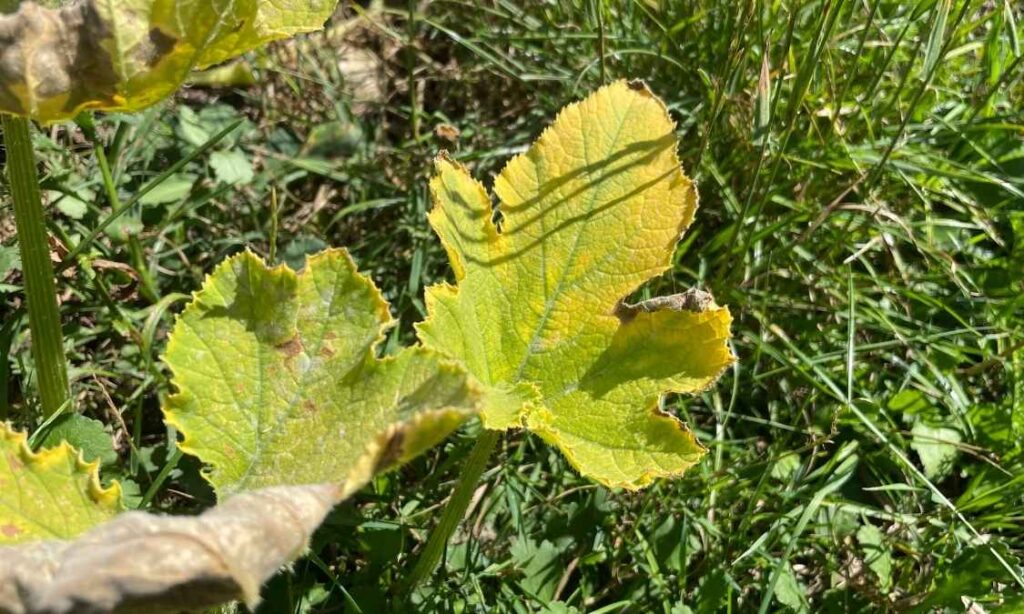
Yellow pumpkin leaves are a frustratingly ambiguous sign of stress for growers. They can be caused by aging, pests, drought, and nutrient stress, among other things. In fact, I’ve written a whole article about the possible causes of yellow pumpkin leaves, and how to address each one.
Fruit drop
Finally, another common affliction of pumpkin growers is fruit-drop, when immature fruits shrivel up and drop off the vine instead of ripening. This is a clear sign your plant is stressed – either due to lack of water, shortage of nutrients, or infestation by a pest or disease.
Pests and diseases
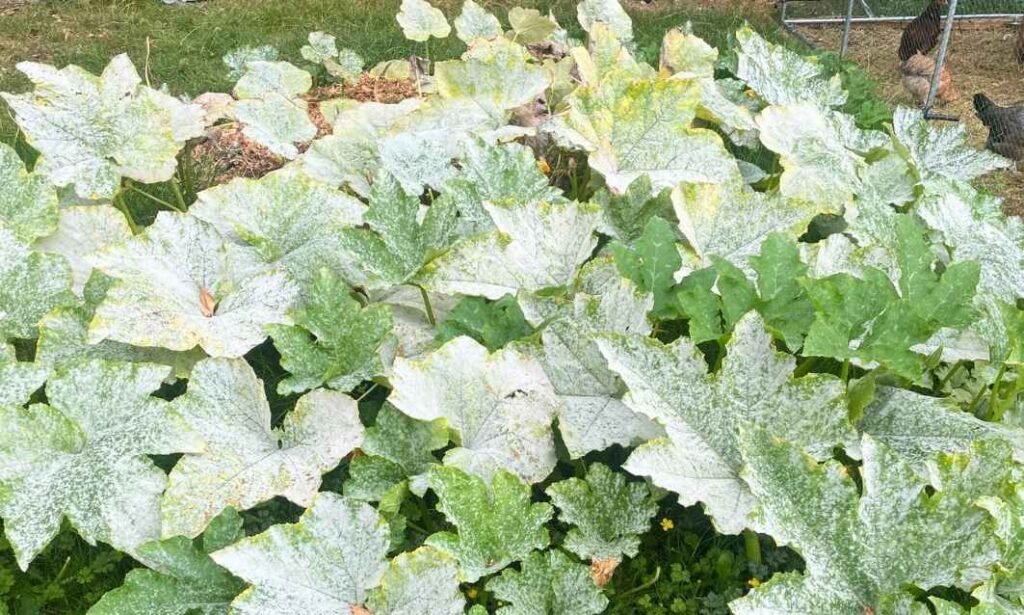
Pumpkins are pretty hardy, but can be prone to powdery mildew and there are some pests that attack them. The best way to keep your pumpkin vines free from disease is to make sure that the conditions are right for them. Plenty of water and sunshine, and feeding where necessary.
Harvesting and storing your crop
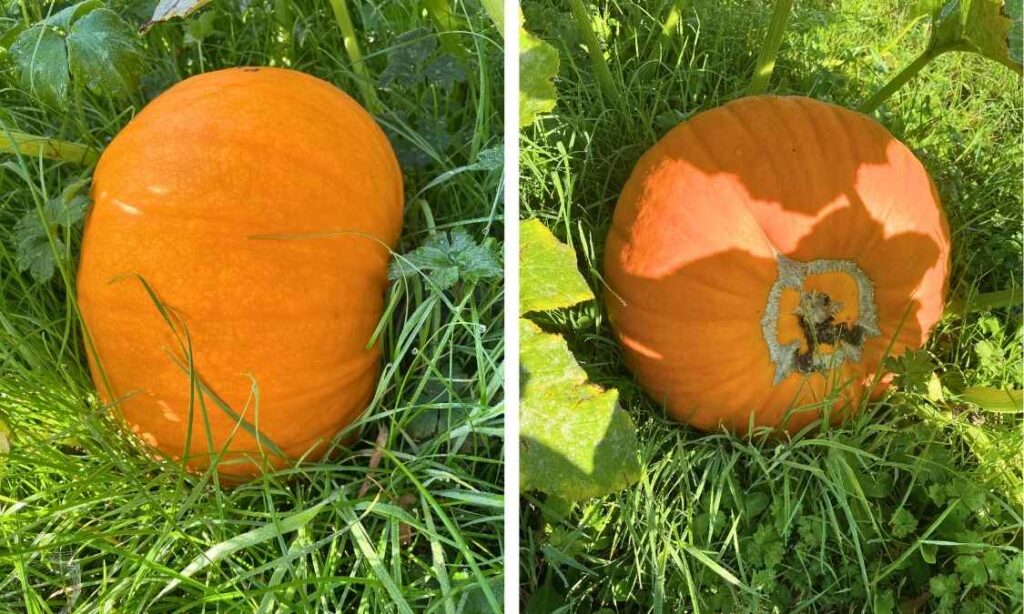
Pumpkins are ready to harvest when the stems turn dry and woody. This happens in late summer or early fall. Sever them from the vine with as long a stalk as possible, and leave them to cure in the sunshine for 7-10 days. Alternatively, you can leave pumpkin fruit on the vine until the first frosts are due. But always remove them before the frosts start. The woody stem and cured skin effectively seal off the inside of the pumpkin. So the flesh stays ripe and fresh for up to 6 months. Store them somewhere cool and well ventilated until you’re ready to use them.
How to get started with pumpkins – summary
Pumpkins aren’t just for halloween – they’re delicious too. There’s a variety for everyone, and they’re pretty easy to grow as long as you plant them in rich soil and water them well throughout the growing season. If space is a problem, try growing a mini variety vertically instead. Remember to check young plants regularly for pests, and lift fruits slightly off the ground to protect them from rot. And finally, don’t forget to tell us how you get on in the comments box down below! In fact, let us know what varieties you’re thinking of trying right now!